
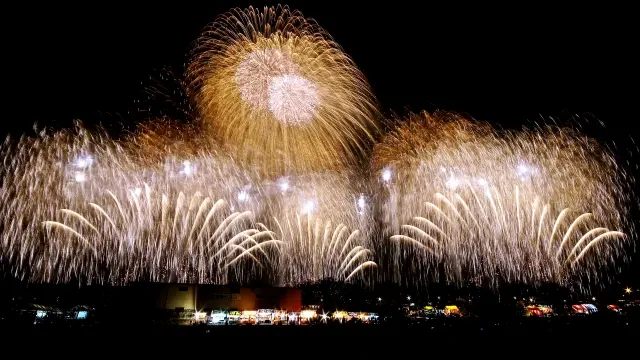
The Tsuchiura All-Japan Fireworks Competition (土浦全国花火競技大会, Tsuchiura Zenkoku Hanabi Kyogi Taikai) is one of Japan's "three great fireworks competitions," alongside Omagari in Akita and the Ise Jingu Offering fireworks in Mie. In 2026 it lights up the banks of the Sakura River in Tsuchiura, Ibaraki, on Saturday, November 7.
This is a very different event from a summer fireworks festival. It is a juried competition: pyrotechnicians from across Japan bring brand-new shells and are scored on how perfectly each one bursts. The craftsmanship in each shell is on another level.
If you are pairing it with the other big autumn competition, our guide to the Omagari Fireworks 2026 explains a similar setup: all seats are paid, and there are no same-day tickets.
The first ticket lottery has already closed. If you want a paid seat now, the individual resale lottery, which ends on October 2, is your only option.
The 2026 event at a glance
Here are the essentials before you plan anything else.
Item | Details |
|---|---|
Date | Saturday, November 7, 2026 |
Competition start | 5:30 p. |
Scheduled end | 8:00 p. |
Shells | About 20,000 |
Venue | Banks of the Sakura River, near Gakuen Bridge (Tsuchiura City) |
Organizer | Tsuchiura All-Japan Fireworks Competition Executive Committee |
The weather policy has one wrinkle. Light rain is not enough to stop the show. It runs as scheduled, and only genuinely severe weather pushes it to the following Saturday, November 14.
A word on refunds: if the show is pushed to November 14, your ticket simply carries over to that day. The organizer says tickets are refunded only if the event does not take place at all — once it has started, a stoppage or cancellation is not refunded. Check the official news page for the fine print before you buy, and on the day itself it is also where the latest go or no-go call is posted.
Check Tsuchiura Fireworks Tours
Paid seats: sold out, resale lottery only
All paid seating is sold through a lottery, run online via Ticket Pia. Applications ran from August 12 to September 10 and winners were announced on September 14, so the first round is over.
Your remaining option is the individual resale lottery for tickets returned by other buyers. Entries run from September 27 to 11:59 p.m. on October 2, with winners announced from 6:00 p.m. on October 5. You apply through the dedicated Ticket Pia page (Tsuchiura Fireworks on Ticket Pia); payment is by credit card, with a ¥990 handling charge on top of the seat price. Once that window closes, there is no official way left to buy a seat.
Be realistic about your chances, though. The organizer's notices and the resale fine print are in Japanese, and because the lottery only reassigns seats other buyers have handed back, the odds are slim. If you don't land a seat, note that the city has not yet published where viewing is allowed or how roads will be closed in 2026, so check the official announcements before you decide where to go (see the closing section).
For reference, these were the seat types and prices in the first sale. The resale lottery covers the same categories.
Seat type | Price (incl. | Capacity |
|---|---|---|
Tatami box (table seat) | ¥80,000 | 4 people |
Tatami box (full) | ¥26,000 | 5 people |
Tatami box (half) | ¥13,000 | 2 people |
Tatami box (chair) | ¥12,000 | 1 person |
Chair seat A | ¥6,000 | 1 person |
Chair seat B | ¥5,000 | 1 person |
Chair seat C | ¥4,000 | 1 person |
Getting there from Tsuchiura Station
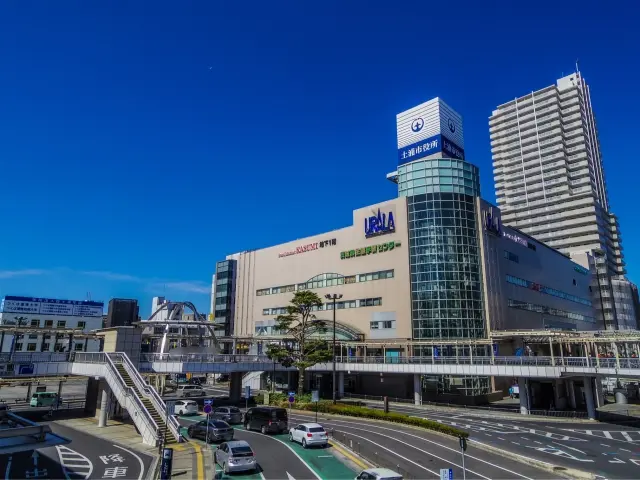
The nearest station is Tsuchiura on the JR Joban Line. From Ueno in Tokyo it is roughly 45 minutes by limited express and about 70 minutes by local train. From the station to the venue is about 2.5 km, or a 30-minute walk, though it will likely take longer as the crowds grow.
If you would rather not walk it, a shuttle bus connects the east exit of Tsuchiura Station with the venue at Gakuen Bridge. The ride takes about 10 minutes and costs ¥400 for adults and ¥200 for children one way, with IC cards accepted.
Outbound buses run from 3:00 p.m. to 5:30 p.m. (the last departure from the station), and return buses run from 6:30 p.m. to 9:30 p.m., with service sometimes extended during busy periods. The line to buy a ticket can add 30 minutes or more, so leave yourself a buffer rather than arriving right before the start.
Check hotel availability and rates in Tsuchiura
Driving and parking
If you drive, know that you can't just show up and park that day. All ten official lots (P-3 through P-12) require payment and an advance lottery reservation.
The first parking lottery has already closed; the next round runs from 10:00 a.m. on October 2 to 11:59 p.m. on October 7. Applications are accepted through the reservation site (ticket-pass.com). Fees are ¥3,300 all-in for general lots, and ¥2,200 for the P-11 Craft Civic Hall lot only. The venue is about 20 minutes from the Sakura-Tsuchiura or Tsuchiura-kita interchange on the Joban Expressway.
Heading home and what to bring
When it ends around 8:00 p.m., the whole crowd heads for Tsuchiura Station at once. Entry restrictions can go into effect, and the organizer warns that even a limited-express ticket does not guarantee priority boarding. The last return shuttle is scheduled for 9:30 p.m., so work out how you will get home before the show begins.
If you are coming from far away, staying near Tsuchiura Station and heading back the next morning is one way to dodge the crush. That said, it is only 45 to 70 minutes from Ueno, so plenty of people simply make it a round trip from Tokyo.
Dress for it, too. Temperatures in Ibaraki can drop into the single digits after dark in early November, and the riverside venue catches the wind. If you have a box or chair seat, you will be sitting still for a few hours, so a heavy coat, a blanket, hand warmers, and a cushion for insulation can make a real difference.
As for food stalls, free viewing spots, and the November 7 road closures, the organizer has not published details yet. Check the official site and the traffic-control map that Tsuchiura City and the police usually release in late October before you settle on where to eat or stand.
This article was translated from the original Japanese with AI assistance and reviewed by our editorial team. The Japanese version is authoritative.