
The soft, flickering glow of fireflies is one of Japan's most beloved early-summer sights. “Firefly watching,” or hotaru-gari, has long been a cherished tradition across Japan, and you might assume you'd need to head deep into the countryside to see it. But right in the middle of Tokyo's 23 wards, there's a garden where Genji fireflies drift through the dark every year: Hotel Chinzanso Tokyo, in Bunkyo Ward.
Since 1954, Chinzanso has hosted “Hotaru no Yube” (an evening of fireflies)—an early-summer firefly-viewing tradition in the hotel's forest-like garden. At peak times, an estimated 500–600 Genji fireflies appear each night around the garden's firefly stream and waterwheel area—a genuinely magical scene for somewhere so central.
This guide covers what makes Chinzanso's fireflies special, the 2026 season and best timing, how to see them and what it costs, how to get there, and a few viewing-etiquette tips—all based on official information.
Note: Dates, prices, and garden-entry rules can change. Always check the official website before you go. (This article is based on official information as of June 2026.)
1. The Fireflies of Chinzanso: 70+ Years of Early-Summer Tradition in Central Tokyo
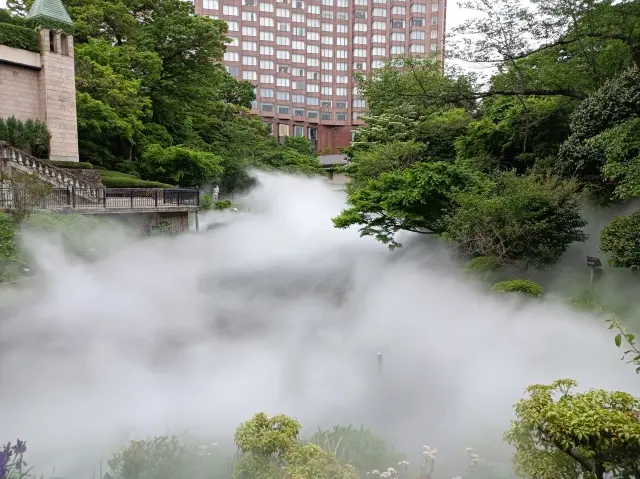
Hotel Chinzanso Tokyo sits in Sekiguchi, Bunkyo Ward, yet it surrounds you with a sprawling, woodland-like garden. In early summer, the garden's main attraction is the Genji firefly (genji-botaru), Japan's most iconic species. The tradition goes back to 1954, when the hotel's founder, Eiichi Ogawa, started “Hotaru no Yube” out of a wish to let Tokyo's children see fireflies.
Since 2000, the hotel has worked with specialists to build an environment where fireflies can complete their whole life cycle, from eggs to flight. Past official announcements have described the project as involving around 10,000 fireflies in total, counting both the Genji fireflies that emerge in the garden itself and adults raised at an outside facility and released here. At peak, an estimated 500–600 Genji fireflies appear each night, with the firefly stream and waterwheel area as the main viewing spots.
Chinzanso is also famous for “Tokyo Unkai,” one of Japan's largest garden mist displays, which creates a low-lying “sea of clouds” across the grounds. It's presented as something to enjoy alongside the firefly season, though to protect the fireflies, the hotel turns off the mist inside the firefly-viewing areas while the fireflies are active. You can still enjoy both in one evening: take in the fireflies' pale, pulsing light first, then wander over to the misted parts of the garden. It's a uniquely Chinzanso way to experience early summer in Tokyo.
2. The 2026 Season and the Best Time to Go
Fireflies only light up for a short window, at a specific time of night. At Chinzanso, you can generally see them after sunset from around mid-May to early July, in the garden and in a dedicated biotope. As a rule of thumb, garden-hatched Genji fireflies can be seen until around mid-June at the firefly stream (Hotaru-sawa), the Kokai spring, and around the waterwheel, while late June into early July shifts to the climate-controlled biotope.
The best viewing starts once it's fully dark after sunset—officially, from around 7:30 p.m. In the rain, fireflies often hide under leaves, but Chinzanso also has an indoor “Firefly Cave” biotope where they tend to stay active, so even a rainy evening can still work.
For 2026, the firefly-viewing season (“Hotaru no Yube”) is officially listed as Saturday, May 16 through Tuesday, June 30. The dinner buffet below runs separately, on select days from Sunday, May 17 through Tuesday, June 30. Because the buffet dates vary, it's best to check the official calendar before you book. If you're visiting in early-to-mid June, your timing should line up nicely with the peak.
3. How to See the Fireflies, and What It Costs
You watch the fireflies inside the hotel's garden. To enter the garden, you either use the hotel's facilities (a restaurant, an overnight stay, and so on) or, if you're not using a facility, buy a garden admission ticket in advance through the hotel's dedicated site. The easiest way to enjoy the evening fireflies is one of the dinner plans below.
Hotaru no Yube Dinner Buffet: Enjoy a Japanese-Western-Chinese buffet, then step into the garden for the fireflies—Chinzanso's signature early-summer experience. For 2026, prices are ¥14,200 (Mon–Thu) or ¥16,300 (Fri–Sun) for adults, ¥6,700 for elementary-school children, and ¥4,100 for children aged 3 and older (tax and service charge included). Seating runs in slots such as 6:00–8:00, 6:30–8:30, or 7:00–9:00 p.m. depending on the day, with check-in starting 30 minutes beforehand.
Check availability and book your stay at Hotel Chinzanso Tokyo.
There's also a one-night-only “Champagne Night Buffet — Firefly Fantasy” with free-flowing champagne on Saturday, June 13 (¥17,800 for adults), plus overnight stay plans if you'd like to take your time before and after. Fireflies can be seen for free at some public parks, too (more on that below), but Chinzanso's appeal is the complete experience: fireflies paired with a special dinner or hotel stay in a central Tokyo garden. If you'd rather enter with just a garden ticket, check current prices and availability on the official site or with the reservations desk.
4. Getting There
Hotel Chinzanso Tokyo is at 2-10-8 Sekiguchi, Bunkyo-ku, Tokyo.
The nearest station is Edogawabashi on the Tokyo Metro Yurakucho Line, about a 10-minute walk from Exit 1a. From Mejiro Station (JR Yamanote Line), take a Toei bus from in front of the station (for example, one bound for Shinjuku Station West Exit) and get off at “Hotel Chinzanso Tokyo-mae,” a 2-minute walk away. On Saturdays, Sundays, and holidays, a free shuttle bus runs from JR Ikebukuro Station (check the official site for days and times).
The Bunkyo community bus “B-guru” stops nearby as well.
5. Viewing Etiquette and What to Wear
Fireflies are delicate creatures, so a little etiquette keeps the experience good for everyone. Watch, don't touch—never catch or handle the fireflies. Avoid strong light, too: phone flashlights and camera flashes stress the fireflies and spoil the view for others. Keep your voice down and steer clear of loud noises.
For clothing, long sleeves and long pants are your best defense against bugs. Insect-repellent sprays and mosquito coils can affect the fireflies, so it's better to cover up than to spray. Evenings can cool off, so bring a light layer, and wear comfortable shoes—the garden paths get dark underfoot.
Make the Most of Early Summer in the City
Chinzanso is the “special night out” version of firefly watching, but Tokyo also has free spots where you can see them.
Places like Otomeyama Park in nearby Shinjuku offer a more natural setting, and we round them up in our guide to seeing fireflies in Tokyo.
Early summer is also peak hydrangea season, so pairing an evening of fireflies with a next-day hydrangea stroll makes for a lovely seasonal trip.


More to Read This Season
▶ Tokyo's Firefly Magic: 5 Places to Catch Hotaru in the City This Early Summer (2026)
▶ 6 Best Hydrangea Spots in Tokyo | 2026 Bloom Dates & Festival Guide
▶ What to Wear in Japan in June: Your Complete Guide to Dressing for Rainy Season
This article was translated from the original Japanese with AI assistance and reviewed by our editorial team. The Japanese version is authoritative.