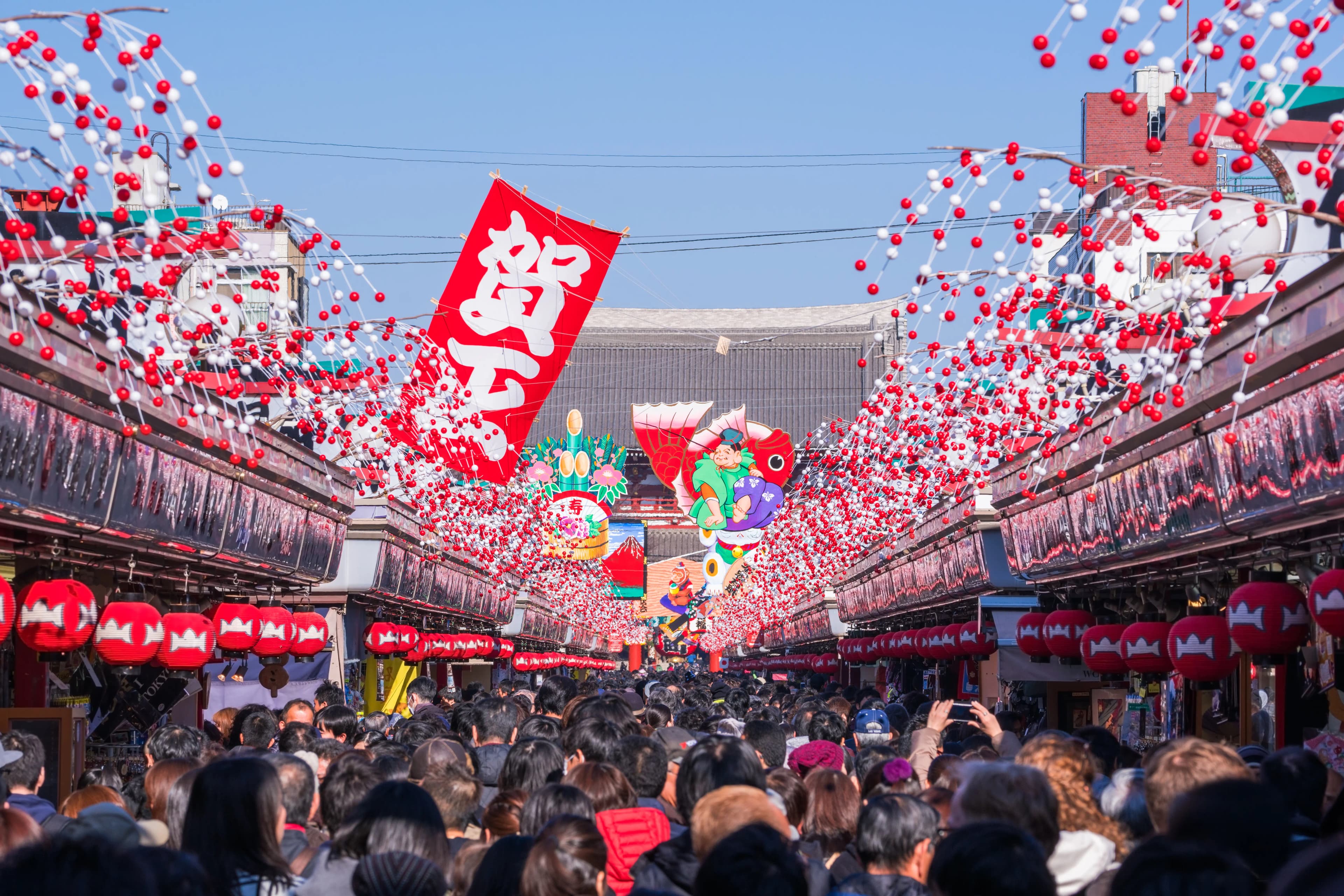
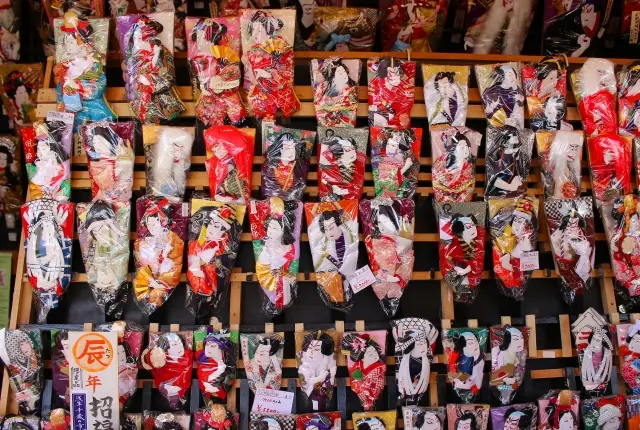
Senso-ji's Hagoita-ichi (羽子板市) is Asakusa's year-end market for hagoita, decorated wooden paddles used in a traditional New Year's game. Several dozen hagoita shops line the temple grounds.
In 2026, it runs for three days, from December 17 to 19. Hours are 9 am to 7:30 pm on Thursday the 17th and Friday the 18th, and the market wraps up at 7 pm on Saturday the 19th.
Friday the 18th is Osame-no-Kannon (納めの観音), the last ennichi (縁日) of the year. At Senso-ji, the ennichi is the monthly day dedicated to Kannon, the Buddhist deity enshrined at Senso-ji, and the temple says it draws especially large crowds of worshipers.
The market runs into the evening, but Senso-ji's Main Hall, known as the Hondo (本堂), closes at 5 pm. If you want to step inside the Main Hall, to look around or to pray, arrive before 5.
If you're still booking tickets and trains for a December trip, our list of things to book before a December trip to Japan covers what to lock in early.
Hagoita-ichi 2026 at a glance
Item | Details |
|---|---|
Name | Toshi-no-Ichi (歳の市), better known as Hagoita-ichi (羽子板市) |
Dates | Thursday, December 17 – Saturday, December 19, 2026 |
Market hours | 9:00 am–7:30 pm (until 7:00 pm on Dec 19) |
Venue | Senso-ji temple grounds, 2-3-1 Asakusa, Taito City, Tokyo |
Size | Several dozen hagoita shops |
Contact | Asakusa Tourism Federation (浅草観光連盟), +81-3-3844-1221 |
Hotels around Tokyo: availability and rates
Official info (in Japanese): Taito City's Toshi-no-Ichi (Hagoita-ichi) page, updated September 29, 2026
Day-by-day hours and the Main Hall
Date | Market | Main Hall | Note |
|---|---|---|---|
Thu, Dec 17 | 9:00 am–7:30 pm | 6:30 am–5:00 pm | Opening day |
Fri, Dec 18 | 9:00 am–7:30 pm | 6:30 am–5:00 pm | Osame-no-Kannon |
Sat, Dec 19 | 9:00 am–7:00 pm | 6:30 am–5:00 pm | Market closes 30 min earlier |
At Senso-ji, the 18th of every month is Kannon's ennichi. December 18 is the last one of the year, hence the name Osame-no-Kannon.
If you want to be there for Osame-no-Kannon, go on Friday the 18th and expect bigger crowds. On Saturday the 19th, the market closes at 7 pm, 30 minutes earlier than on the first two days.
Whichever day you pick, visit the Main Hall first and browse the market afterward, so the 5 pm closing doesn't cut your visit short.
Hagoita shops and the sanbon-jime clap
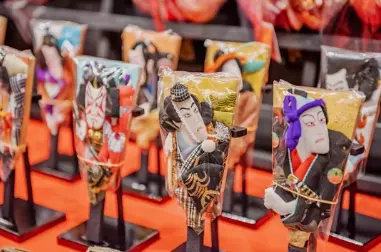
Hagoita are the paddles for hanetsuki, a New Year's game played with a shuttlecock. Traditional oshie hagoita (押絵羽子板) feature raised figures made from padded fabric. Kawari hagoita (変わり羽子板) are novelty paddles depicting current events, satire and popular entertainers.
Sizes vary a lot. The Tokyo Convention & Visitors Bureau's 2025 listing said around 10,000 oshie hagoita would be on display, from 15 cm (about 6 in) up to roughly 2 m (6.5 ft).
If you're flying home with one, check that it fits in your suitcase before you buy. Neither the temple nor the city lists prices, so ask the price of any paddle that catches your eye.
Senso-ji's event page shows a hagoita buyer being sent off with sanbon-jime (三本締め), a rhythmic three-part hand clap for good luck.
Origins: from year-end market to Hagoita-ichi
The market began in the Edo period as Toshi-no-Ichi, the "year-end market." Vendors selling New Year goods and lucky charms set up on the temple grounds on December 17 and 18 to catch the crowds coming for Kannon's ennichi.
Senso-ji says it was the biggest year-end market in Edo (old Tokyo), with vendors stretching from Asakusabashi all the way to Ueno. Toward the end of the Edo period, the number of hagoita sellers grew.
The shuttlecock looks like a dragonfly, an insect thought to eat the harmful bugs that bring illness, so the paddles came to be seen as lucky. Families also gave a hagoita when a girl was born.
Hagoita gradually became the market's main draw, and the year-end market came to be called Hagoita-ichi.
Getting to Senso-ji
The nearest station is Asakusa. From the Tokyo Metro Ginza Line, Tobu Skytree Line, Tsukuba Express or Toei Asakusa Line (Exit A4), it's about a 5–7 minute walk.
Senso-ji has no parking of its own and points drivers to nearby lots such as Kaminarimon Underground Parking (雷門地下駐車場). During the market, the train is the more practical option.
Coming back for the first temple visit of the new year? Our guide to hatsumode in Tokyo, with quieter times and all-night trains includes Senso-ji. For December 31 itself, see New Year's Eve in Japan: temple bells and all-night trains.
This article was translated from the original Japanese with AI assistance and reviewed by our editorial team. The Japanese version is authoritative.