Somewhere around day three of a Japan trip, everyone ends up needing something small: a folding fan because July is hotter than you expected, five more souvenirs for coworkers, or a way to cram everything back into your suitcase. The answer to all three is the same store — the 100 yen shop (hyaku-en shop, 100円ショップ). Most items cost 100 yen before tax, roughly 60 US cents at mid-2026 rates, and the quality is consistently better than the price suggests.
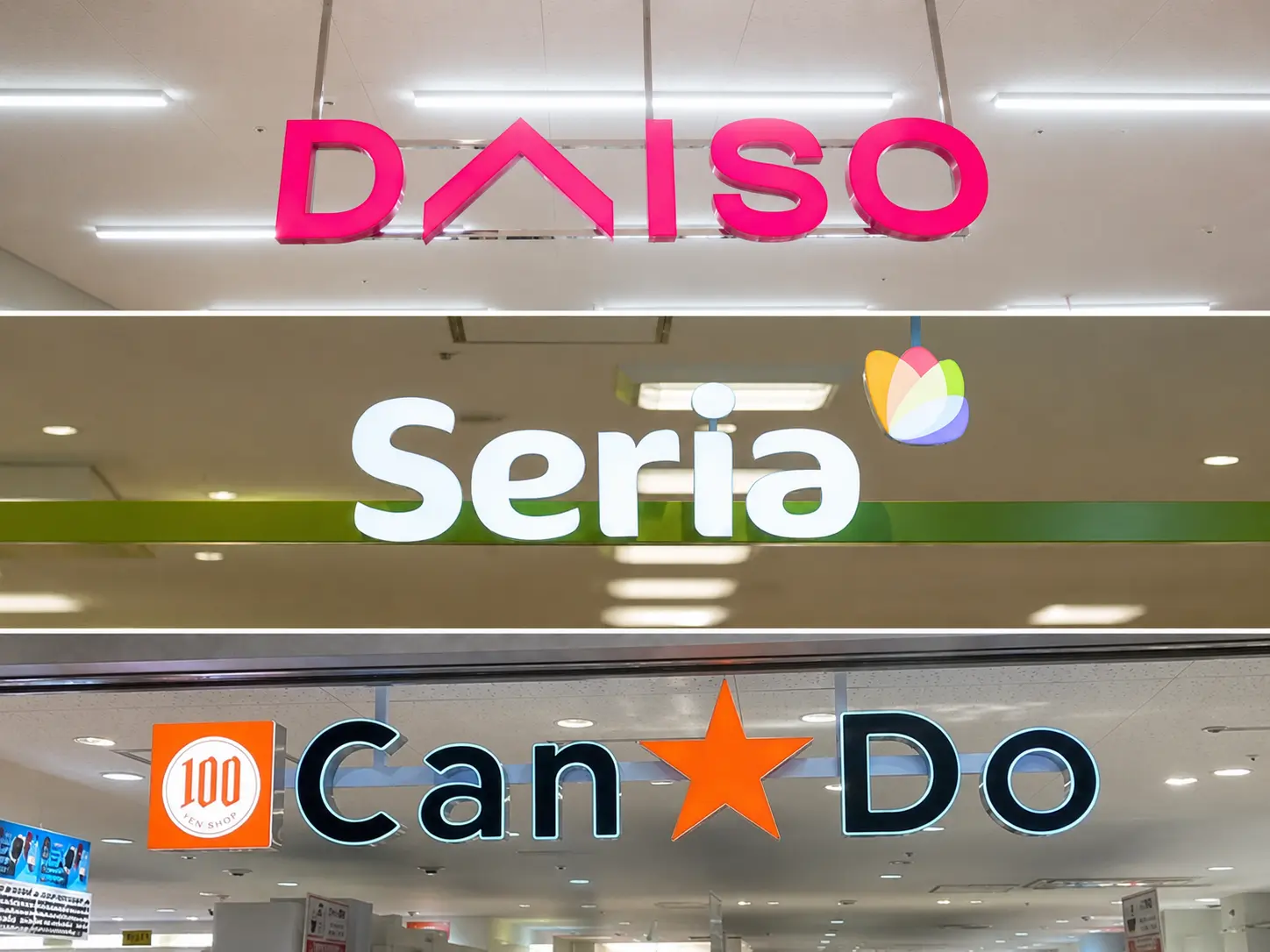
This guide covers Japan's three big 100 yen chains — Daiso (ダイソー), Seria (セリア), and Can Do (キャンドゥ) — what travelers actually buy there, and the honest answer to whether you can shop tax-free. For tax-free bulk shopping, see our Don Quijote (Donki) Tax-Free Shopping Guide.
How the pricing works
The math is simple. A 100 yen item rings up at 110 yen with Japan's 10% consumption tax, or 108 yen for food, which is taxed at 8%.
One thing to know before you fill your basket: not everything costs 100 yen. Daiso in particular also stocks items at 200, 300, and 500 yen (before tax). Price tags are clearly marked, so a quick glance saves you a surprise at the register.
The big three at a glance
Chain | Stores in Japan | Best for |
|---|---|---|
Daiso | 3,955 (end of Feb 2026) | Selection — one stop for everything |
Seria | 2,134 (as of June 2026) | Design — browsing homeware and stationery |
Can Do | 1,355 (end of Feb 2026) | Quick top-ups while you're out |
Store counts are the chains' own published figures. If you only visit one, make it a large Daiso.
Daiso: Japan's biggest, and the safest bet
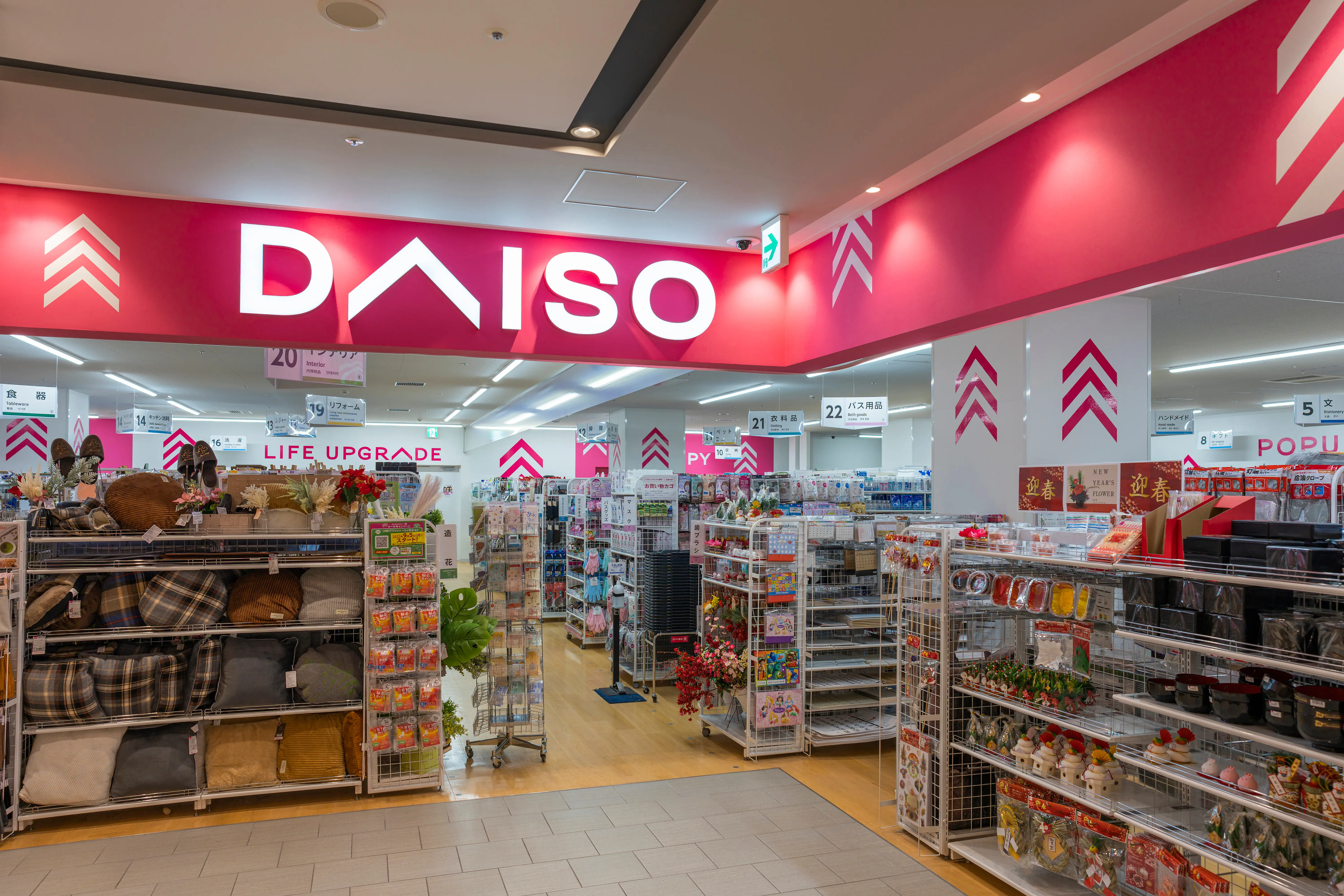
Daiso is the largest 100 yen chain in Japan, with stores in 26 countries and regions worldwide. The company behind Daiso, Daiso Industries (大創産業), also runs two sister brands — Standard Products and THREEPPY — and the three brands together passed 6,000 stores worldwide in June 2026. In practice, this means typing "Daiso" into your map app will pull up a store almost anywhere in Japan.
For souvenir hauls, head to a big store. In Tokyo, two sit right on the tourist trail: Daiso Harajuku on Takeshita Street (2nd floor of the Village 107 building, 9:30 a.m.–9:00 p.m.) and the store on the 6th floor of Marronnier Gate Ginza 2 (11:00 a.m.–9:00 p.m.).
The Ginza location is the one Daiso calls its global flagship. On the same floor you'll find Standard Products, the step-up sister brand centered on 300 yen (330 yen with tax), and THREEPPY, which does muted-tone homeware in what the brand calls "otona-kawaii" (adult-cute) style. Personally, I'd point anyone who likes simple, understated home goods straight to Standard Products — the wood-and-neutral-tone lineup punches well above its price.
Seria: the design-focused one that stays at 100 yen
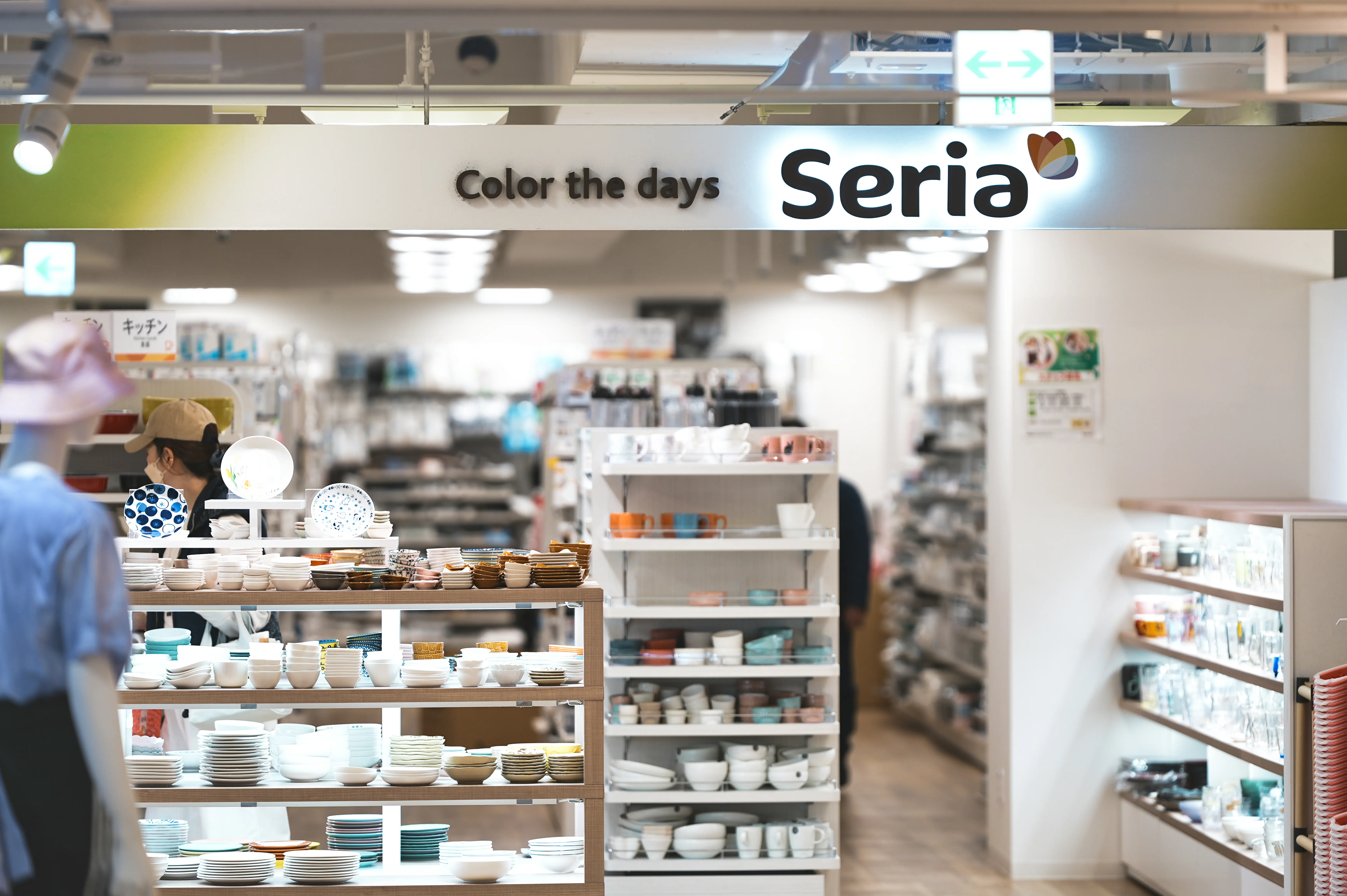
Seria is the purist of the three, sticking to 100 yen (110 with tax) as its core price. It has 2,134 stores across Japan as of June 2026.
It's quieter and less flashy than Daiso, but the dishes, storage boxes, and stationery lean toward soft colors and wood-grain textures, and half the fun is spotting things that don't look like they cost a dollar. If you want one nice thing for yourself rather than a bag of giveaways, Seria is the better browse.
Can Do: the one you pass anyway
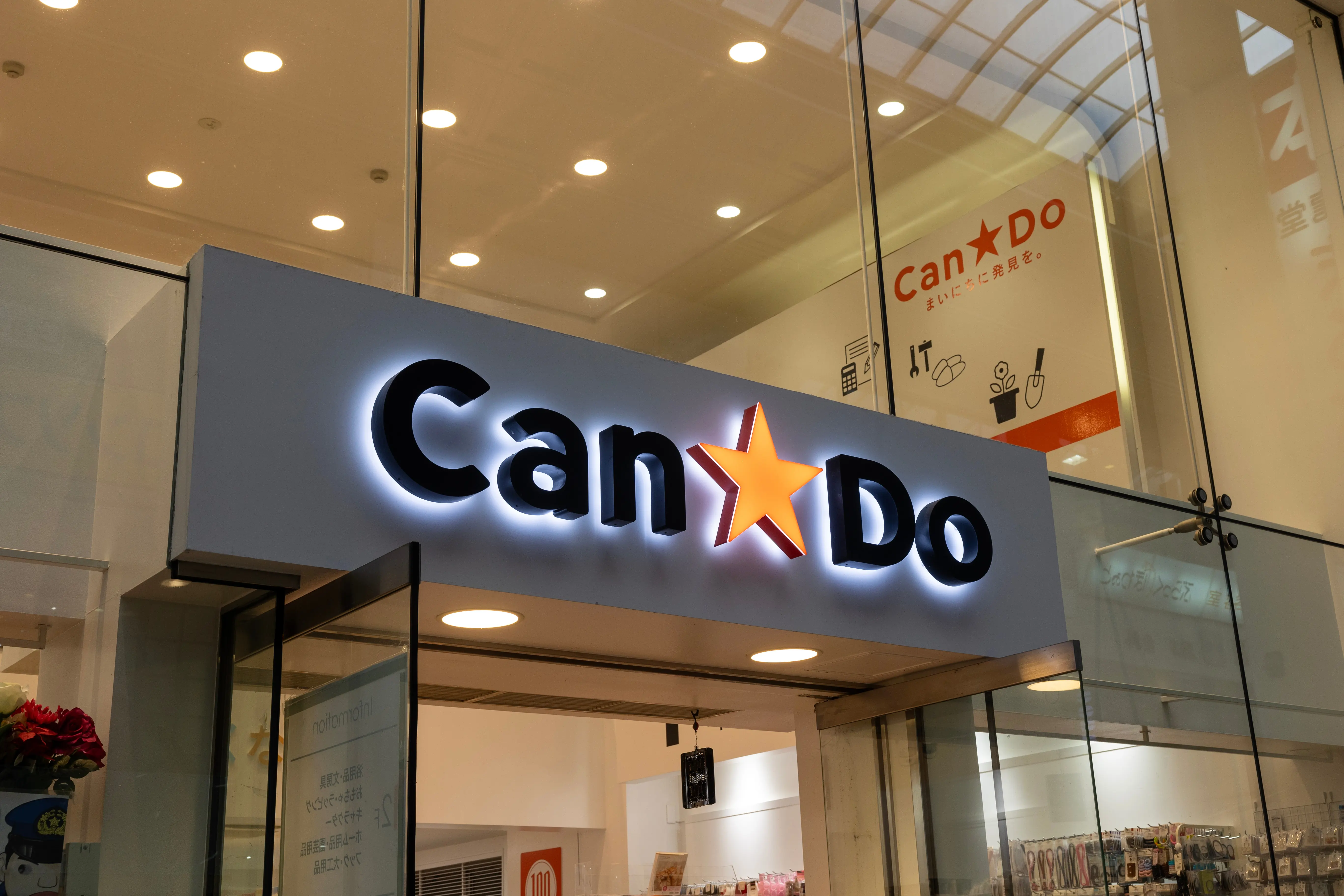
Can Do runs 1,355 stores (end of Feb 2026) and joined the AEON group, one of Japan's biggest retailers, in 2022. Its stores tend to be inside station buildings and shopping centers, which makes them easy to hit without changing your plans. Perfect for restocking small stuff mid-trip.
What travelers actually buy
For souvenirs, 100 yen shops are legitimately good. All of the below are staples stocked on Daiso's official online store, and everything packs flat or small.
Tenugui (手ぬぐい), traditional printed cloths: designs range from sushi (that one is 100% cotton, 90 × 33 cm) to the classic ichimatsu (市松) checkerboard. They weigh nothing, slide into any gap in your suitcase, and double as wrapping for bottles and gifts.
Folding fans (sensu, 扇子) and uchiwa: you'll use one on the walk back to the hotel in summer, and paired with an embroidered fan case it makes a respectable gift.
Travel compression bags and packing cases: the cheapest fix for a suitcase that no longer closes.
Stationery and tableware: Japanese pens, notebooks, chopsticks, and small plates are easy wins for both your desk and your gift list.
Seria and Can Do carry the same categories. My rule of thumb: Seria when design matters, Can Do when convenience does.
Can you shop tax-free at a 100 yen shop?
Short answer: don't count on it.
Japan's tax-free scheme has a minimum: 5,000 yen before tax, spent at the same store on the same day. At 100 yen an item, that's a 50-item basket. On top of that, none of the big three chains publish any real tax-free guidance on their official sites, and whether a given store participates varies location by location. If tax-free shopping is the point, do your bulk buying at Don Quijote or a drugstore instead.
One date to keep in mind: from November 1, 2026, Japan switches to a refund-style system. You'll pay the tax-included price at the register and get the consumption tax refunded after customs confirms your purchases when you leave the country. If your trip lands after that date, budget with tax included.
Paying and opening hours
Cashless payment is widely accepted at city-center stores. Daiso's Harajuku and Ginza stores, for example, list credit cards, e-money, and the major QR code apps like PayPay on their official store pages. Acceptance varies by store, though, so keep some cash for smaller neighborhood locations. For the full picture, see our payments guide, "Is Japan Cash-Only? How to Pay in Japan in 2026."
Plastic bags aren't free — Japan has charged for them at retail stores since July 2020. A foldable reusable bag makes a smart first purchase (Japanese stores call them "eco bags," エコバッグ); you'll use it the rest of the trip.
Hours vary by store. Even the two Tokyo Daiso stores above differ by an hour and a half in the morning, and stores inside malls follow the mall's hours. Go during the day rather than counting on a late-evening dash.
If you only have time for one stop
Make it Marronnier Gate Ginza 2. Daiso, Standard Products, and THREEPPY share the 6th floor, so in about an hour you can see the whole spectrum of Japan's 100 yen shops: from the 110 yen classics to the step-up homeware.
This article was translated from the original Japanese with AI assistance and reviewed by our editorial team. The Japanese version is authoritative.