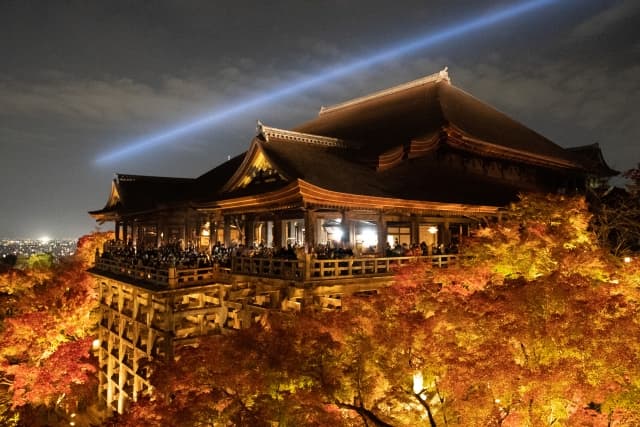
Every November, a handful of Tokyo shrines and temples fill up with rows of golden rakes glinting under the lanterns. This is Tori-no-Ichi (酉の市), the "Rooster Fair." People come to buy an ornate rake for luck and prosperity in the year ahead, then share a rhythmic hand-clapping ritual with the stall owner. With hands clapping, lanterns glowing, and walls of golden rakes all around, it's a scene that stays with you.
In 2026 the fair falls on just two days: Saturday, November 7 and Thursday, November 19. This guide covers what Tori-no-Ichi is, where to find it, and how to pick and buy one of those famous rakes. For another glimpse of Tokyo's traditional fair culture, read our guide to the summer Hozuki-Ichi Ground-Cherry Market in Asakusa.
Good to know: 2026 has no "third rooster" day, so the fair runs on just two dates this year rather than three.
What Tori-no-Ichi Is
Tori-no-Ichi is held on the "days of the rooster" in November at Ōtori shrines (鷲神社・大鳥神社) and a few temples. Vendors selling kumade (熊手), decorative bamboo rakes meant to "rake in" good fortune, pack the grounds, and crowds arrive to wish for a prosperous year in business.
There are several origin stories. At Asakusa's Ōtori Shrine, legend holds that the deity Yamato Takeru (日本武尊) prayed for victory before a campaign and, on his way home, hung his rake-shaped weapon on a pine tree at the shrine to celebrate the win. That day was a rooster day in November, and it became the shrine's festival day.
Next door, Chōkoku-ji (長國寺) temple enshrines Washi Myōken Bosatsu and has long observed the same rooster days with a fair of its own. That makes Tori-no-Ichi a rare festival celebrated at both a shrine and a temple at once.
The 2026 Dates
Tori-no-Ichi lands on the days marked "rooster" in the traditional zodiac calendar. The dates shift every year, and some years have two rooster days while others have three.
In 2026, there are two:
- First rooster day (ichi-no-tori): Saturday, November 7
- Second rooster day (ni-no-tori): Thursday, November 19
The third rooster day would fall in early December, so 2026 has no "third rooster" (san-no-tori).
There is an old saying that "years with a third rooster day see more fires." It is folklore rather than fact, often read as a seasonal warning about dry winter air and more open flames indoors. Since 2026 has no third rooster day, the saying does not apply this year, but it is still a fun piece of Tori-no-Ichi lore to know.
Where to Find It
More than a dozen sites hold Tori-no-Ichi within Tokyo alone. Here are the largest and most visitor-friendly. The dates are the same everywhere (Nov 7 and 19), but the hours and atmosphere differ from place to place.
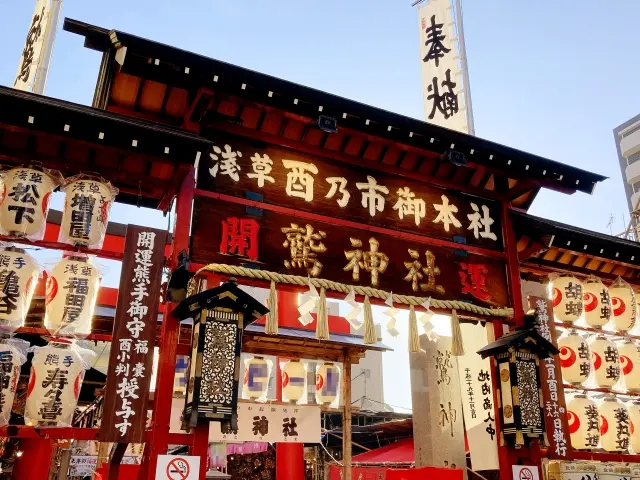
Asakusa Ōtori Shrine & Chōkoku-ji (Senzoku, Taitō Ward) is the best-known birthplace of the fair. Rake sellers spill across the adjacent shrine and temple until you can barely tell where one ends and the other begins. The market runs the full 24 hours of each rooster day, from midnight to midnight. On the eves (Nov 6 and 18, from 11:15 p.m.) there is a preliminary rite, but attending it requires an advance reservation.
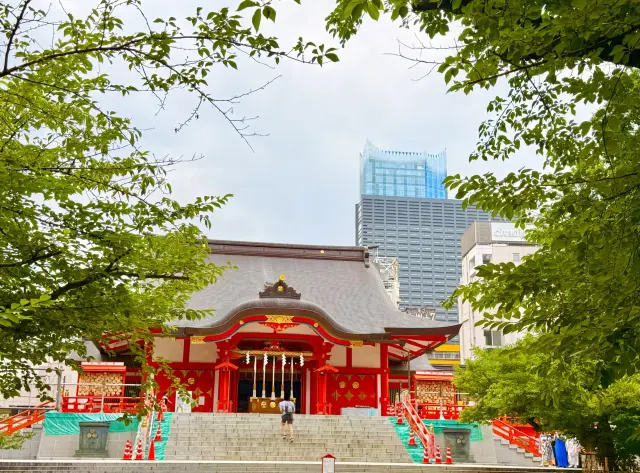
Shinjuku Hanazono Shrine (Shinjuku Ward) hosts its Ō-tori-sai right in the middle of the entertainment district. Alongside the rake sellers, food vendors line the surrounding streets on both fair days (November 7 and 19), and the shrine is also known for its rare misemono-goya sideshow tents, a form of entertainment that has all but vanished in Japan. The nearest station is Shinjuku-sanchōme, with Shinjuku and Seibu-Shinjuku stations also within walking distance.
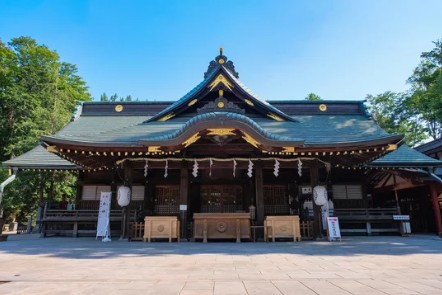
Fuchū Ōkunitama Shrine (Fuchū City) is often counted among the Kantō region's three great Tori-no-Ichi fairs, alongside Asakusa and Shinjuku. Rake and food vendors fill its spacious grounds, giving it a calmer feel than the downtown fairs. Other Ōtori shrines around the city, such as Meguro Ōtori Shrine (Meguro Ward), hold the fair as well.
How to Choose and Buy a Kumade
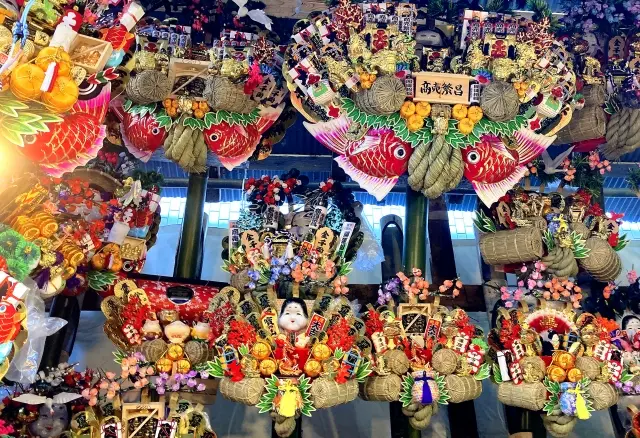
The star of Tori-no-Ichi is the kumade, a bamboo rake dressed up with lucky charms: the Seven Lucky Gods, smiling Okame masks, gold coins, and rice bales. It is a symbol of prosperity, likened to a tool that rakes in both fortune and customers.
Prices span a wide range. A palm-sized "mame" rake runs around 1,000 yen, while the popular mid-size ones sell for roughly 10,000 to 50,000 yen, and the grandest can reach several hundred thousand yen. Tradition says that once you start buying a kumade, you should choose a slightly larger one each year to symbolize the steady growth of your business.
The price of a kumade is settled by haggling, as it has been for generations. You talk the seller down, then leave the discount behind as a "goshūgi" tip for the shop. That has long been considered the stylish way to buy: both sides walk away feeling they shared the luck.
Once the deal is done, the shop staff sends you off with a lively hand-clapping ritual, chanting for a safe household and a thriving business as everyone claps in unison. The exact clapping pattern varies from shop to shop. Even visitors can join in: pick up one small rake you like and you'll get the send-off too.
Other Lucky Charms
Beyond the rakes, the fair offers a few more good-luck items.
- Kakkome (a rake amulet): a tiny bamboo rake tied with rice ears and a paper charm. The name plays on "raking in" luck, and you can pick one up at the shrine or temple office for a small offering. It suits anyone who finds a full-size rake a bit much for a first visit.
- Yatsugashira (a taro variety): a single root that sprouts many shoots. The character for "head" in its name symbolizes advancement, while its many shoots represent hopes for a flourishing family line.
- Kirizanshō: a chewy rice cake flavored with Japanese pepper (sanshō) and cut into short strips. Because no part of the pepper plant goes to waste, it is considered auspicious.
Many of these small charms start at a few hundred yen, which makes them easy souvenirs.
Before You Go
Tori-no-Ichi comes alive after dark, and Asakusa and Shinjuku in particular draw huge crowds every year. If you would rather avoid the crush, arrive in the early evening.
Plan to pay in cash. The rake sellers and food vendors generally take cash, and while some accept cashless payment, it varies by shrine and by shop, so carrying yen is the safe bet.
Photograph the grounds and the market freely, but keep out of the way of worshippers and sellers. Photography rules may be unclear at places such as Hanazono Shrine's sideshow tents. Ask before photographing people or performers, and put the camera away if you are unsure.
When you are ready to part with a rake a year later, you can bring it to the temple or shrine's collection point at the next Tori-no-Ichi. Receiving a new rake as you return the old one is part of the yearly rhythm, and honestly half the fun.
This article was translated from the original Japanese with AI assistance and reviewed by our editorial team. The Japanese version is authoritative.