Walk around Japan in summer and you'll start spotting a red banner with a single character — 氷 (kōri, "ice") — fluttering outside shops.
That's the signal for kakigori (かき氷). You'll find it everywhere from early summer through the end of the season: festival stalls, old back-street coffee shops, and specialty parlors with lines out the door.
But here's the thing. The 300-yen cup from a festival stall and the 1,800-yen bowl from a specialty shop are, honestly, two different foods. So here's my advice up front: get a simple cup from a festival stall one day, then on another day sit down for a proper bowl of natural-ice shaved ice at a specialty shop. The difference will surprise you.
This guide covers how to read the flavors, why specialty kakigori is so impossibly fluffy, where to eat it, and when the season peaks. If you're building a summer itinerary, our "Guide to Japanese Summer Festivals 2026" is a good place to map out the bigger picture first.
Why "shaved ice" doesn't quite capture it
Yes, kakigori translates to "shaved ice," but it's a world away from the Hawaiian or American version.
Good kakigori is shaved so thin that it melts the instant it hits your tongue — less crunchy snow cone, more cloud. That texture is the whole point, and it's what makes the Japanese version special.
The history runs deep. Kakigori goes back to the Heian period (794–1185). In The Pillow Book (Makura no Sōshi), the court writer Sei Shōnagon describes shaved ice drizzled with sweet syrup and served in a new metal bowl as one of life's elegant things.
Back then, ice was cut in winter, stored in an icehouse (氷室, himuro) through the summer, and reserved for the imperial court — a genuine luxury. It only reached ordinary people in the Meiji era (1868–1912), once ice factories and ice-shaving machines became widespread.
The "ice" banner is your signal
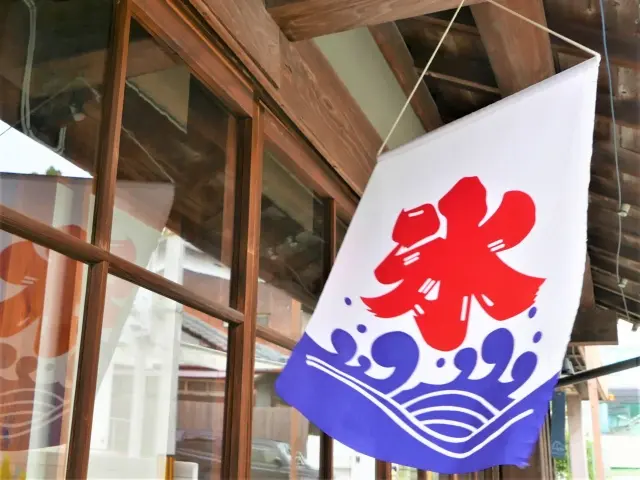
Shops serving kakigori hang a banner with the red character 氷 (kōri) over a pattern of waves. It's called a kōribata (氷旗, "ice flag"), and when you see one, it means: shaved ice served here.
The banner has a real backstory. In the Meiji era, to manage the hygiene of ice, sellers and producers who passed inspection were required to display a flag showing they were certified — and that's the origin most people point to for the kōribata.
The wave pattern is often linked to the days when natural ice was shipped to cities by boat. These days it's just a marker, but hunting for that red flag in a summer town is a small pleasure of its own.
Decoding the flavors
The syrup names on the menu are where most visitors freeze up. Learn a few and ordering gets much easier.
Flavor | What it is |
|---|---|
Ichigo (いちご) | The classic. |
Uji (宇治) | Matcha syrup from Uji, Kyoto's famous tea region. |
Uji Kintoki (宇治金時) | Matcha syrup topped with sweet azuki (red bean) paste. |
Milk Kintoki (ミルク金時) | Azuki bean paste with sweetened condensed milk |
Blue Hawaii (ブルーハワイ) | Blue syrup with no fixed fruit flavor — a tropical mix that varies by shop |
Lemon / Melon | Straightforward fruit flavors, easy for kids |
If you can't decide, start with ichigo or Uji Kintoki. The Kintoki balances the bitterness of matcha against the sweetness of red beans, and it tastes unmistakably Japanese in a single bowl.
Blue Hawaii wins on looks, but just know the flavor varies a lot from shop to shop.
That fluffy texture often means "natural ice"
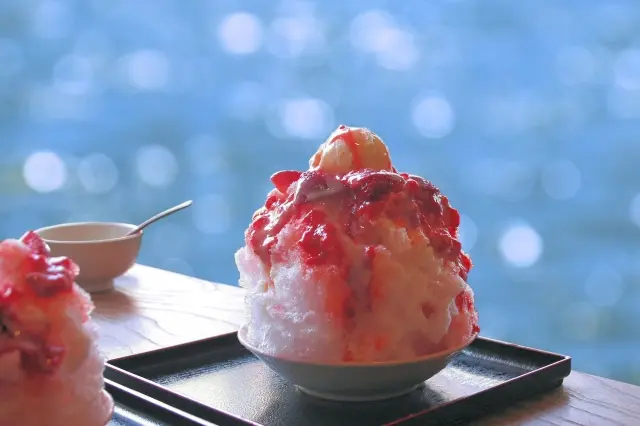
One reason specialty kakigori feels like eating a cloud comes down to the ice itself. Shops that use "natural ice" (天然氷, tennen-gōri) are considered a class apart.
Natural ice is frozen slowly outdoors in the dead of winter. It has few impurities and is hard and slow to melt, which lets it be shaved into impossibly thin ribbons — a completely different mouthfeel from freezer ice.
Only a handful of producers still make it, and several of them cluster in Nikkō, in Tochigi Prefecture. There's also a long-established maker in Nagatoro, in the Chichibu area of Saitama Prefecture, dating back to the Meiji era.
Specialty shops that skip natural ice usually go with junpyō (純氷), a clear, slowly-frozen factory ice. Junpyō is still far better than home freezer ice and makes a delicious bowl. The simple version: natural ice tastes mellow, junpyō tastes clean and crisp.
Where to try natural-ice kakigori
If you're going to eat kakigori in Japan, a bowl of natural ice is worth seeking out. Here are a few well-known shops by region. All of them are popular, with crowds, occasional unscheduled closures, and seasonal changes to their hours — always check the official website or social media before you go.
Himitsudo (ひみつ堂), Yanaka, Tokyo
A famous shop using natural ice from Nikkō. Known for long summer lines
Asami Reizō (阿左美冷蔵), Nagatoro / Chichibu, Saitama
A kakigori shop run by a Meiji-era natural-ice producer. Go for the ice itself
Yondaime Tokujirō (四代目徳次郎), Nikkō, Tochigi
Direct outlet of an ice house that makes natural ice in the Kirifuri highlands. Eat it at the source
In Tokyo, Himitsudo in Yanaka is the most accessible place to start. If you want to visit the source of the ice itself, it's worth the trip out to Nikkō or Chichibu for a bowl you can only get where it's made.
Where to eat it: from stalls to parlors
Natural-ice parlors are the special end of the spectrum, but kakigori is also an everyday food. Where you eat it changes both the price and the experience. For a quick fix, even the cup of shaved ice from a convenience store holds up surprisingly well (see our "Complete Guide to Japanese Convenience Stores").
Where | Rough price | Good for |
|---|---|---|
Festival & fair stalls | ¥300–500 | Soaking up the atmosphere. |
Convenience stores & supermarkets | ¥150–400 | A cheap, quick cool-down back at the hotel |
Specialty parlors | ¥1,000–2,000 | The real fluffy experience, worth doing once |
Japanese cafés & sweets shops | ¥800–1,500 | Sitting down and taking your time |
Stall kakigori is one of the joys of a summer festival or fair.
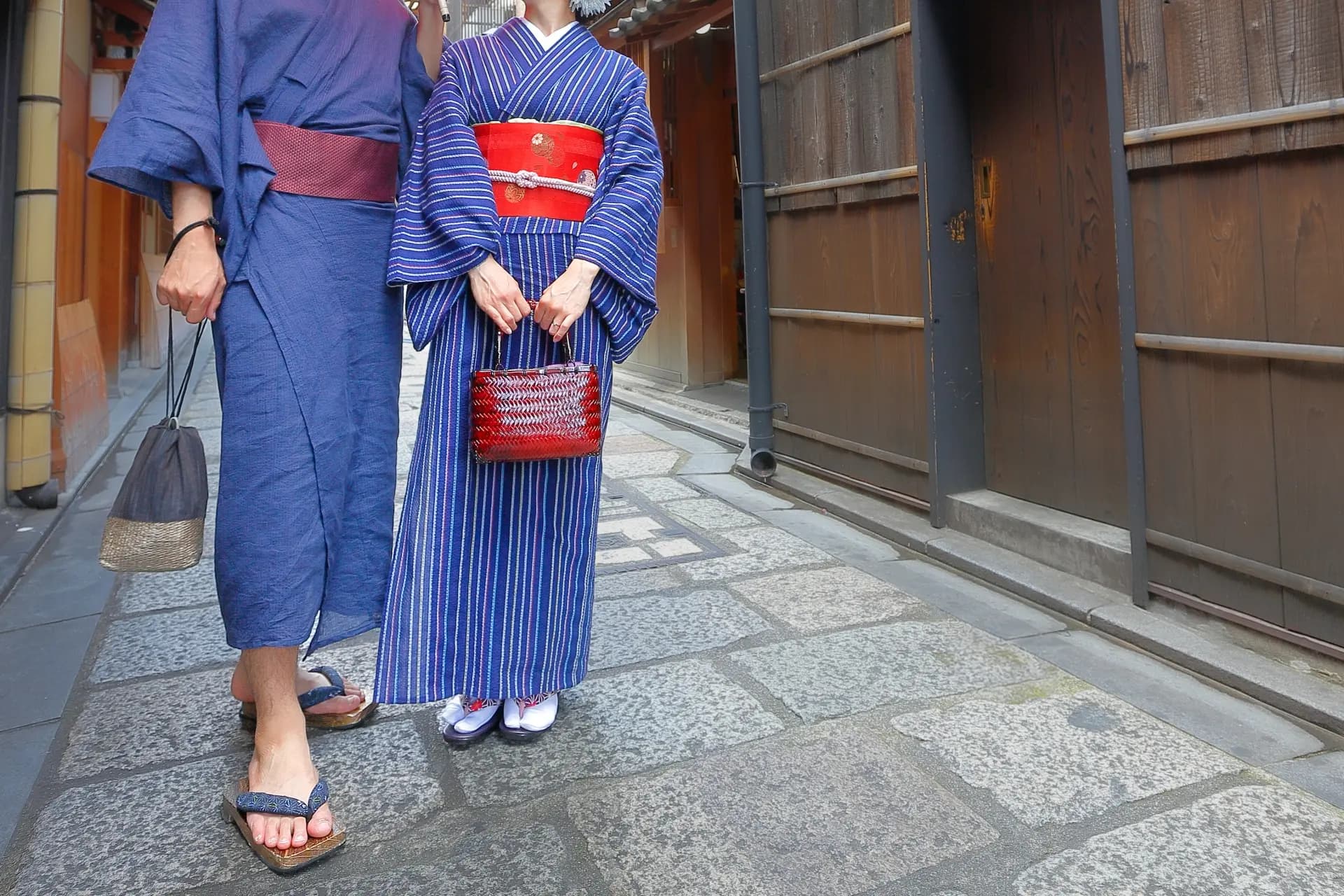
If you're going in a yukata, a cup of shaved ice in hand suits the scene perfectly — our "Summer Yukata Guide 2026" covers how to wear one, and the "Guide to Japanese Summer Festivals 2026" covers the festivals themselves.
You'll find the stalls at fireworks shows too, so pair it with the "Tokyo Fireworks Guide 2026" when you plan your summer nights.
When's the season?
Kakigori is summer food, full stop. You'll see the stalls and the ice banners on the streets roughly from early summer through the end of September, with the peak running from the end of the rainy season through August — the hottest stretch is when it tastes best.
The popular specialty shops get longer lines as the heat climbs. Weekend afternoons are the worst, so aim for right after opening in the morning. A few well-known parlors do stay open year-round, but a bowl eaten while the whole town is in summer mode still hits differently.
How to eat it, and a few things to know
There's a little technique to it. Spread the syrup through the whole bowl, not just the top, so the flavor doesn't fade halfway down. And eat it before it melts — that cloud-like texture is a race against the clock.
Eat too fast, though, and you'll get that sharp ache behind your forehead. It's a real, documented thing: brain freeze in English, "ice-cream headache" (アイスクリーム頭痛) in Japanese. It passes in under a minute, but if you'd rather skip it, just slow down.
One practical note: festival stalls are cash-only, as a rule. Cards and IC transit cards usually won't work, so keep some coins on you.
If you have dietary restrictions, watch the toppings. Condensed milk is dairy, and azuki red-bean paste is a legume — both turn up in Uji Kintoki and Milk Kintoki. If you need to avoid them for allergies or religious reasons, go for a plain syrup-only bowl, or just ask the staff.
July 25 is "Kakigori Day"
Japan has a Kakigori Day, and it falls on July 25. It's said to have been set by the Japan Kakigori Association, drawing on two things: a play on natsu-gōri (夏氷, "summer ice"), which can be read as the numbers 7-2-5 (na-tsu-go), and the fact that on July 25, 1933, the city of Yamagata logged what was, at the time, the highest temperature ever recorded in Japan.
In other words, the hottest stretch of the year is exactly when kakigori comes into its own. You don't need to wait for that one date, though. If you're traveling Japan in summer and you spot that red 氷 banner, go in for a bowl. Start with the humble cup from a stall, and work your way up to a natural-ice parlor. It's the coolest way to enjoy a Japanese summer — in every sense.
Read next
Guide to Japanese Summer Festivals 2026 — how to enjoy the stalls and when the major festivals happen
Summer Yukata Guide 2026 — how to wear a yukata, and where to rent one in Asakusa
Tokyo Fireworks Guide 2026 — dates and access for the major shows worth traveling for
Complete Guide to Japanese Convenience Stores — the cup kakigori and ice cream are cheap and good, too
This article was translated from the original Japanese with AI assistance and reviewed by our editorial team. The Japanese version is authoritative.