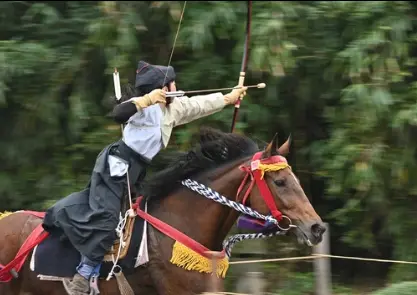
Every November, one of Tokyo's calmest forests turns into a running track for horses. At Meiji Jingu, archers in full hunting costume gallop down a straight course and loose arrows at wooden targets as they pass. This is yabusame (流鏑馬), mounted archery, and it's held as part of the shrine's Autumn Grand Festival. In past years, anyone could watch for free, and the shrine is a short walk from Harajuku and Omotesando.
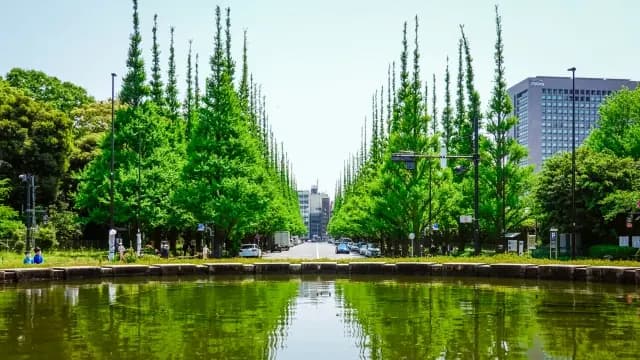
This guide explains when yabusame takes place in 2026, where in the grounds to find it, and what to confirm before you go. If you are already planning an autumn trip to Tokyo, it pairs naturally with the shrine's shichi-go-san season and the nearby ginkgo avenue.
Yabusame is held on November 3 in the afternoon, on the lawn on the west side of the shrine grounds. Viewing is normally free; the exact 2026 start time, though, won't be confirmed until the shrine posts its schedule in early October.
The 2026 date: Nov 3 only
Meiji Jingu's annual grand rite (Reisai) falls on November 3 every year, the birthday of Emperor Meiji. In 2026 that is a Tuesday and a national holiday, Culture Day. The wider Autumn Grand Festival runs from November 1 to 3: November 1 is the Enshrinement Anniversary and November 3 is the main rite.
Yabusame is performed on that main day, November 3. It is presented by the Japan Equestrian Archery Association (Dai Nippon Kyubakai, of the Takeda school), and the association's 2026 calendar already lists "November 3 — Meiji Jingu yabusame," so it is set to go ahead.
One caveat: the detailed 2026 timetable, with the exact start time of each event, has not been published yet as of late September. The shrine usually posts it in early October, so check the latest notice before you head out if you want to plan your visit around the event.
Where to watch, and roughly what time
The archery takes place on the grassy field on the west side of the grounds, along the west approach. The course runs about 200 meters and has three targets, and each rider shoots at them in turn while riding at speed.
Because the 2026 times are not out yet, here is 2025 as a guide: practice runs began after 9 a.m., and the mounted shooting itself started around 1 p.m. The morning practice is worth catching too, when the costumed riders warm up their horses. Give yourself plenty of time to reach the west lawn, and confirm the exact hour once the shrine posts the timetable.
Neither the shrine nor the archery association lists paid seating or admission tickets. Viewing has been free in past years, but arrangements can change, so check the current notice before you go.
The other performances on Nov 1–3
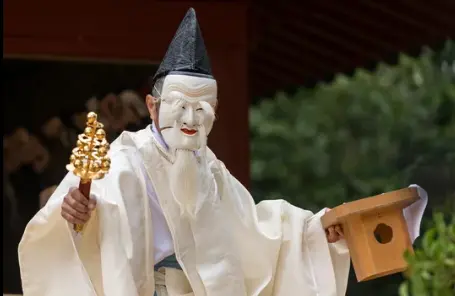
On the same day as the yabusame, and on the two days before it, traditional performing arts and martial arts are staged in front of the main hall and out on the grounds. The following is a sample from 2025, with that year's times and places; the shrine will confirm the 2026 schedule in its official notice.
- November 1: Noh and Kyogen (noon), Sankyoku classical music (3:45 p.m.) — stage in front of the main hall
- November 2: Bugaku court dance (11:45 a.m.), classical song and dance (2:45 p.m.) — stage in front of the main hall
- November 3: Aikido demonstration (9 a.m.), classical martial arts (10 a.m.), Momoteshiki ceremonial archery (11 a.m., lawn east of the treasure hall), yabusame (1 p.m., west approach lawn), Satsuma biwa (3 p.m., outer hall of worship)
All of these are free to watch. You don't get many chances to see court dance or classical music performed on a shrine stage, so it's well worth pairing the performances in front of the main hall with the yabusame. November is also shichi-go-san season, when families come to pray for their children (ages three, five, and seven), and you'll see them in kimono around the grounds. If your trip overlaps, find out when it takes place and where to experience it in Tokyo: Shichi-Go-San 2026: When It Is, and Tokyo's Famous Shrines.
Getting in: hours and fees
You can visit Meiji Jingu as usual during the festival. Entry to the grounds is free — no ticket, no advance booking.
The gates open and close on a schedule that shifts month by month with sunrise and sunset. In November the grounds open at 6:10 a.m. and close at 4:10 p.m. The early close catches people off guard, so if you want to wander the grounds after the afternoon archery, plan backward from closing time.
Only the inner garden, Meiji Jingu Gyoen, has a separate fee: a 500 yen upkeep donation (open 9 a.m. to 4 p.m. in November). The garden is famous for its irises in early summer, but the autumn color is lovely too. If you want a longer autumn walk nearby, you can also head to the golden ginkgo avenue in the same district: Jingu Gaien Ginkgo 2026: Peak Mid-to-Late November, a Free Golden Tunnel.
Access and what to bring
Meiji Jingu has three approach entrances, each with its own nearest station.
Entrance | Nearest station |
|---|---|
South approach (Harajuku side) | JR Harajuku Station / Meiji-jingumae 'Harajuku' subway station |
North approach | Kita-sando subway station / JR Yoyogi Station |
West approach | Sangubashi Station (Odakyu line) |
The yabusame field is on the west side, so Sangubashi Station (west approach) is closest. That said, first-timers may prefer to enter from the south approach at the big torii gate, pay respects at the main hall, and walk over from there. It is about a 10-minute walk from any entrance to the main hall, and then a bit further west to the lawn.
If you're coming from out of town and want to catch the morning practice, you can check hotel availability and rates in Tokyo around Harajuku and Yoyogi.
A few last things for the day itself. This is an outdoor event, so in past years it has gone ahead in light rain, with performances moved to a different spot; in bad weather some events are canceled. If the forecast looks rough, check the official notice in the morning before you leave.
Casual photos as a visitor are fine. Filming for coverage or promotion needs permission, and so do portrait shoots with a hired professional photographer. If you bring a tripod or other bulky equipment, be mindful of the people around you.
Early November mornings and evenings in Tokyo are chilly, often around 10°C, while afternoons can feel mild in the sun. Bring a light layer to stay comfortable while you wait for the archery to begin.
This article was translated from the original Japanese with AI assistance and reviewed by our editorial team. The Japanese version is authoritative.