
Visit a Japanese shrine in November and you will almost certainly see them: tiny children in bright kimono or formal hakama, holding a long paper bag and posing with proud parents and grandparents. This is Shichi-Go-San (七五三, literally "seven-five-three"), a celebration for children turning three, five, and seven. Families dress the children up and visit a shrine to give thanks and pray for their healthy growth.
Come across one of these celebrations on your trip, and you are witnessing a real family milestone. Here is what Shichi-Go-San is, when it falls in 2026, which Tokyo shrines are known for it, and the one thing every visitor should get right: the photo etiquette. New to visiting shrines? Our guide to goshuin, Japan's shrine and temple stamps, also walks through the basic etiquette.
Shichi-Go-San officially falls on November 15, but most families visit on the weekends around it. Mid-to-late November mornings are your best chance to see it.
What Shichi-Go-San Means (Ages 3, 5, and 7)
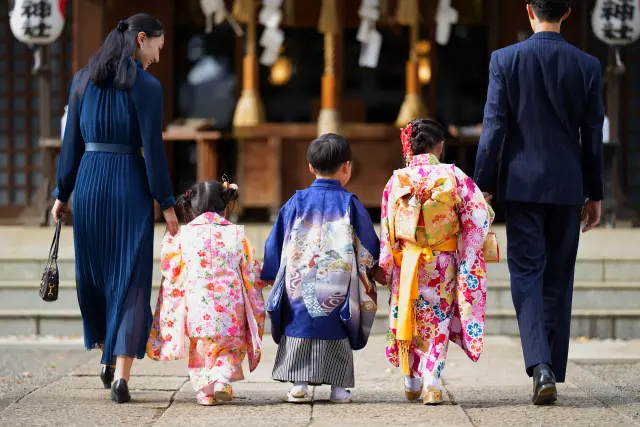
Shichi-Go-San grew out of three separate coming-of-age rituals from the Heian period (794–1185), which over the centuries merged into a single celebration. Each age still carries its own original meaning.
- Age 3, Kamioki (髪置): for both boys and girls, the day they traditionally began to grow out their hair.
- Age 5, Hakamagi (袴着): a boy's first time wearing the formal hakama trousers.
- Age 7, Obitoki (帯解): a girl swapping the simple cords of early childhood for a proper adult obi sash.
So in practice, three-year-olds of either sex, five-year-old boys, and seven-year-old girls are the ones celebrated. Families once counted a child's age the old way (kazoedoshi), but today most simply use the child's actual age, and either is considered fine.
Behind the custom is a sobering history: infant mortality was once high, and a child's survival was thought to rest in the hands of the gods. Shichi-Go-San is a way of giving thanks that a child has made it this far, and of wishing them well for the years ahead.
2026 Dates and the Rokuyo Calendar
The official date is November 15 every year, and in 2026 that falls on a Sunday. In practice, families no longer insist on the 15th itself. Most simply visit on a weekend or holiday from mid-October through late November.
When choosing a day, some families still check the rokuyo, the traditional six-day calendar of lucky and unlucky days. In November 2026, the "taian" (most auspicious) days are the 6th, 10th, 16th, 22nd, and 28th. The taian dates that fall on a weekend, Sunday the 22nd and Saturday the 28th, are the ones most likely to be busy at well-known shrines.
The official date, November 15, actually falls on "butsumetsu," considered the least lucky day in the rokuyo. But Shichi-Go-San has no real connection to those omens, and plenty of families still visit on the 15th because it is the proper day.
To see the color and the kimono for yourself, visit a large shrine such as Meiji Jingu on a weekend morning in the second half of November. If instead you are visiting with your own child and want a calmer experience, a weekday morning is far quieter.
Shrines Known for Shichi-Go-San in Tokyo
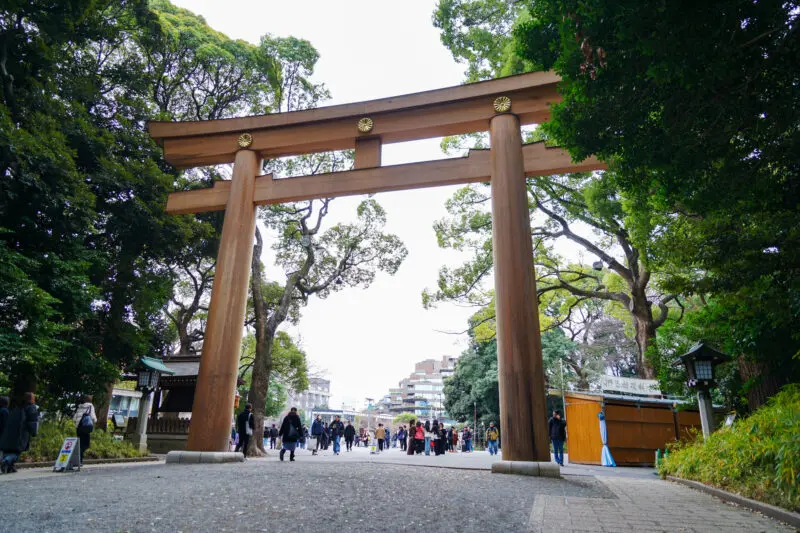
These Tokyo shrines are well known for Shichi-Go-San. The hours and offering amounts below reflect each shrine's standard, year-round information; they can change, so check the official site before you go.
Shrine | Reception hours | Offering (hatsuho-ryo) | Reservation |
|---|---|---|---|
Meiji Jingu (Shibuya) | 9:00–16:20 (gates close 16:10 in Nov; see below) | From ¥5,000 | Not needed (same day) |
Hie Jinja (Chiyoda) | 9:00–16:00 | Check official site | Not needed (same day) |
Suitengu (Chuo) | 8:00–15:00 | From ¥10,000 (a goodwill offering) | Not needed (same day) |
The nearest stations are Harajuku or Meiji-jingumae for Meiji Jingu, Akasaka or Tameike-sanno for Hie Jinja, and Suitengu-mae for Suitengu.
At Meiji Jingu, the reception desk sits at the front of the Kaguraden hall, to the right of the main shrine. You can sign up for a Shichi-Go-San blessing on arrival, and during busy periods families are shown in one group at a time.
One timing note: the hours in the table are year-round. In November, Meiji Jingu's gates close earlier, at 16:10 (16:00 in December), so the desk stops taking families well before that. Aim to finish at the desk by mid-afternoon to be safe.
Hie Jinja lets you register online in advance to skip filling out forms on the day. Suitengu, associated with safe childbirth and children's well-being, gives chitose-ame and other keepsakes to families who receive a blessing. Beyond Tokyo, big shrines like Dazaifu Tenmangu in Fukuoka hold Shichi-Go-San prayers too; if there is a major shrine near where you are traveling, its official site is worth a look.
What You'll See: Chitose-Ame and Formal Kimono

The first thing you notice is the children's clothing. Boys wear haori jackets and hakama; girls wear kimono, with seven-year-olds tying a full adult obi. Many families visit a photo studio first to have the children's hair styled and kimono fitted, so the shrine grounds look noticeably more festive than usual.
The other signature sight is chitose-ame (千歳飴), or "thousand-year candy." It is a thin, long stick of red-and-white candy, and the shape carries a wish for the child to live a long and healthy life, as long as the candy itself. It comes in a cheerful bag decorated with cranes, turtles, and pine, all symbols of longevity, and most shrines give it to children after the blessing.
Photo Etiquette for Visitors
This is the part worth getting right. Shichi-Go-San is not a tourist event; it is a private family celebration. The children are adorable and you will want a photo, but pointing a camera at someone else's child without asking is best avoided. Many families also hire their own photographer, so a group you are watching may be in the middle of a paid shoot, which is one more reason to keep your distance.
If you would love a shot of a child in kimono, ask the family first, or keep it to a wide shot where no single face is recognizable.
There is etiquette for shrine photos in general, too. The center of the approach path (the sando) is considered the gods' path, so avoid planting yourself in the middle for a photo and step to the side instead. Photography is often forbidden during prayers and inside the main hall, and rules differ from shrine to shrine, so follow the signs.
One practical note: November mornings and evenings can be cold, especially in tree-shaded shrine grounds. If you plan to linger, bring an extra layer. For temperatures and what to pack, see our guide on what to wear in Japan in autumn.
Joining In, or Just Passing Through
If you would like your own child to take part, you can rent a kimono and have them dressed professionally. Large photo studios such as Studio Alice offer packages that combine a commemorative photo shoot with kimono rental and professional dressing for the shrine visit.
Prices and seasonal offers change from year to year, so check the studio's official site for the latest packages.
And if you are simply passing through in November, a large shrine is worth a short detour to see families dressed in their finest.
This article was translated from the original Japanese with AI assistance and reviewed by our editorial team. The Japanese version is authoritative.
