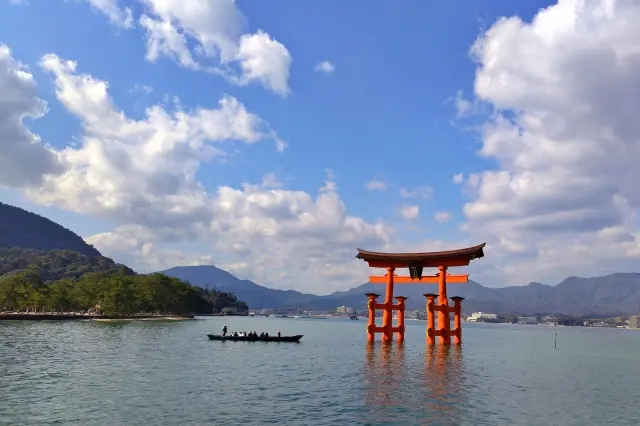
At high tide, the Great Torii of Itsukushima Shrine on Miyajima appears to float on the water. At low tide the sand is exposed and you can walk right out to its base. It is the same gate, but the scene changes completely depending on when you arrive.
This guide covers how to check the tides for your visit, which of the two ferries to take, the visitor tax, and the shrine's hours and fees.
Above a tide level of 250 cm the torii appears to float; below 100 cm you can walk up to it. Choose the view you want, then check the tide for your visit before setting out.
High tide or low tide: two views of the Great Torii
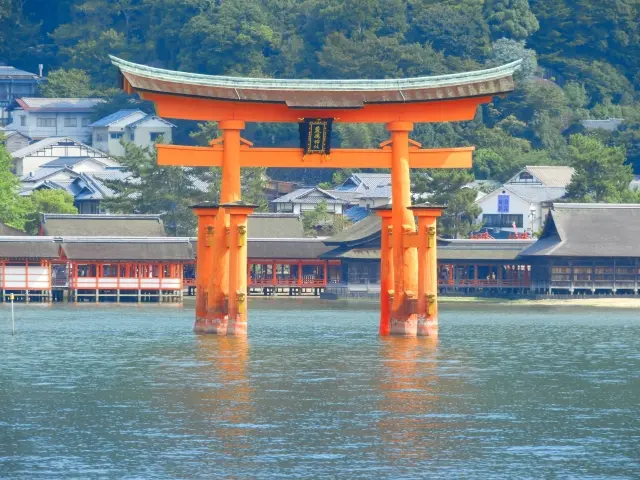
The view of the torii depends on the tide level at that moment. The Miyajima Tourist Association gives the thresholds as numbers, not just "high" and "low": above 250 cm the gate looks like it's standing on the sea, and below 100 cm the seabed around its feet is exposed.
Those figures are measured at Hiroshima Port. At Itsukushima Port, high and low tide come a little earlier, so don't plan around exactly 250 cm; allow some time on either side.
High and low tide each come twice a day, and the times shift slightly from one day to the next.
A morning high tide can give way to an afternoon low, so with half a day on the island you may catch both views: the torii floating at high tide and the exposed sand at low tide.
The current gate stands 16.6 meters tall. Its latest restoration ran from 2019 to December 2022, and the gate is fully visible again.
Reading the tide for your visit
Once you know which scene you are after, look up the tide for your date. On the Miyajima Tourist Association site, the hours when you can walk out appear as 大鳥居散歩 ("Great Torii walk"), and the hours when it floats as 海上社殿 ("shrine on the sea").
Both are listed by time of day. To plan further ahead, the same site has a yearly tide table, and the Japan Meteorological Agency's tide tables (select Hiroshima) work as well.
The key is to read the tide in centimeters rather than trusting the words "high" and "low." Some days a high tide never reaches 250 cm, and some days a low tide never drops below 100 cm.
Two ferries — and the JR-only "Otorii route"
You reach Miyajima by ferry from Miyajimaguchi. From Hiroshima Station, the trip takes about 45 minutes and ¥620 via the JR Sanyo Line and ferry, or about 80 minutes and ¥440 via the Hiroden tram and ferry.
Both totals include the ferry fare. The ¥100 visitor tax is extra.
Two companies run the crossing: JR West Miyajima Ferry and Miyajima Matsudai Kisen. The fare is the same on both, at ¥200 one way for adults and ¥100 for children, and the ride takes about 10 minutes. The two piers sit right next to each other at Miyajimaguchi.
Only JR West Miyajima Ferry runs the "Otorii route" (Great Torii route). Its departures from Miyajimaguchi between 9:10 and 16:10 pass close to the Great Torii, so if you want to see it up close from the water, take a JR boat in that window.
The Otorii route may not operate on some tides, so check with JR West Miyajima Ferry on the day.
JR West Miyajima Ferry | Miyajima Matsudai Kisen | |
|---|---|---|
One-way (adult) | ¥200 | ¥200 |
Crossing time | about 10 min | about 10 min |
"Otorii route" | Yes (9:10–16:10) | No |
JR Pass / Seishun 18 | Valid | Not valid |
If you are traveling on a Japan Rail Pass or a Seishun 18 ticket, only JR West Miyajima Ferry is covered; Matsudai is not, so board at the JR pier. The ¥100 visitor tax is never covered by the pass; you pay it when you board.
The Miyajima visitor tax: ¥100 per person
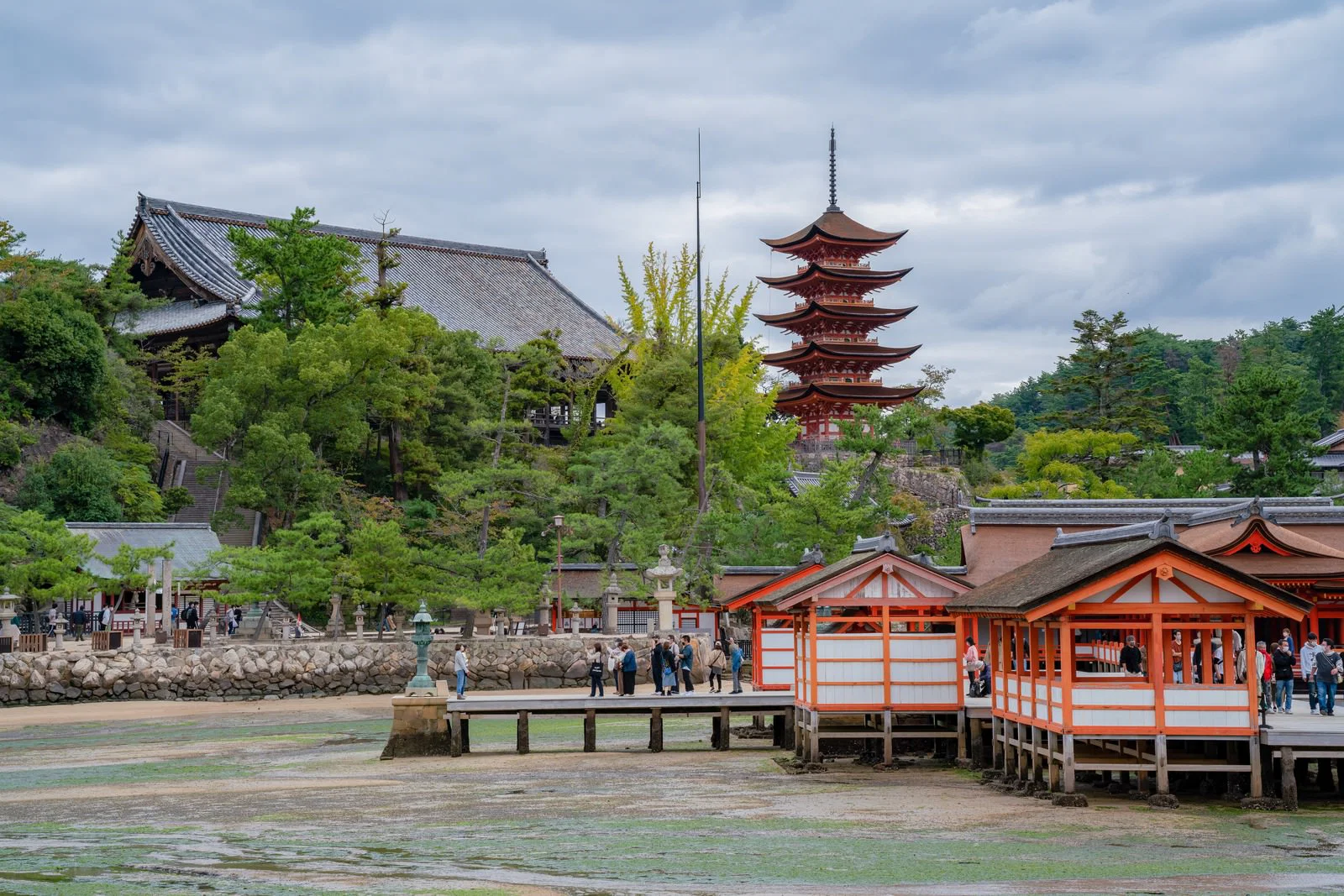
Since October 1, 2023, anyone crossing to Miyajima by boat pays the Miyajima visitor tax, collected by Hatsukaichi City. It is ¥100 per visit, or ¥500 for a full year if you cross often.
On the ferry, the ¥100 tax is collected together with the fare, so there's no separate ticket window to find.
Preschool children are exempt, as are students and their chaperones on school trips (university trips excepted). Visitors with a qualifying disability certificate are also exempt, though a caregiver accompanying them still pays.
How you claim an exemption differs by company, so check with your ferry operator.
Itsukushima Shrine hours and admission
You can see the Great Torii itself from the shore and the promenade without paying. To enter the shrine's vermilion corridors, you need an admission ticket: ¥300 for adults, ¥200 for high school students, and ¥100 for elementary and junior high students.
The treasure hall (open 8:00–17:00) has the same admission fees. If you want to see both, a combined ticket at ¥500 for adults is the cheaper option, and it is sold only at the shrine entrance.
Opening and closing times shift with the season, and the shrine closes earlier in winter, so if you are arriving late in the day, check the closing time before you set out.
Period | Open–Close |
|---|---|
Jan 4 – end of Feb | 6:30–17:30 |
Mar 1 – Oct 14 | 6:30–18:00 |
Oct 15 – Nov 30 | 6:30–17:30 |
December | 6:30–17:00 |
Note: Open 0:00–18:30 on January 1, and 6:30–18:30 on January 2 and 3.
The tide determines whether the Great Torii appears to float or towers above you as you walk across the sand. Choose the view you want, then plan your visit around the tide and the ferry times.
This article was translated from the original Japanese with AI assistance and reviewed by our editorial team. The Japanese version is authoritative.