For three days at the start of July, a quiet corner of Tokyo's old downtown fills up with potted morning glories in every shade of blue and purple.
This is the Iriya Asagao Matsuri (入谷朝顔まつり), the Morning Glory Fair, held in the Iriya neighborhood of Taito Ward.
In 2026 it runs July 6 (Mon) through July 8 (Wed). If you're after a slice of local Tokyo summer rather than the usual tourist crowds, an early-morning walk down rows of flowering vines is a lovely, low-key way to find it.
What is the Iriya Morning Glory Fair?
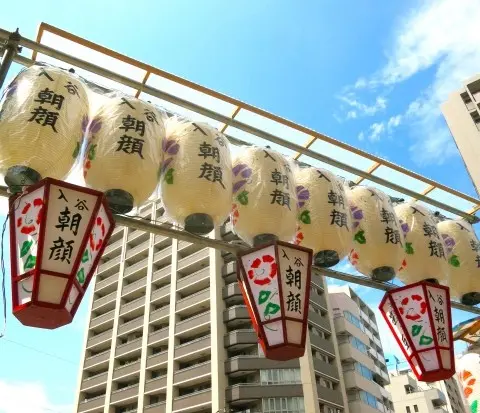
The fair centers on Iriya Kishimojin (入谷鬼子母神), a temple formally named Shingen-ji (真源寺), and spills out along Kototoi-dori (言問通り) avenue.
2026 marks the 79th edition. Roughly 30 morning-glory growers line the street, around 100 food and game stalls join them, and the fair draws about 100,000 visitors each year.
Morning glories first reached Japan from China in the Nara period (8th century), and not as ornamental plants at all — the seeds were prized as a medicine. People only began growing them for their flowers in the Edo period.
Iriya became a center of cultivation toward the end of the Edo period, in the early 1800s, and by the mid-Meiji era it was famous nationwide for its blooms.
The tradition died out once. The last commercial grower closed up in the early Taisho era and the morning glories disappeared from Iriya.
Today's fair is a postwar revival, brought back in 1948, and locals have kept it going ever since, unwilling to let one of the neighborhood's summer rituals slip away.
There's a reason it lands in early July. The morning glory has an old alternate name, kengyuka — the "herd-boy flower" — which ties it to the legend behind Tanabata, the star festival.
So the fair has long been held over the three days around Tanabata.
As for the temple itself, Iriya Kishimojin enshrines Kishimojin (鬼子母神), a guardian deity of children, and it's counted among Edo's three great Kishimojin temples.
It even lives on in a classic Japanese pun: "Osore-iriya no Kishimojin," a play on osore-irimasu, a humble way of saying "much obliged," with Iriya tucked inside. While you're shopping for flowers, it's worth stepping into the calm temple grounds for a moment.
Dates, hours & admission (2026)
Name | The 79th Iriya Asagao Matsuri (Morning Glory Fair) |
Dates | July 6 (Mon) – July 8 (Wed), 2026, three days |
Venue | Around Iriya Kishimojin (Shingen-ji) and along Kototoi-dori, Shitaya/Iriya, Taito Ward, Tokyo |
Admission | Free (you only pay if you buy a pot) |
Held rain or shine (may be canceled in severe weather)
Most stalls are open from around 5 a.m. until about 9 p.m. As you'd expect from a morning glory fair, the flowers look their best early, when the blooms are fully open.
Strolling the stalls in the cool morning air and saving the evening for the festival crowds is the way locals tend to do it.
For the fair, Kototoi-dori becomes a pedestrian zone and traffic is restricted nearby. The exact hours change from year to year, so check the official website before you go.
There's no bike parking near the venue and drones aren't allowed, so coming by train is your safest bet.
Next to the temple, at a plaza called Sakamoto Asagao Hiroba, a regional products fair (furusato bussan-ten) runs over the same three days, selling specialty goods from around Japan — a nice stop once you've seen the flowers.
Getting there
Tokyo Metro Hibiya Line, Iriya Station, Exits 1 and 2: about a 1-minute walk
JR Uguisudani Station, South Exit: about a 3–5 minute walk
You come up out of the station almost on top of the stalls, so it's hard to get lost even on a first visit. Iriya is one stop from Ueno on the Hibiya Line, which makes it easy to pair with Ueno or Asakusa in the same outing.
How to enjoy the flowers
The stars of the fair are the potted morning glories themselves — blue, purple, red, white, some with delicately edged petals, in a real range of colors and shapes.
Many are trained in the traditional andon style, with the vines wound around a round frame, and the rows of them are hard to walk past without stopping to shoot.
Bringing live plants out of Japan is tricky because of quarantine rules, so if you're visiting from abroad, you're better off enjoying the flowers where they are rather than buying a pot.
If you're picking one up as a gift for a friend in Japan, or for the place you're staying, ask the grower how to care for it — they'll happily walk you through watering and sunlight on the spot.
Prices vary by stall and by year, so check the tags as you browse; wandering the rows to look costs nothing.
Slip out from among the pots and you'll find the food stalls lined up too — yakisoba, candied fruit, all the festival classics. It feels exactly like an old-Tokyo summer matsuri (祭り) should.
Practical tips for travelers
For the flowers, come early; for the festival buzz, come in the evening. Pick your time to match what you're after.
Stalls are usually cash only, so bring small bills. There are convenience-store ATMs near Iriya and Uguisudani stations if you need to top up after you arrive.
It runs rain or shine, but the ground gets wet, so wear shoes you can walk in comfortably.
Early July in Tokyo is hot and humid. Bring a hat, water, and a towel to wipe off sweat.
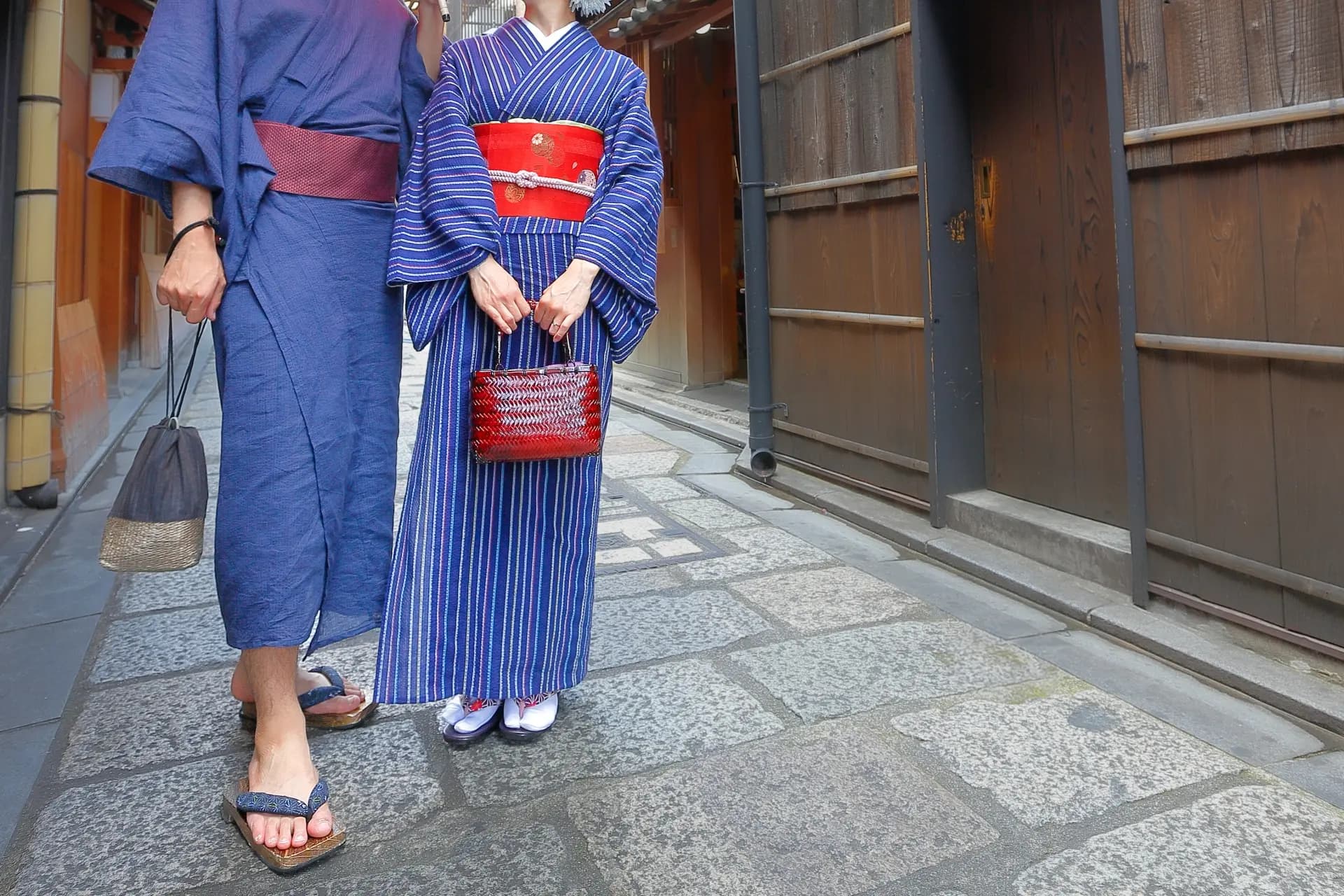
Wearing a yukata makes the whole festival feel that much more like summer.
Pair it with
The day after the fair ends, the nearby Senso-ji (浅草寺) temple in Asakusa holds its Shimanrokusennichi and Hozuki-ichi (ほおずき市), the ground cherry market — July 9 (Thu) and 10 (Fri) in 2026. Hit both and you can string together two of Tokyo's great summer markets back to back.
There's plenty more old-Tokyo summer to chase from here — Asakusa's Tanabata festival, a yukata stroll through the back streets. Between the cool-morning flowers and the nighttime festivals, July downtown is a good month to wander.
This article was translated from the original Japanese with AI assistance and reviewed by our editorial team. The Japanese version is authoritative.