If you're booking a hotel in Japan, there's a small tax that usually isn't shown in your online total: the accommodation tax (宿泊税, shukuhaku-zei). It's charged per person, per night, and the amount depends entirely on which city you stay in and how much your room costs.
For a cheap business hotel in most cities it's a few hundred yen. For a luxury suite in Kyoto it can now reach 10,000 yen a night. And in almost every case you pay it in cash or by card at the front desk, separately from the room rate you already prepaid online.
Here's what it costs in 2026, city by city, plus the two changes worth planning around: Kyoto's steep new rates that started in March 2026, and Tokyo's switch to a percentage-based tax in April 2027.
The accommodation tax is almost never included in your online booking total. You settle it in person at the hotel, on top of the room rate — so add it to your budget before you arrive.
Accommodation tax by city (2026)
The tax is calculated on the room rate per person, per night, before consumption tax and before any meals. In most cities it's a fixed yen amount that increases by price band. A couple of places, like Niseko (Kutchan), charge a percentage of the room rate instead.
City | Accommodation tax (per person, per night) | No tax below |
|---|---|---|
Tokyo | ¥100 (¥10,000–14,999) / ¥200 (¥15,000+) | Under ¥10,000 |
Kyoto | ¥200–¥10,000 (see full table below) | No threshold — taxed at any price |
Osaka | ¥200 (¥5,000–14,999) / ¥400 (¥15,000–19,999) / ¥500 (¥20,000+) | Under ¥5,000 |
Fukuoka City | ¥200 (under ¥20,000) / ¥500 (¥20,000+) | No threshold |
Kanazawa | ¥200 (¥5,000–19,999) / ¥500 (¥20,000+) | Under ¥5,000 |
Nagasaki City | ¥100 (under ¥10,000) / ¥200 (¥10,000–19,999) / ¥500 (¥20,000+) | No threshold |
Sapporo | ¥300 (under ¥20,000) / ¥400 (¥20,000–49,999) / ¥1,000 (¥50,000+) — prefecture + city | No threshold |
Niseko (Kutchan) | 3% of the room rate | No threshold |
Nara | None | — |
A few notes that trip people up. In Fukuoka the figure you pay actually combines a ¥50 prefectural tax with a city tax, but you settle the single amount shown above. Kitakyushu and the rest of Fukuoka Prefecture charge a flat ¥200.
Hokkaido works the same way. The prefecture charges ¥100/¥200/¥500 by band, and then major cities add their own tax on top — the Sapporo figures above already combine both. Hakodate, Otaru, and Niseko Town also add a local tax, so budget a little more in those places.
And in Niseko (Kutchan) the 3% rate works out to ¥1,800 per person, per night on a ¥60,000 ski chalet — far more than the few hundred yen you'd pay for the same price elsewhere.
Some cities, like Nara, don't charge an accommodation tax at all, so it isn't a given everywhere.
Kyoto: the steepest new rates (2026)
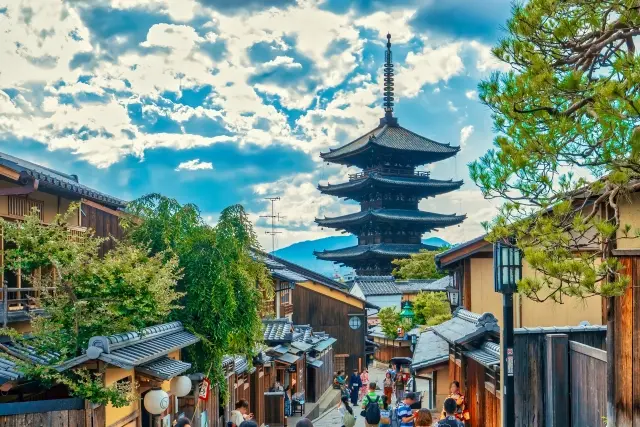
Kyoto raised its accommodation tax sharply on March 1, 2026, and those rates are already in force. There are now five rate bands, and for the priciest rooms Kyoto's tax is the highest in the country.
Room rate per person, per night | Kyoto tax |
|---|---|
Under ¥6,000 | ¥200 |
¥6,000–19,999 | ¥400 |
¥20,000–49,999 | ¥1,000 |
¥50,000–99,999 | ¥4,000 |
¥100,000 and above | ¥10,000 |
The change hit mid-range and luxury stays hardest. The ¥50,000–99,999 band jumped from ¥1,000 to ¥4,000, and the city added a brand-new ¥10,000 band for rooms of ¥100,000 or more. Only the rate for stays under ¥6,000 stayed at ¥200.
So if you're staying somewhere upscale in Kyoto, check your per-night rate against this table before you book. The tax alone can add several thousand yen to a two- or three-night stay.
If you're still deciding where to base yourself, our guide on where to stay in Kyoto breaks the city down by neighborhood and budget.
Paying the tax: when and how
This is the part that surprises first-time visitors. Even if you prepay your room in full through Booking.com, Expedia, or another site, the accommodation tax is normally not in that total. The price shown on these sites covers the room only.
You pay the tax in person, usually at check-in or check-out, along with any other on-site charges. Whether you can pay by card, IC card, or QR code — or cash only — is set by each hotel, not by the city, so carry a little cash just in case.
One more thing worth knowing: the tax band is based on the rate per person, not per room. If two of you share a ¥28,000 room in Tokyo, that's ¥14,000 each, so you each pay the ¥100 rate rather than the ¥200 one. Most cities work this way.
Onsen towns: a second tax (nyuto-zei)
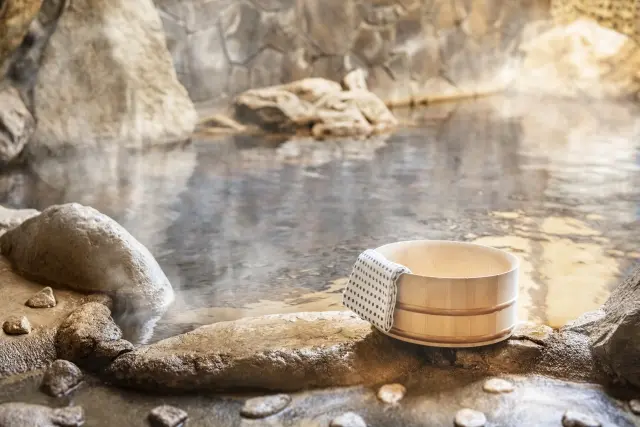
If you're staying at a hot-spring inn, expect a separate line called the bathing tax (入湯税, nyuto-zei). The standard rate is about ¥150 per person, per night, and it's charged on top of any accommodation tax, not instead of it. In Hakone, for example, the bathing tax is ¥150 per night for overnight guests.
So in an onsen town that also levies an accommodation tax, you may see both on your bill. It's a small amount, but it's easy to forget when you're budgeting.
Coming changes in 2027
Two changes are worth knowing about if you're planning further ahead.
Tokyo switches to a percentage. From April 1, 2027, Tokyo replaces its ¥100/¥200 flat tax with a flat 3% of the room rate, with no upper cap. Rooms under ¥13,000 per person, per night become tax-free, but above that the tax scales with the price: a ¥40,000 room would carry ¥1,200 in tax per night instead of the current ¥200.
The new tax will also cover private lodging (民泊, minpaku) and guesthouses, not just hotels and inns.
More cities are joining. In June 2026, Japan's national government approved new accommodation taxes for seven more municipalities, all scheduled to start in 2027: Yamagata, Tomakomai, Kitahiroshima, Nago (Okinawa), Wakkanai, Fujiyoshida, and Fujikawaguchiko. Start dates and rates differ by city, so check locally before you travel.
How to budget for it
For a typical trip, the accommodation tax is a minor cost: a few hundred yen a night in most cities. But it adds up across a multi-city itinerary, and Kyoto's upper bands and Niseko's percentage can add up to a significant amount for higher-end stays.
The simple rule: look up your per-night, per-person room rate, match it to the city table above, and set aside a little cash for the front desk. If you also plan to shop, it's worth understanding Japan's separate tax-free shopping rules, which change on November 1, 2026, and work completely differently from the accommodation tax.
This article was translated from the original Japanese with AI assistance and reviewed by our editorial team. The Japanese version is authoritative.