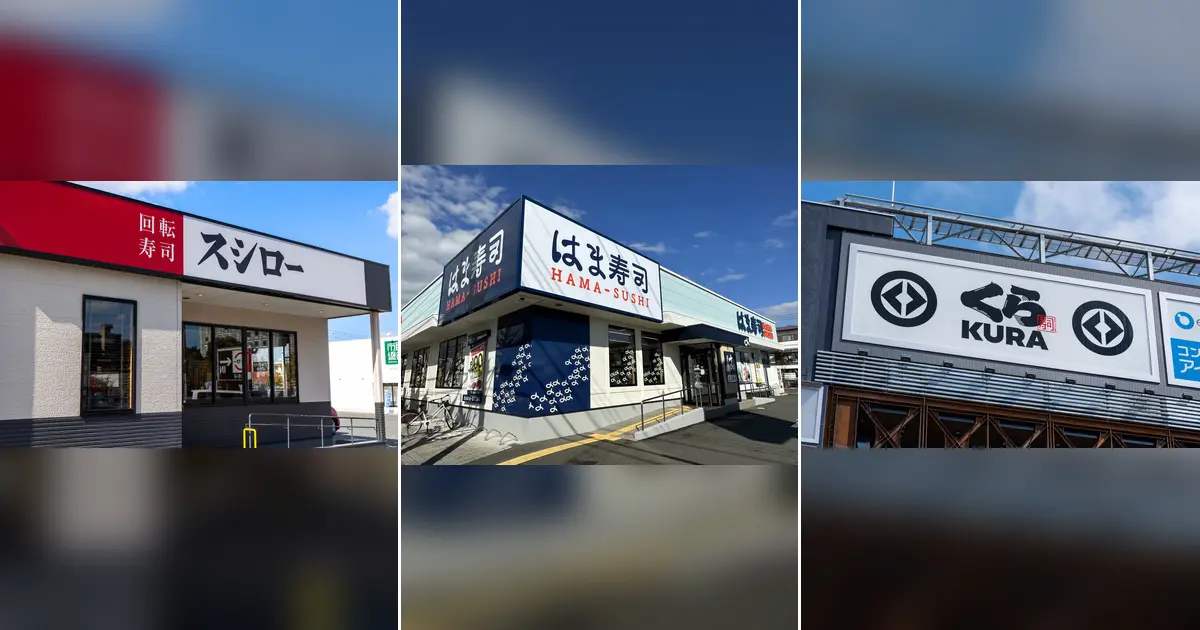
You've probably seen the photos. Little plates gliding past on a belt, a hundred yen each, and you just reach out and take what you want. That's the version of conveyor belt sushi most people arrive in Japan expecting.
It isn't quite the version waiting for you in central Tokyo.
Kura Sushi's flagship branch in Asakusa lists its plates from ¥150 on the company's own store page. Head out to the suburbs and you'll find a Kura Sushi where plates start at ¥115. Same chain. Same logo above the door. Different price.
Below is what the three big chains — Sushiro, Kura Sushi and Hama Sushi — actually cost in 2026, what makes each of them worth choosing, and how to get from the front door to the bill without guessing. Everything here comes from the companies' own websites. For restaurant etiquette beyond sushi, see How to Order at a Japanese Restaurant in 2026: Ticket Machines, Otoshi & the Call Button.
The price depends on which branch you walk into
None of the three chains charges the same price nationwide. This surprises almost everyone.
Kura Sushi sorts its branches into four price tiers on its official menu page: plates from ¥115, from ¥120, from ¥130, and from ¥150 (all tax included). Between the cheapest and the most expensive branch, the entry price differs by ¥35 a plate.
Hama Sushi's official menu lists its cheapest nigiri at ¥110 tax included. It, too, flags "urban stores" (都市型店舗) where the items and the prices differ from a standard branch.
Sushiro publishes no chainwide price list at all. Instead, every branch has its own menu page on the official site. Look up the Yurakucho branch and the cheapest regular nigiri tier is ¥150 a plate, tax included.
Now the part worth knowing before you go. Travelers gravitate toward Asakusa, Shibuya, Akihabara, Yurakucho — the branches by the big stations. Those are precisely the ones the chains classify as "urban stores" or "global flagship stores," and they sit at the higher end of the scale. The easier a branch is to reach on a sightseeing day, the more you will pay per plate.
None of the companies explains on its website why the city branches cost more. What is documented is simply that the tiers exist. Which cuts both ways: ride out to the suburbs and the ¥115 plates are real. Nobody is being cheated here. You just want to know, before the bill arrives, that where you eat moves the price by thirty yen a plate or more.
The three chains at a glance
Chain | Cheapest plate (tax incl. | What makes it different | Operator |
|---|---|---|---|
Sushiro (スシロー) | Varies by branch (¥150 at Yurakucho) | Digiro — tap sushi as it slides across a screen | Akindo Sushiro Co. |
Kura Sushi (くら寿司) | From ¥115, depending on the branch tier | Bikkura-Pon — five plates and a game starts | Kura Sushi, Inc. |
Hama Sushi (はま寿司) | From ¥110 | Five soy sauces on every table | Hama-Sushi Co. |
Taste is personal, so I'm not going to rank them. What I can do is tell you what each chain has built that the other two have not. For most travelers that difference will matter more than the fish.
Sushiro: tap the sushi as it slides across a screen
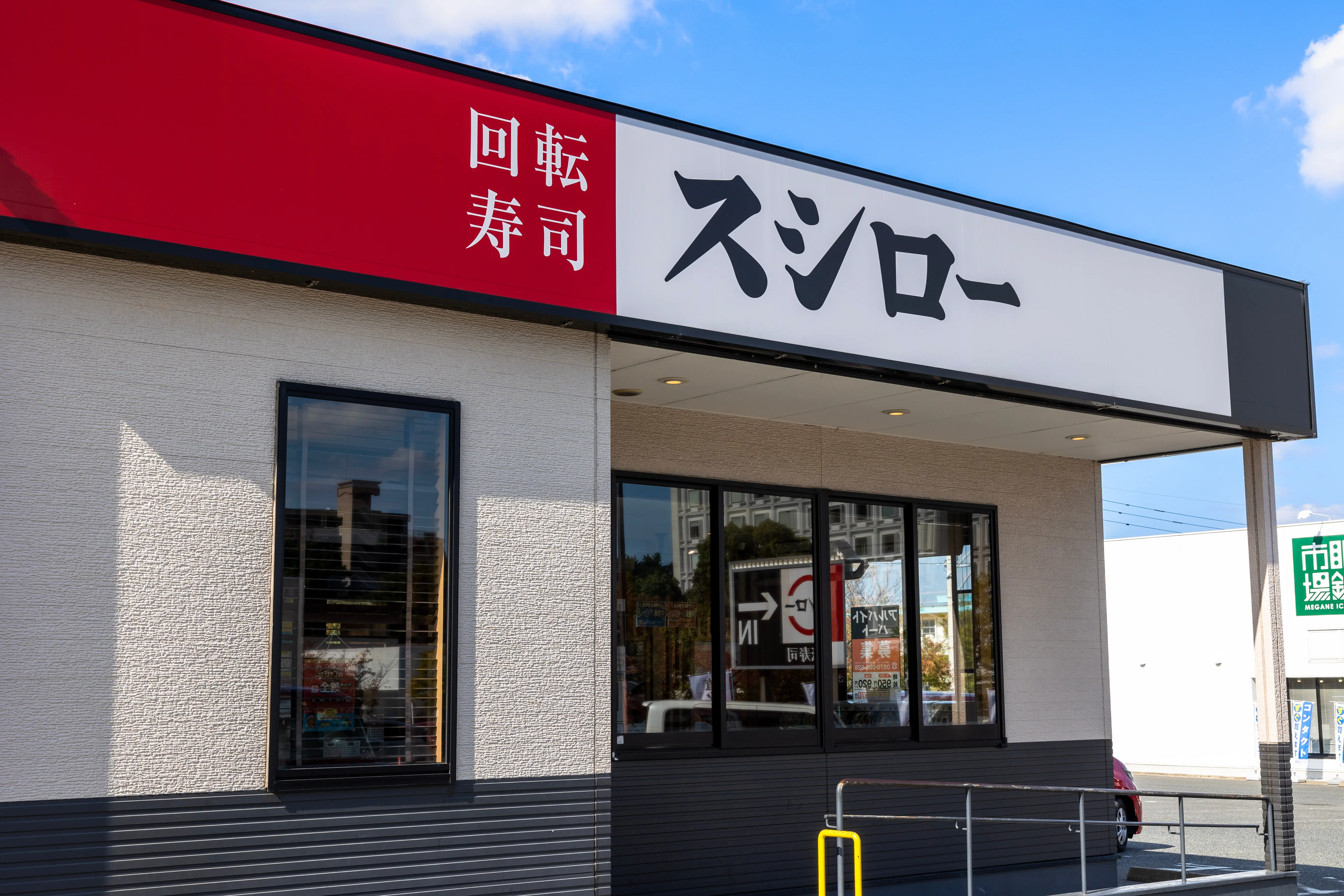
Some Sushiro branches have installed a large touchscreen called Digiro (デジロー). Sushi drifts across the display, you tap what you want, and the order goes in. It is the sensation of picking a plate off the belt, moved onto glass.
Your order then travels down a dedicated lane to your table on a system Sushiro calls the Auto Waiter (オートウェイター). Nothing to grab at, nothing to miss.
One caution. Digiro is in some branches, not all of them, and Sushiro's own site says the rollout is still expanding. A famous branch in the middle of Tokyo is no guarantee. Check the official Digiro page and the store finder before you commit to a particular address — and while you're on the store page, look at that branch's menu prices too.
Official site: デジローで回転すしに、もっとワクワクを。新たな食体験をスシローで。
デジローってなに? | 回転寿司 スシロー
Kura Sushi: five plates, and a game starts
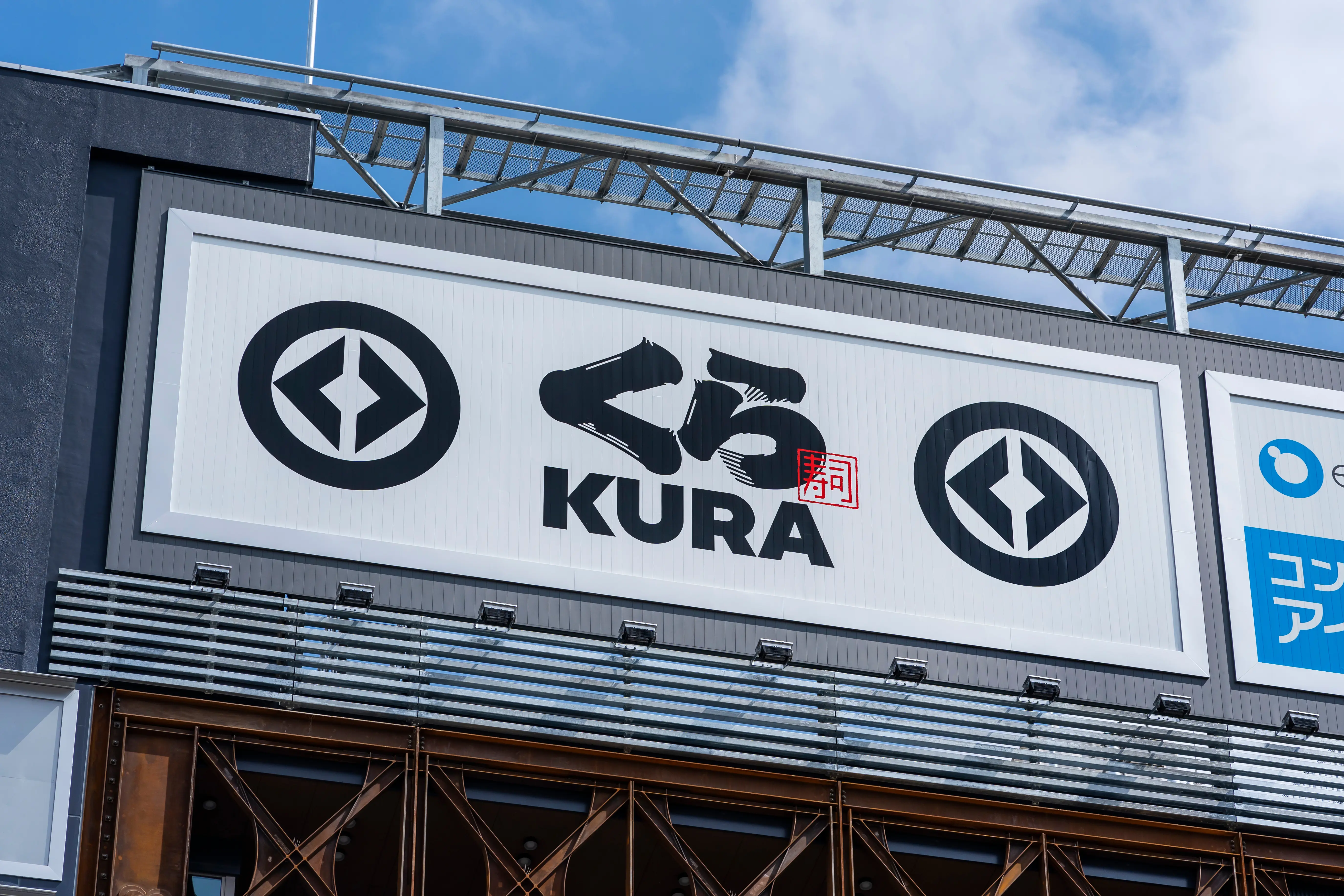
There is a slot at every Kura Sushi table. You post your finished plates into it, and on the fifth plate a game called Bikkura-Pon (ビッくらポン!) fires up on the screen in front of you. Win, and a capsule toy drops out. If you are traveling with children, this single feature will buy you an entire relaxed meal.
Paying is unusual too. Press the checkout button at your table and you settle the bill yourself, without flagging anyone down. Credit cards, electronic money and QR payments are all accepted.
In Asakusa, the branch to know is Kura Sushi Global Flagship Store Asakusa ROX — the company's own designation, not mine. It sits on the fourth floor of the Asakusa ROX building with 272 seats, which means the wait is easier to predict than at a small branch. As noted, plates start at ¥150 here, and some items and prices differ from an ordinary Kura Sushi.
Branch | Kura Sushi Global Flagship Store Asakusa ROX |
|---|---|
Address | Asakusa ROX 4F, 1-25-15 Asakusa, Taito-ku, Tokyo |
Hours | Mon–Fri 11:00–23:00 / Sat–Sun 10:20–23:00 |
Price | From ¥150 a plate (tax incl. |
Seats | 272 |
Official site: 無添くら寿司のオフィシャルページです。「安心・美味しい・安い」をコンセプトにくら寿司のこだわりや各種メニュー紹介、店舗検索、トピックの他、企業情報、IR情報を掲載しています。
くら寿司 ホームページ
Hama Sushi: five soy sauces on every table
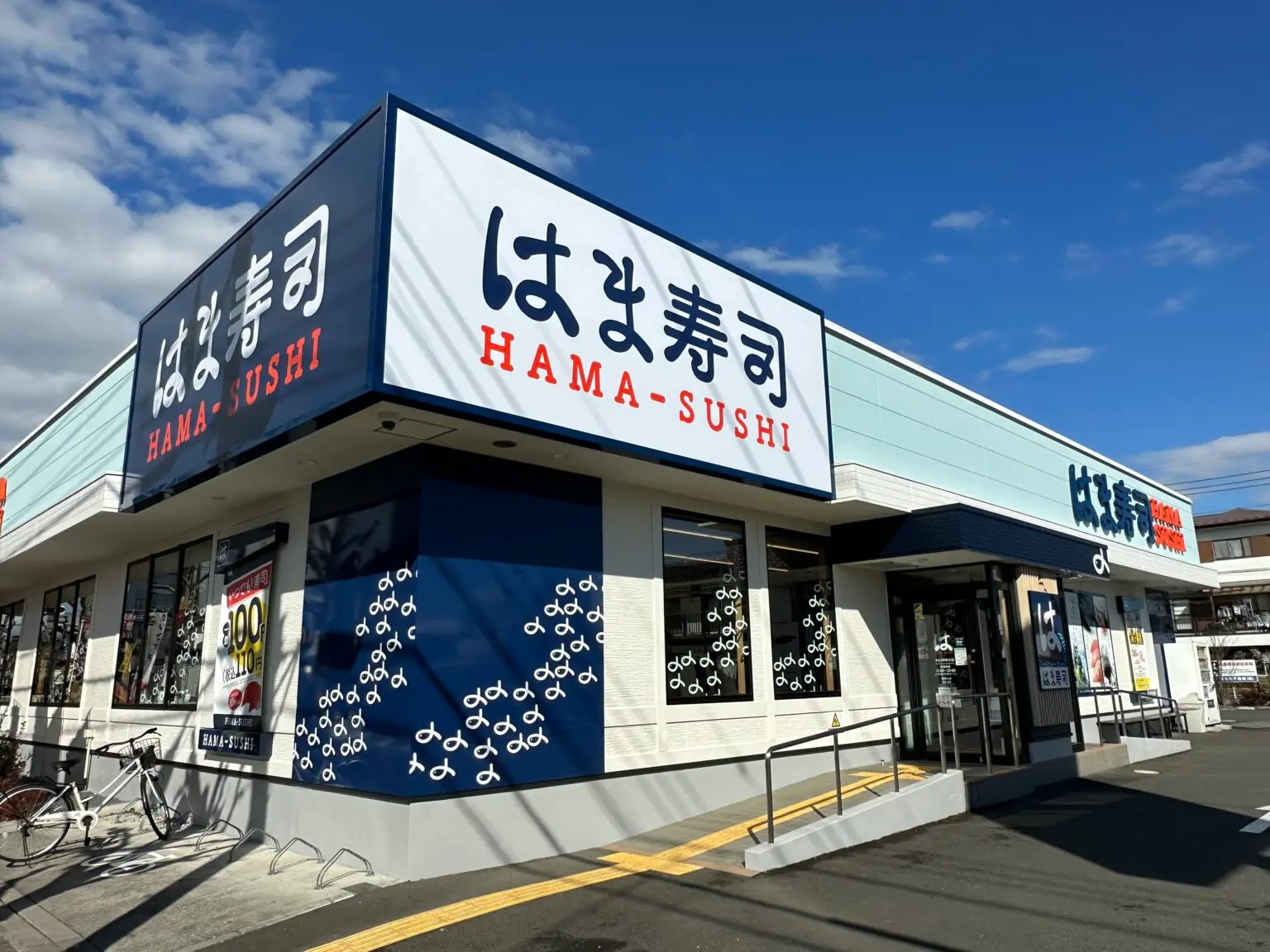
At Hama Sushi, five bottles of soy sauce stand on the table. The same slice of fish tastes different depending on which one you reach for, and working through them by neta is a pleasure in itself.
- Tokusei dashi shoyu (特製だし醤油) — Hama Sushi's own dashi-based soy sauce
- Kanto-style koikuchi (関東風濃口醤油) — dark soy sauce, eastern Japan
- Hokkaido kombu shoyu (北海道昆布醤油) — kelp soy sauce
- Kyushu-style sashimi shoyu (九州風さしみ醤油) — sashimi soy sauce, southern Japan
- Shikoku-style yuzu ponzu (四国風ゆずぽんず) — citrus ponzu rather than soy sauce
In western Japan, the Kanto-style koikuchi is swapped out for a Kansai-style sweet soy sauce (関西風甘口醤油). You cannot reproduce your Tokyo lunch in Osaka, which I find rather wonderful.
In Tokyo, the Akihabara Denkigaiguchi branch is the easy one to fold into a day of sightseeing (BiTO AKIBA PLAZA 3F, 1-18-18 Sotokanda, Chiyoda-ku; Mon–Fri 11:00–23:00, Sat/Sun/holidays 10:00–23:00).
What actually happens, from the door to the bill
First, the big one: whether you can help yourself to plates gliding past now depends on the branch. Sit down and work out which kind of restaurant you're in before you reach for anything.
The rest is much the same everywhere. If there's a machine at the entrance, punch in your party size, take the ticket and wait for your number. Once you're seated, switch the tablet to your language — the languages offered vary by branch, so hunt for the language button first.
Order from the screen. If your food comes down a lane reserved for your table, take it from there when it arrives.
When you're done, it's time to pay. At Kura Sushi you press the checkout button and settle up yourself; elsewhere you call a member of staff or walk to the register. Your plates have been counted at the table, so there's no stack to tally up yourself. Nor is there any tipping in Japan.
Sushiro takes reservations through its official app (excluding some branches). Weekend lunchtimes get long, and booking ahead is the difference between eating and standing.
Paying
Cashless payment is widespread, but which methods work depends on the branch.
Sushiro accepts credit cards, debit cards and QR payments including PayPay, Rakuten Pay, d Payment, au PAY, Merpay, Alipay and WeChat Pay. Kura Sushi accepts credit cards, electronic money and QR payments.
Hama Sushi takes cash and credit cards, with cashless options set branch by branch. The Akihabara Denkigaiguchi branch, for instance, accepts transit IC e-money along with PayPay, au PAY, d Payment, Rakuten Pay, Alipay+, WeChat Pay, iD and QUICPay.
That transit IC card in your pocket — Suica, PASMO — is the one to be careful about. None of the three chains states on its website that transit IC works at every branch. Individual branches certainly accept it, as the Hama Sushi branch above shows. Check your branch's official page, and keep a little cash on you. For payment in Japan generally, see Is Japan Cash-Only? How to Pay in Japan in 2026 (Cash, IC Cards, Contactless & QR).
You can take it with you
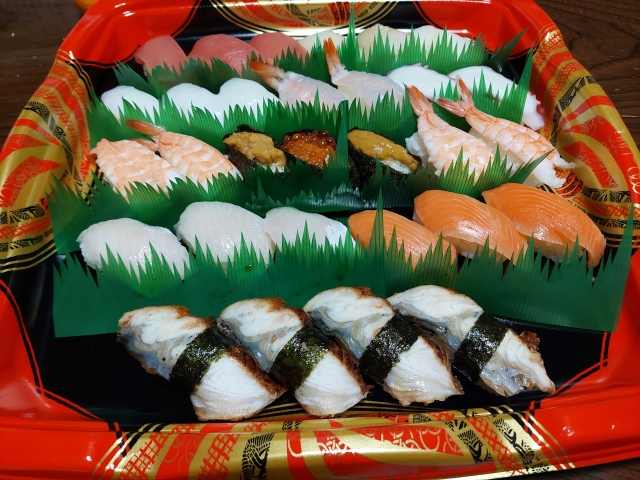
All three chains do takeout, which is worth remembering on the night you'd rather eat in your hotel room, or before a long train ride.
Sushiro lets you order online in advance and collect from an automated pickup locker in the store, so there is no register queue to factor into your schedule. Kura Sushi and Hama Sushi both take takeout orders through their own websites.
If you only have time for one
Go to Asakusa ROX. Plates start at ¥150, so it's not the cheap option — but it's the branch Kura Sushi itself calls a global flagship, the plate slot triggers a game, and 272 seats mean you'll probably get in. To eat at a Japanese conveyor belt sushi restaurant once and understand what the fuss is about, this is the clearest place to do it.
Then, somewhere out in the suburbs later in your trip, find the same chain charging ¥115 a plate. That gap tells you something about eating out in Japan right now.
This article was translated from the original Japanese with AI assistance and reviewed by our editorial team. The Japanese version is authoritative.
