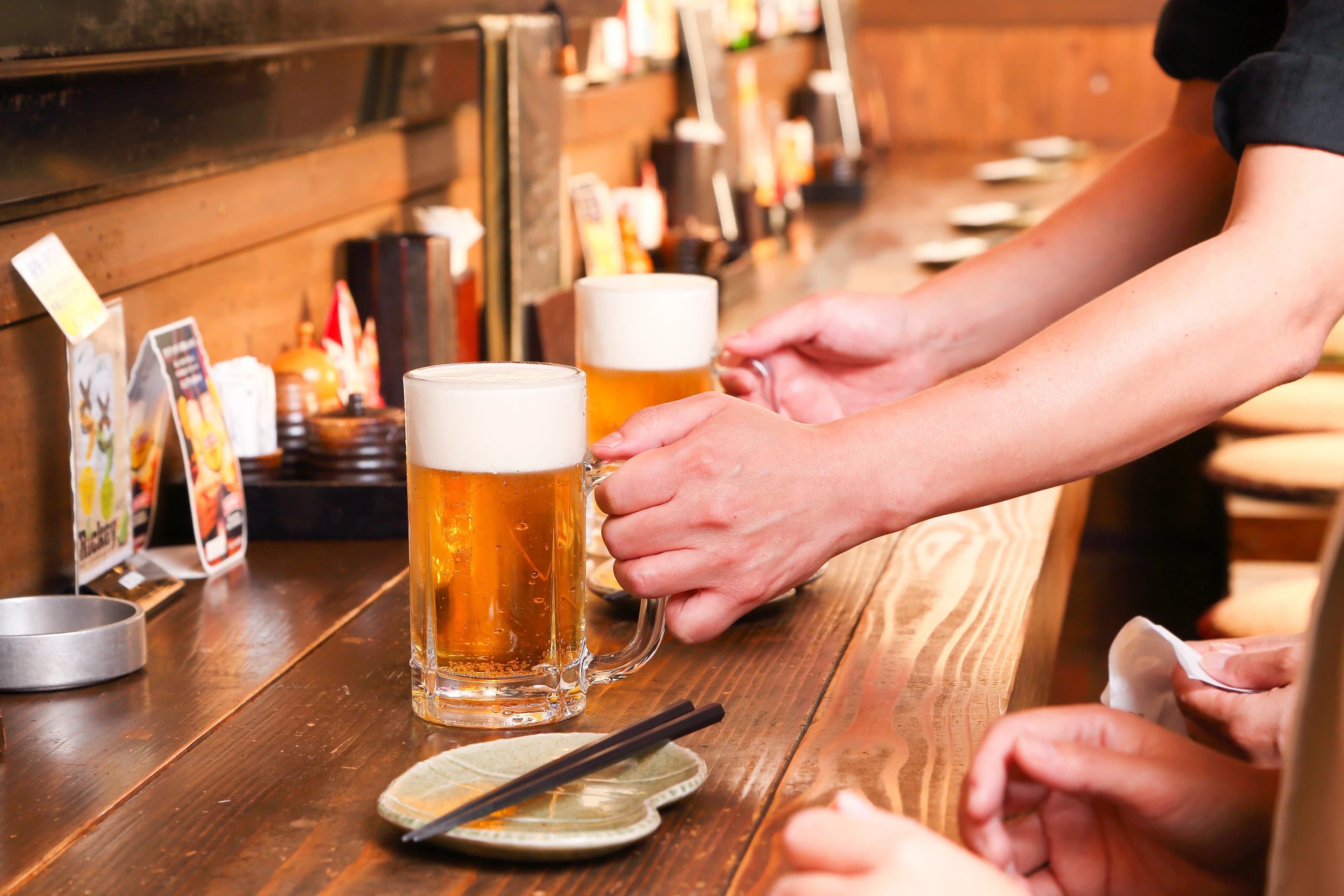
Friends visiting from abroad tell me the same thing again and again: in Japan, it's not the food that trips you up, it's the ordering. You buy a meal ticket from a machine before you sit down. A small dish you never asked for lands on your table at an izakaya. You press a button to call the server at a conveyor-belt sushi place. None of it is hard once you've done it once, but the first time can leave you frozen at the door. This guide walks through the whole thing in the order you'll actually hit it, from stepping inside to paying and leaving. The short version: you don't tip, the price on the menu is the price you pay, and at most places you settle up at a register by the exit (only ticket-machine shops are pay-first).
For the bigger picture of money on your trip, see our complete guide to paying in Japan and how to withdraw cash. Here we'll focus on the dining table.
Four things to know first
Before the shop-by-shop details, four things hold true at almost every restaurant in Japan. Knowing them is enough to make the bill stop feeling like a mystery.
Basic | What it means |
No tipping | Tipping isn't a custom in Japan. |
The listed price is what you pay | Menu and shopfront prices are shown tax-included by default, so the number you see is the number you pay (an izakaya may add an otoshi charge or a service charge on top — more on that below). |
10% to eat in, 8% to take out | Consumption tax is 10% for dining in and 8% for takeout. |
Small shops can be cash-only | Big chains take cards, IC cards, and QR payments, but plenty of small independent places still run on cash. |
Tipping gets its own guide here.
The tax-included pricing comes from Japan's total-price display rule, which the National Tax Agency has required since April 2021.
The split between 10% dine-in and 8% takeout is the reduced tax rate system, in place since October 2019. Carry a little cash just in case, and no shop will leave you stuck.
Walking in
Open the door and the first thing you'll do is say how many people. Holding up fingers works fine. If you hear "shōshō omachi kudasai," that's your cue to wait by the entrance.
Popular places often have a ticket dispenser out front: tap in your party size, take a numbered slip, and wait to be called. At some shops you're asked to buy your meal ticket while you're still in line. Others take reservations, so for a busy hour or a bigger group, booking a table through a reservation site ahead of time is the safe move.
When it's crowded, you may be seated at a shared table (aiseki) with strangers. It's completely normal here, so don't let it throw you.
Ordering
A menu written only in Japanese is where a lot of people stall. In practice, there are plenty of ways to order without speaking the language.
Many restaurants have photo menus or plastic food samples (remarkably lifelike replicas) out front. Point at what you want and say "kore kudasai" (this one, please).
Your phone's translation app can read a menu through the camera and translate it on the spot, which is the quickest way to decode a dish name you can't read.
Chains and restaurants in tourist areas increasingly keep an English or Chinese menu. Just ask, "Do you have an English menu?"
If you have an allergy or a dietary restriction, say so — don't tough it out.
Ask with a specific ingredient, as in "Does this contain egg?" or "Is there a dish without meat or fish?"
The ingredients most worth flagging in Japan are egg, milk, wheat, buckwheat (soba), peanuts, walnuts, shrimp, and crab. Writing the question down or showing it on a translation app gets it across reliably.
More places now cater to vegetarian, vegan, and halal diners, but Japanese stock (dashi) is often made from bonito flakes or dried sardines, so a dish that looks meat-free may not be — when in doubt, always check.
Using a ticket machine (shokken)
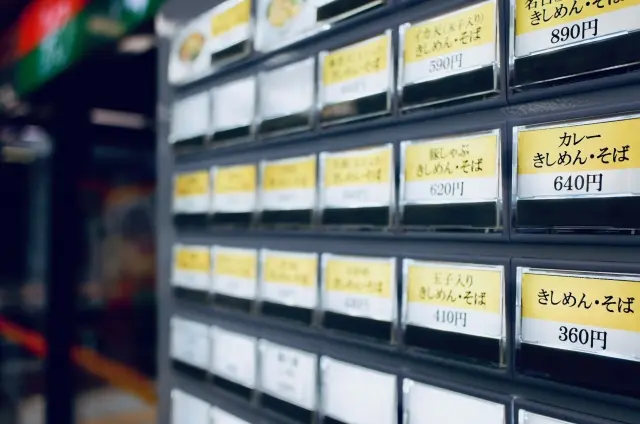
At ramen shops and gyudon or set-meal chains, you'll often find a ticket machine near the entrance. You pay first, press the button for your dish, and hand the printed ticket to the staff once you sit down.
Some machines take cash only; others accept IC cards or QR payments. Check the display to see which bills and coins it takes.
Some machines won't take a ¥10,000 note. Keep a few ¥1,000 notes on you so you're never stuck without change.
Newer touchscreen machines increasingly have a button to switch to English or Chinese. Look for the language button in a corner of the screen.
Because ticket-machine shops are pay-first, you can get up and leave the moment you finish. There's no lining up again to settle the bill.
Touchscreens and the call button
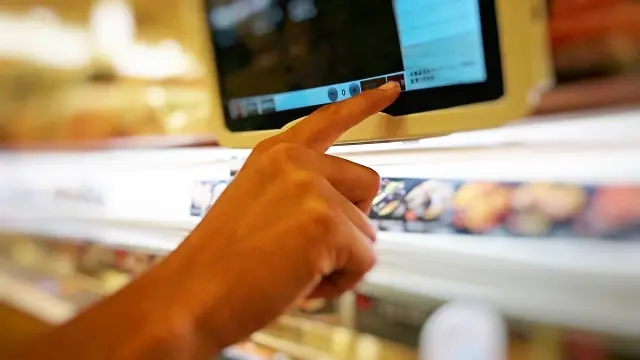
At conveyor-belt sushi, family restaurants, and izakaya, more and more places let you order yourself from a tablet or touchscreen at the table — Sushiro's "DiGiRo" and Kura Sushi's touch panels, for example, where you pick your food off the screen. Most can switch to English.
Where there's no touchscreen, there may be a call button on the table. Press it and a server comes over. Rather than shouting or waving to get attention, pressing that button — or catching a server's eye with a quiet "sumimasen" — is the natural way to do it here.
At conveyor-belt sushi you take plates freely off the belt, and at many shops the items you order on the screen arrive at your seat on a separate express lane or a dedicated tray. The bill is usually counted from your stack of empty plates, so leave them stacked at your seat.
The izakaya "otoshi"
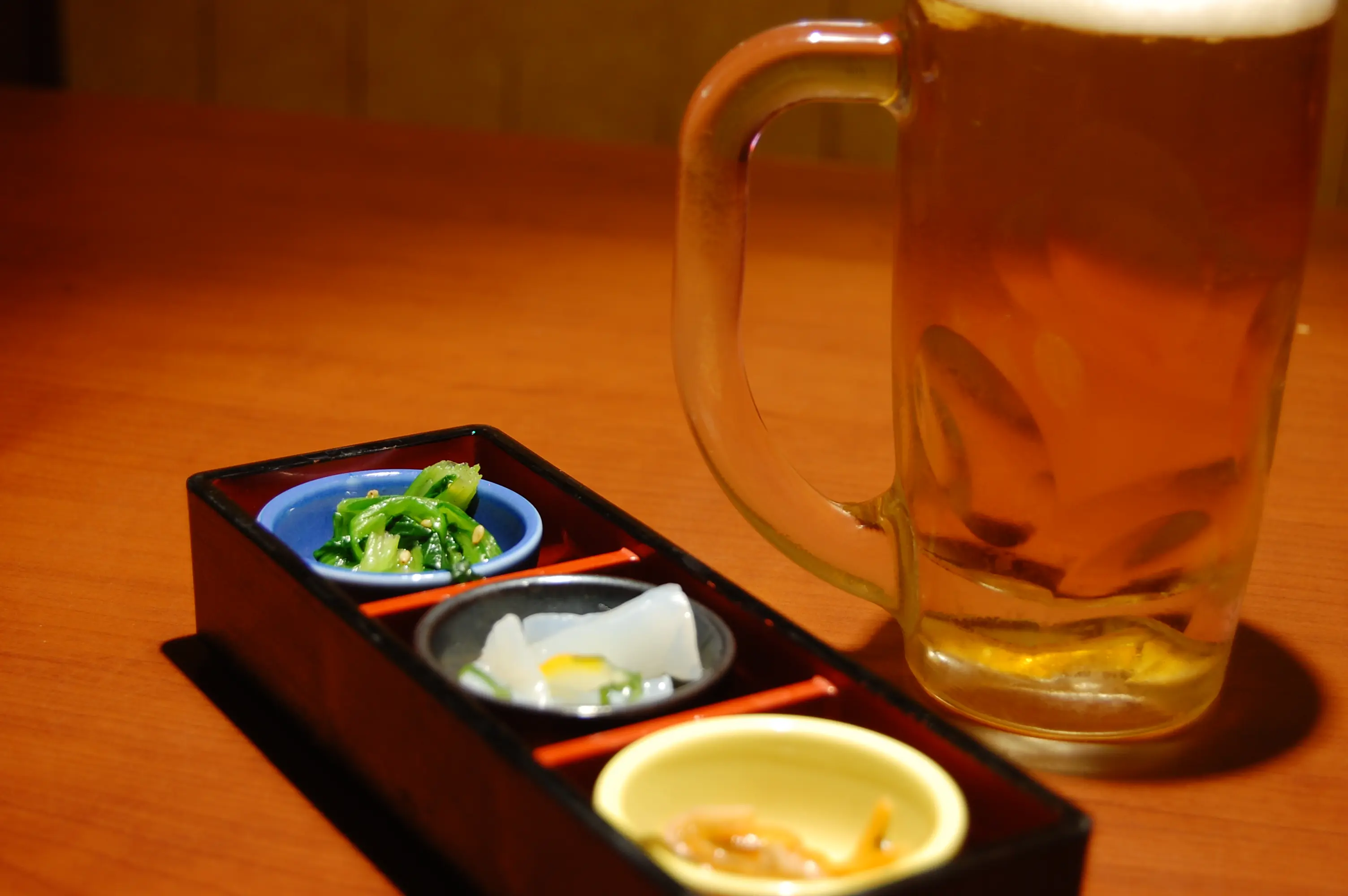
Sit down at an izakaya and a small dish you didn't order may appear. This is the otoshi (also called tsukidashi).
The otoshi works like a seating or cover charge, and at most places it isn't free — figure on roughly ¥300–500 per person, sometimes a bit more. Some shops print the amount on the menu or by the door, so ask if you want to know up front.
Being charged for something you didn't order can feel odd coming from abroad, but it's simply the first small plate that comes with your seat, a long-running custom at Japanese drinking spots. How it's handled varies from place to place, so rather than fighting it, it's easiest to just accept it and move on.
Paying the bill
At most restaurants in Japan you pay at a register near the exit, not at the table. When you're done, you carry the check to the register — a little different from the Western habit of calling a server and paying where you sit.
Ticket-machine shops: already paid, so just leave.
Izakaya, family restaurants, and the like: take the check (on the table, or brought to you) to the register.
One person usually pays for the whole table, so it helps to have one person's card or cash ready. If you want to split it and pay separately, some shops will decline.
Which payment methods you can use depends on the shop.
For how to juggle cash, credit cards, IC cards (like Suica), and QR payments, see our guide to paying in Japan.
Small table manners
A few last details that make the meal go smoothly. None of them are anything to stress over.
You'll often get an oshibori, a damp towel, when you sit down. It's for your hands; wiping your face or neck with it is considered less polished.
Water and tea are free, often self-serve from a pot or dispenser at the table. If none appears, just ask and they'll bring it.
Go ahead and slurp your noodles — it's not rude here. Even the Japan National Tourism Organization says to "feel free to slurp." Hot soba and ramen genuinely taste better that way.
Say "itadakimasu" before you eat and "gochisosama deshita" when you finish — it's a nice touch.
At izakaya, there's a "last order" before closing. If you want anything more, order it before then. Some all-you-can-drink plans also run on a time limit.
Related practical guides
Use this as your starting point and pair it with these to make the day itself go easier.
How to Pay in Japan — cash, IC cards, contactless, and QR
How to Withdraw Cash in Japan — using a foreign card at a convenience-store ATM
The Complete Konbini Guide — how to use one, what to buy, what services to expect
Japan's Kakigori (Shaved Ice) Guide — for summer snacking on the go
This article was translated from the original Japanese with AI assistance and reviewed by our editorial team. The Japanese version is authoritative.


