The first thing that stops you in Japan is not the language. It's the empty plastic bottle in your hand. You buy it, you drink it, and then you carry it for half an hour looking for somewhere to put it. The streets are spotless and there is nowhere to throw anything away. Travelers find this maddening, and reasonably so.
Here is the short answer. In Japan you carry your trash with you and get rid of it at your hotel. During the day, the workable move is to buy something at a convenience store — a konbini — and drop your empties there on the way out. One small plastic bag in your daypack solves most of this.
Below: why the bins vanished (only the reasons operators have actually published), where you can put what, and the one sorting rule you need. If you want the full manual on convenience stores themselves, that's The Complete Guide to Japanese Convenience Stores: How to Use Them, What to Buy, ATMs and Services.
Why there are no bins in the stations
The internet will tell you it's because of the 1995 Tokyo subway sarin attack. I could not find a document in which a railway company officially says that. So I'll stick to the reasons operators have published themselves.
The Tokyo Metropolitan Bureau of Transportation removed the trash cans near the ticket gates at every Toei subway station, plus Nippori and Nishi-Nippori on the Nippori-Toneri Liner, starting May 9, 2022. The stated reason is "to improve safety for customers when using our facilities." The same notice asks passengers to take their trash home with them.
So the official explanation is safety. No specific incident is named. I couldn't find published reasons from other operators, so I won't speculate about them. What matters on the ground is simpler: don't leave your hotel counting on a trash can at the station.
So where do you put it?
Your realistic options:
Place | What you can leave there | Notes |
Your hotel room | Almost anything from the day | The reliable one. |
Convenience store | Packaging from food you bought there | Sometimes inside, sometimes out front. |
Bin beside a vending machine | Empty drink containers only | Not a trash can — see below |
Supermarkets, malls | Whatever the building specifies | Usually near entrances and food courts |
Stations, airports | Depends entirely on the building | Airports usually have them. |
Parks, streets | Almost none | Many municipalities have removed them |
One thing to take from that table: the hotel room is certain, the convenience store is the next best thing. Bag whatever you accumulate during the day, then clear it at a konbini.
The bin next to the vending machine is not a trash can
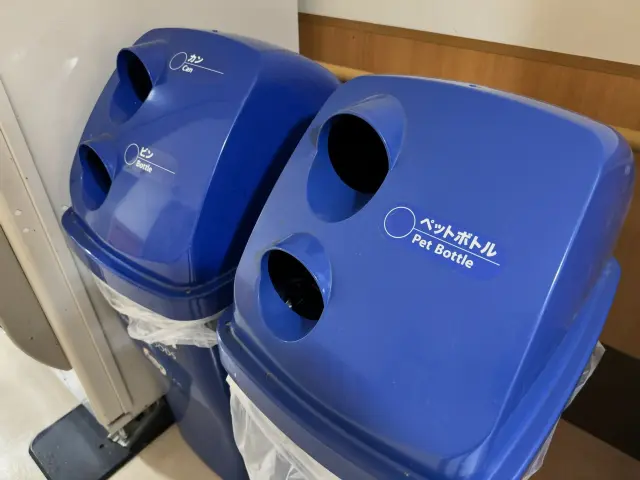
This one catches everyone. According to the Japan Soft Drink Association, the box beside a vending machine is a recycling box for collecting drink containers after you've finished them. What belongs in it is "only empty beverage containers you have finished drinking." Containers with liquid still in them do not go in. Neither do bento boxes, batteries, or cigarettes.
In practice, the association reports that non-container household trash makes up roughly 30 to 50 percent of what ends up in these boxes, and that about 30 percent of people treat the box as a trash can. Travelers are not the only ones getting this wrong.
So: empty bottles and cans, nothing else. Don't put in anything with liquid left. It is not a place for bento trays, receipts, or tissues.
Konbini bins are for the stop you just made
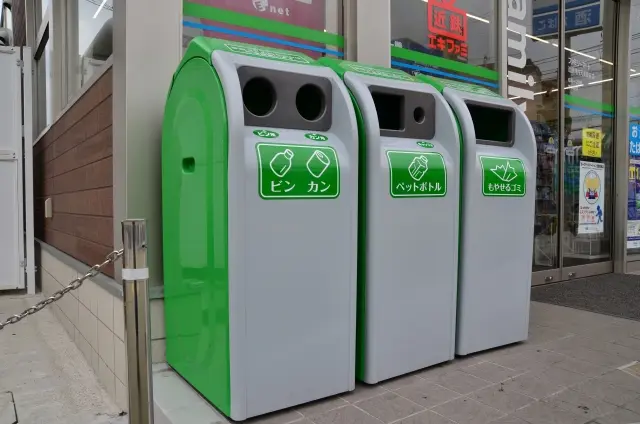
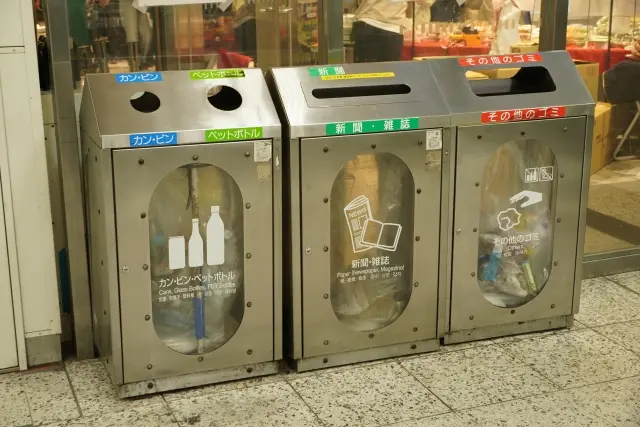
Convenience stores have sorted bins out front or just inside. Lawson has been posting stickers on the bins inside its stores since April 2006, in cooperation with Japan's Ministry of the Environment, asking customers to cut waste and sort properly.
No chain has published a rule saying you may only throw away what you bought there. But these are bins a shop provides for its customers, and emptying a hotel bag into one is not how it's done here. Buy something, then sort your drink containers into the bins on your way out. Nobody minds that.
Konbini are open around the clock and are everywhere in Japan. Big trash goes back to the hotel; the empties you pick up during the day go in a konbini bin. Split it that way and you'll never be stuck.
Sorting: the only rule you need is for plastic bottles
Sorting rules are set by each municipality, so they differ. You do not need to learn all of them. But everyone will expect you to handle a plastic drink bottle — the PET bottle (ペットボトル), as the recycling labels call it — correctly.
Shinjuku Ward puts it like this: take off the cap and the label, then rinse the bottle lightly with water. The cap and label are not part of the bottle — they get counted as "container and packaging plastic" and go out separately.
Do the same before you drop a bottle into the box beside a vending machine and no one will have a problem with you. Never put in a bottle with liquid still inside. That's the rule that matters.
While we're here: Japanese recycling is not the miracle it's made out to be. In the survey for fiscal 2024, published by the Ministry of the Environment in March 2026, total waste came to 38.11 million metric tons, or 839 grams per person per day, and the recycling rate was 19.3 percent — down slightly from 19.5 percent the year before. A clean street and a country producing less garbage are two different things.
Drop a cigarette butt and you'll pay for it
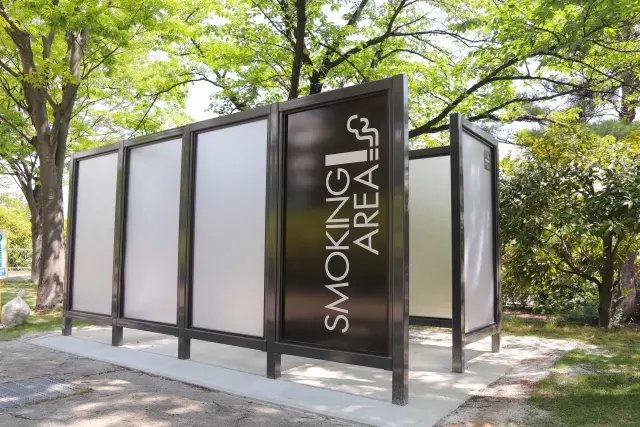
If you smoke, read this section if you read nothing else.
Under Shibuya Ward's Clean Town Shibuya ordinance (きれいなまち渋谷をみんなでつくる条例), smoking anywhere in public across the ward — outside the designated smoking areas — carries a ¥2,000 fine. That covers roads, parks, and plazas, and ward officers have patrolled the whole area since July 2019. The ordinance also forbids dropping cigarette butts in public places.
Chiyoda Ward has designated its entire area a no-smoking zone under its Living Environment Ordinance (生活環境条例). Smoking on the road or in specified public places brings a ¥2,000 fine, and since November 1, 2024, heated tobacco products on the street are covered too.
Carry a pocket ashtray — a small sealable pouch for butts — and use the designated smoking areas. There is nothing on a Japanese street to stub a cigarette out in.
What to pack: one plastic bag
The preparation is trivial.
One or two small plastic bags (any 100-yen shop or convenience store has them)
Drinks in a size you'll finish on the spot, because there's nowhere to pour out the rest
A pocket ashtray if you smoke
Any of the shops in Japan's 100 Yen Shops in 2026: Daiso vs. Seria vs. Can Do, and What Travelers Should Buy will have the bags. A few dozen yen removes one running irritation from your trip.
Carrying it is how you take part
This part is my own opinion. Japanese streets are not clean because the bins are good. It seems to me that the shortage of bins is made up for by people carrying their trash home instead.
If that's right, then carrying your own garbage around is a way of participating in how the city works. It is a nuisance, but a nuisance that means something. Put one plastic bag in your daypack and you're on the city's side for the cost of a few coins.
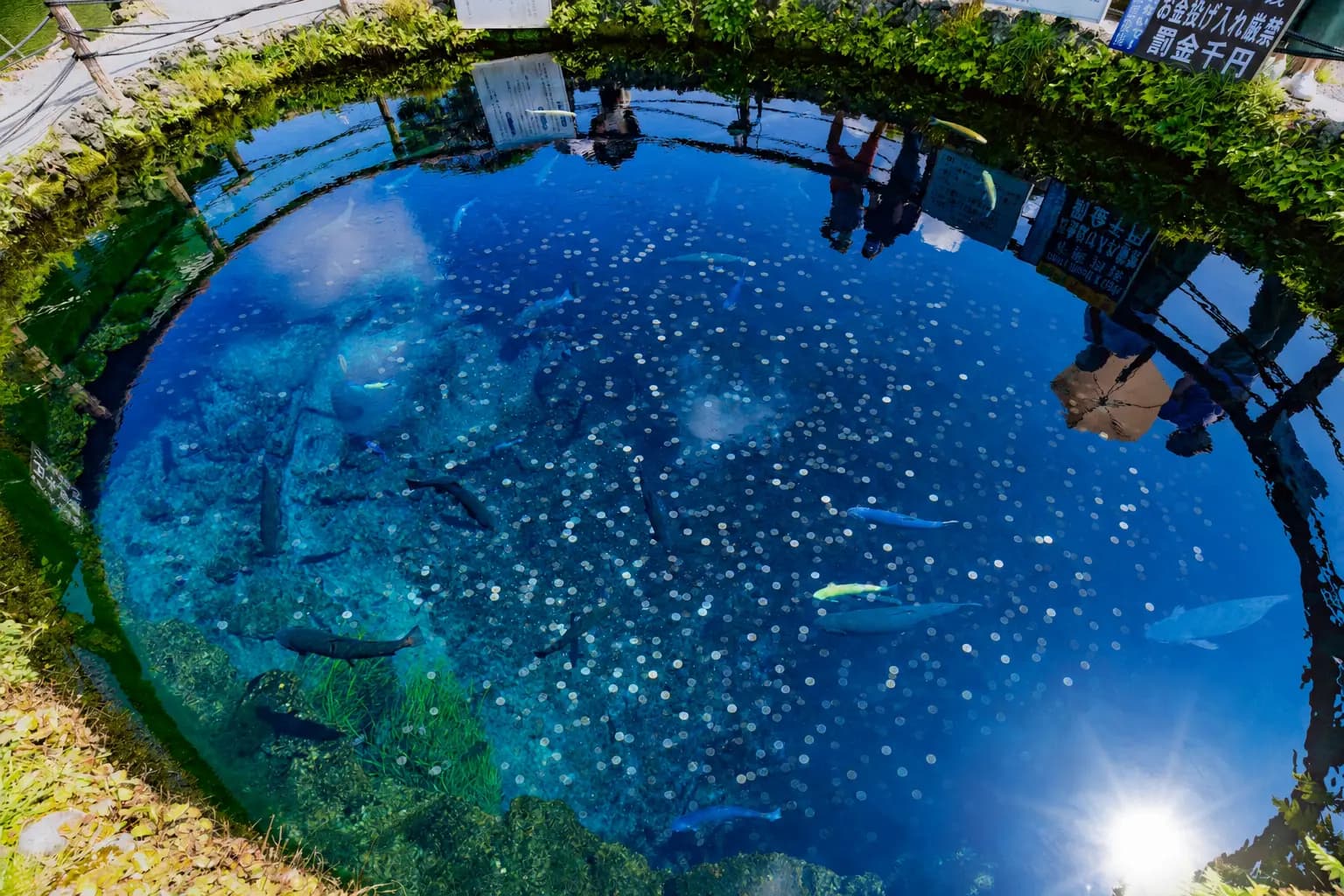
There's a related piece about the habit of tossing coins into ponds at temples and gardens — a well-intentioned gesture that turns into someone's problem. Read Please Stop Throwing Coins into Ponds: Japan's Growing Coin-Tossing Problem. For how to behave on the train, I wrote Train Etiquette in Japan 2026: 8 Rules Travelers Should Know.
This article was translated from the original Japanese with AI assistance and reviewed by our editorial team. The Japanese version is authoritative.