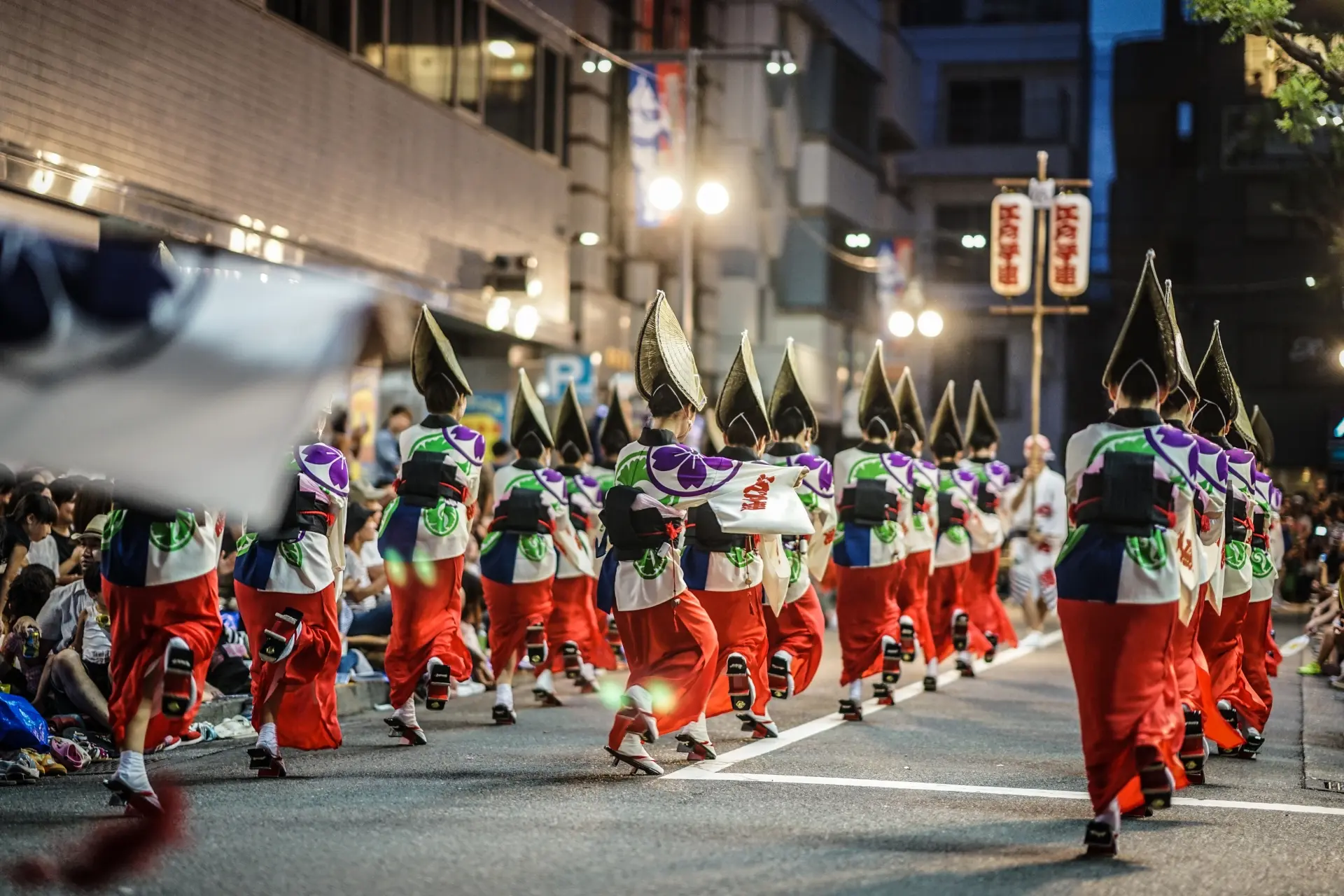
For two evenings at the end of August, the Tokyo neighborhood of Koenji turns its shopping streets into a stage. The 2026 Tokyo Koenji Awa Odori runs on Saturday, August 29 and Sunday, August 30. It brings the Awa Odori dance—born in Tokushima on the island of Shikoku—to the streets of western Tokyo, and it's one of the biggest summer festivals in the city.
This guide covers what you'll want to sort out before you go to the August 29–30 festival: the dates and hours, the eight dance stages, the paid reserved seats and the rules for watching free, the road closures, and how to walk in from each station—all based on the organizer's official announcements.
If you're comparing summer festivals across Tokyo around August 29–30, see our Japan Summer Festival Guide 2026: Food Stalls, Yukata, and Festival Etiquette as well.
2026 at a Glance
Here are the basics. 2026 marks the 67th edition.
Name | 67th Tokyo Koenji Awa Odori |
|---|---|
Dates | Saturday, August 29 and Sunday, August 30, 2026 (two days) |
Hours | 5:00 p. |
Area | Shopping streets around JR Koenji Station and Tokyo Metro Shin-Koenji Station, plus Konan-dori |
Organizer | Tokyo Koenji Awa Odori Promotion Association |
Admission | Free along the route (only the reserved seats are paid) |
The festival draws roughly one million people over the two days. In 2025 it pulled in about 1.02 million, with 158 ren (dance troupes) performing. Note that the official program covers these two main days only—there is no announced pre-festival event.
Official site: Koenji Awa Odori
Eight Dance Stages Across the Neighborhood
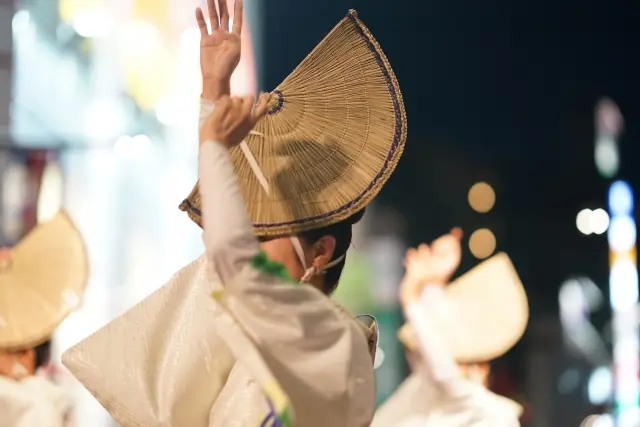
Koenji Awa Odori doesn't happen in a single plaza. Eight enbujo—dance stages, which here means stretches of street closed off as performance lanes—are set up along the shopping arcades north and south of Koenji Station and down Konan-dori toward Shin-Koenji.
The eight stages for 2026 are:
- Chuo Enbujo (central stage)
- Higashi Enbujo (east stage)
- Junjo Enbujo
- Pal Enbujo
- Momozono Enbujo
- Minami Enbujo (south stage)
- Look Daiichi Enbujo (Look No. 1 stage)
- Look Daini Enbujo (Look No. 2 stage)
Each stage closes a stretch of road to traffic, so spectators watch from the sidewalks on both sides. The mood differs from stage to stage: the wide avenues near the station feel powerful, while inside the arcades you're close enough to see the dancers' expressions. For a first visit, the large Chuo Enbujo is the most impressive place to start.
The performance schedule for each ren is published day by day on the official site. If there's a troupe you want to catch, check the running order in advance.
Reserved Seats: Prices and How to Apply
For anyone who'd rather sit, a few stages offer paid reserved seats (tokubetsu sajiki). Prices depend on the stage, and each unit includes one admission ticket.
Chuo Enbujo | 15,000 yen (one unit) |
|---|---|
Junjo / Momozono / Minami Enbujo (pick one) | 10,000 yen (one unit) |
You may apply for up to five units per person. These seats are offered as a thank-you to supporters of the association, so once you apply, tickets cannot be returned, canceled, or changed, and there is no refund if the event is called off for rain.
For details such as the exact day and time each seat covers, check the official listing.
Applications are taken by postcard or online. The postcard window closed on July 15, 2026, while online applications are accepted until 11:59 p.m. on Friday, August 28—the evening before the festival. If you want a seat, apply early through the official site.
Official site: Special Seat
Watching for Free: The No-Saving-Spots Rule
Anywhere along the route outside the reserved seats is free to watch from. There is, however, a clear rule about saving spots.
Laying down plastic sheets or tape to hold a place is not allowed, and any mats left on the ground may be removed. The only seated viewing is in the paid reserved seats; if you're watching for free, plan to stand along the sidewalk.
The streets are no-smoking, with smoking limited to designated corners. Take your trash with you, and stay out of the performance lanes (the roadways) while the dancing is on. When it's crowded, follow the guards' directions.
Official site: Viewing Etiquette
Road Closures on August 29–30: Times and Area
Traffic is restricted across the festival area while it's running. The closures apply both days, Saturday, August 29 and Sunday, August 30, from 4:10 p.m. to 8:30 p.m.
The restricted zone is the part of north and south Koenji bounded by Ome-kaido, Kanjo-nanago (Ring Road 7), Waseda-dori, and Mabashi-dori. During those hours, vehicles cannot enter or pass through the zone. The closures are carried out with the permission of the Suginami Police. Skip driving and come by train.
Official site: Traffic Restrictions During the Event
Walking Times from Each Station
Several stations put you within walking distance. The main two are JR Koenji Station and Shin-Koenji Station on the Tokyo Metro Marunouchi Line.
JR Koenji Station (Chuo-Sobu Line, local) | about 5 min on foot |
|---|---|
Shin-Koenji Station (Tokyo Metro Marunouchi Line) | about 5 min on foot |
Higashi-Koenji Station (Tokyo Metro Marunouchi Line) | about 12 min on foot |
JR Asagaya Station | about 15 min on foot |
JR Nakano Station | about 15 min on foot |
Minami-Asagaya Station (Tokyo Metro Marunouchi Line) | about 20 min on foot |
Koenji and Shin-Koenji stations get very crowded on the day. Shifting your return time, or walking in from Asagaya or Nakano a little farther out, helps you avoid the crush at the ticket gates.
Official site: Access
In Case of Rain
Koenji Awa Odori goes ahead in light rain. In heavier rain, though, it may be canceled.
There is no announced rain date, so if bad weather is forecast, check the official site or social media on the day for the latest word. As noted above, the reserved seats are not refunded even if the event is canceled for rain.
Food Stalls on August 29–30
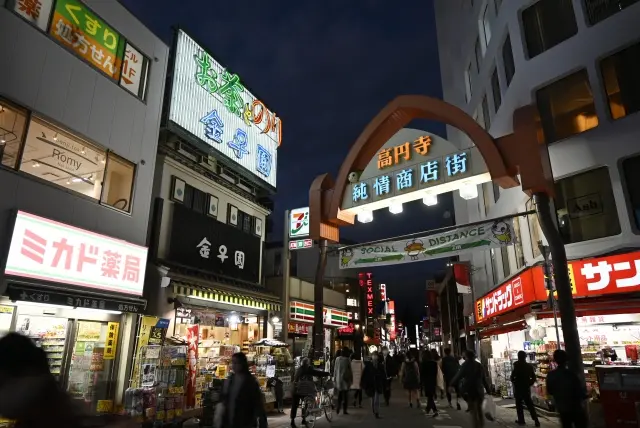
Many people picture a Japanese festival lined with food stalls, but Koenji Awa Odori is a dance festival that turns the roads themselves into stages. For August 29–30, the official site says nothing about yatai or food stalls being set up.
What it does have is Koenji itself: the shopping streets along the route are full of restaurants and shops, and they're open for business on August 29–30. For drinks and a bite, plan to use the arcade's own storefronts. Rather than coming for stalls, come to enjoy the neighborhood.
History: A Festival Born in 1957
Koenji Awa Odori began in 1957. A group from Koenji's Pal shopping street started it as a small event to answer neighboring Asagaya's Tanabata festival, which had launched a few years earlier. It started out as the "Koenji Baka Odori" (Koenji fool's dance), then gradually adopted the real Awa Odori style from Tokushima and grew into what it is today.
More than sixty years on, it has become one of Tokyo's signature summer festivals. The dancing here holds its own against Tokushima's, and ren come from across the country to take part.
At the end of summer in Koenji, two evenings wrapped in the sound of gongs and drums make for one of the season's real pleasures in Tokyo.
If you're planning around other summer events in the city, our Tokyo Summer 2026 Events Calendar: Festivals, Fireworks, and More in July–August is a good place to look.
This article was translated from the original Japanese with AI assistance and reviewed by our editorial team. The Japanese version is authoritative.