Every summer, the surface of Shinobazu Pond (不忍池) in Ueno disappears under a blanket of lotus (hasu). The leaves grow taller than you'd expect, and pink flowers push up between them until the water is hard to see at all. Stand at the edge and it's easy to forget you're a few minutes from one of Tokyo's busiest stations. There's just one catch: the flowers open early in the morning and close again by midday.
That's why, with the Shinobazu lotus, when you go matters more than which day you go. This guide covers the 2026 season and how to plan an early-morning visit while the flowers are still open.
Shinobazu Pond is one of the classic sights of summer in Ueno. If you'd like to build a trip around the festivals and fireworks that fill the same weeks, see Tokyo Summer 2026: Every Festival & Fireworks Show, in Date Order.
The pond that disappears under lotus
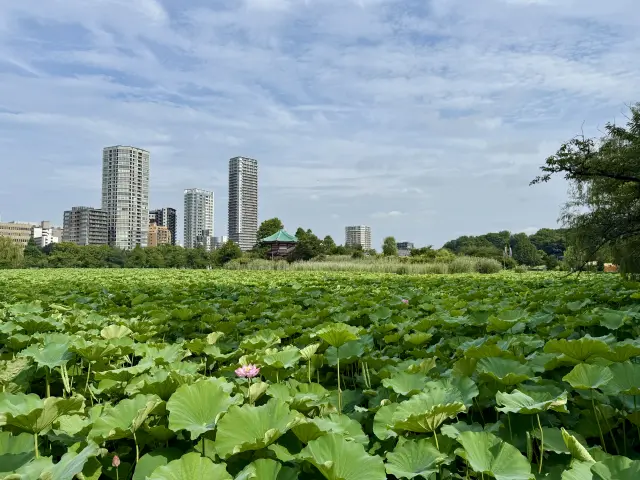
Shinobazu Pond sits at the southern edge of Ueno Park (Ueno Onshi Park / 上野恩賜公園). It looks like a single body of water, but it's actually split into three: the Lotus Pond (Hasu-ike / 蓮池), the Boat Pond, and the Cormorant Pond (U-no-ike / 鵜の池). You can take a rowboat or a swan boat out on the Boat Pond, and watch waterbirds on the Cormorant Pond.
The lotus takes over the Lotus Pond. Taito City's tourism guide describes it filling with lotus that turn the pond pink through July and August. At the height of summer the leaves and flowers tower over the pond's surface, and walking the path along the water feels like walking through the lotus rather than beside it. Few places this close to a major Tokyo station give you this much lotus.
When to see them (2026)
The Shinobazu lotus is usually at its best from early July to late August. The Tokyo Metropolitan Government's official Ueno Park page lists this stretch as the viewing season.
The exact timing shifts a little from year to year with the heat, so it's worth checking the latest bloom updates from Taito City or the Metropolitan Government's park office just before you go.
The flowers close by midday — timing is everything
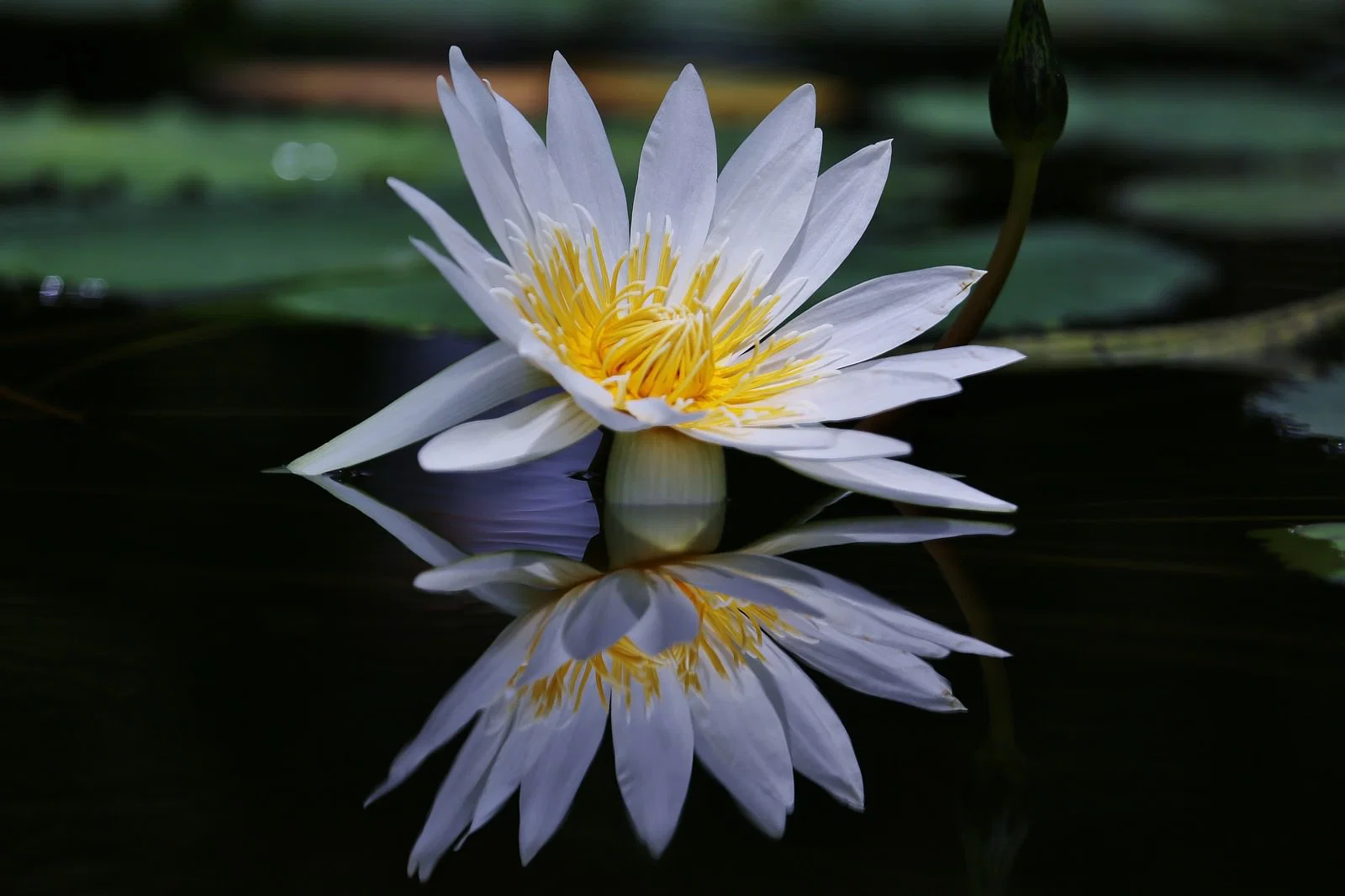
The single most useful thing to know about the Shinobazu lotus is when it opens. The flowers are most fully open around 7:00 to 9:00 a.m., then gradually close through the late morning toward noon. Tokyo's official tourism site, GO TOKYO, recommends coming early for exactly this reason. Show up at that hour and you'll have the pond largely to yourself, save for a handful of photographers, before the daytime crowds arrive.
Each bloom lasts about three or four days, opening every morning and closing by midday, and it's said to look its best on the second morning. Arrive late, and you'll be looking at a quiet pond of flowers that have already shut for the day. If the lotus is your reason for coming, come in the morning.
Viewing season | Early July to late August (typical) |
|---|---|
When the flowers open | About 7:00–9:00 a. |
Getting there and the basics
Shinobazu Pond is right next to Ueno Station, and the train is the easiest way in. It's about a 5-minute walk from the Shinobazu exit of JR Ueno Station, and roughly the same from Ueno Station on the Tokyo Metro Ginza and Hibiya lines.
Name | Shinobazu Pond (inside Ueno Park) |
|---|---|
Address | 5-20 Uenokoen, Taito City, Tokyo |
Access | About 5 min from JR Ueno Station (Shinobazu exit); about 5 min from Ueno Station on the Tokyo Metro Ginza / Hibiya lines |
Park hours | 5:00–23:00 (Ueno Park) |
Admission | Free |
Official site (Ueno Park, Tokyo Metropolitan Government): 東京都建設局における上野恩賜公園 Ueno Park 公式ホームページの自然がいっぱい(公園の見どころ)のページです。
自然がいっぱい|公園の見どころ|上野恩賜公園 Ueno Park 公式ホームページ
A little botany: lotus is not water lily
Lotus (hasu / ハス) and water lily (suiren / スイレン) look similar and are easy to mix up, but they belong to different plant families.
The clearest difference is how they stand. Lotus leaves and flowers rise well above the water; water lily leaves float on the surface, with the flowers sitting low near the water.
Water lily leaves have a notch cut into them, while lotus leaves are round and unbroken. What covers Shinobazu Pond is lotus — and those tall, upright stems are how you know.
Bentendo: the temple on the water
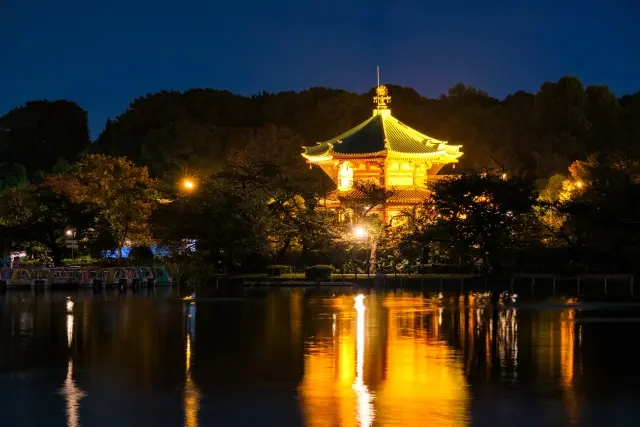
On the island at the center of the pond (Nakanoshima, also called Benten-jima / 弁天島) stands a vermilion, eight-sided hall: Shinobazunoike Bentendo (不忍池辯天堂). It's a temple of the Tendai school, part of Kan'ei-ji, and its principal image is Happi Benzaiten (八臂辯才天), the eight-armed goddess. Benzaiten is a deity of water, so the water-loving lotus makes a fitting companion for her hall. In summer the lotus rings the hall, and walking the causeway in the morning light brings you right up among the flowers.
The hall is open from 9:00 a.m. to 5:00 p.m. One easy plan: see the lotus in the early morning, then spend the time until the hall opens strolling the park.
Official site : Shinobazunoike Bentendo
Ueno Summer Festival 2026: 4,000 Wind Chimes and Floating Lanterns
The lotus season overlaps with Ueno's summer festival. In 2026, the Ueno Summer Festival (the 75th Edo Shumi Noryo Taikai / 第75回江戸趣味納涼大会) runs from Friday, July 10 to Tuesday, August 11, centered on the shores of Shinobazu Pond.
During the festival, the lotus-viewing deck is hung with around 4,000 wind chimes for the "Rin-Rin Kairo" chime corridor — a chance to watch the lotus while the chimes ring in the breeze. Along the water, the Ueno no Ennichi evening fair runs from 3:00 to 9:00 p.m. (canceled in bad weather), and on July 17 from 7:00 p.m. there's a toro nagashi, where paper lanterns are floated on the water.
Lotus in the morning, festival in the evening — the same pond gives you two different faces depending on when you come.
Official site (Ueno Summer Festival 2026): 2026年7月10日(金)〜8月11日(火・祝)、上野公園不忍池周辺・水上音楽堂で開催される「第75回江戸趣味納涼大会 うえの夏まつり2026」公式サイト。4,000個の風鈴が並ぶりんりん回廊、あいあい傘タワー、上野之縁日など見どころ満載。主催:上野観光連盟。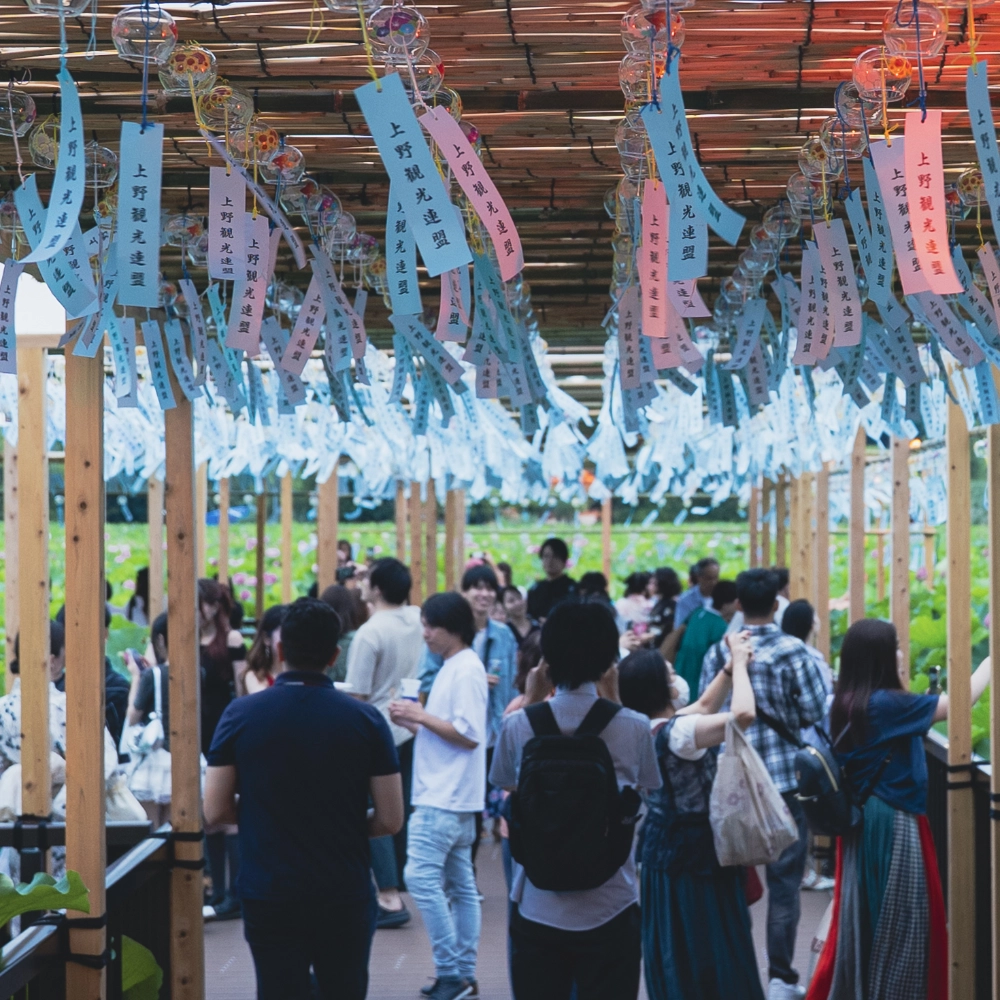
【公式】うえの夏まつり2026|7月10日〜8月11日|上野公園・不忍池(第75回江戸趣味納涼大会)
More to see around Ueno, and the old town beyond
Ueno Park, where Shinobazu Pond sits, is big enough to fill a whole day. Right beside the pond is Ueno Zoo, and the park is also home to the Tokyo National Museum, the National Museum of Western Art, and the National Museum of Nature and Science. On the south side of Ueno Station, the crowded market street of Ameyoko (Ameya Yokocho) stretches toward Okachimachi.
After the lotus in the morning, it's worth wandering a little farther to the old-town neighborhoods of Yanaka, Nezu, and Sendagi, northwest of Ueno. We've mapped out how to walk them in The Yanesen Walking Guide: Slow Down in Tokyo's Most Charming Old-Town Neighborhood.
Tips for an early-morning visit
Even in the morning, Tokyo summers are hot and humid. If you're getting up early for the lotus, bring something to drink and sip it as you walk. There isn't much shade around the Lotus Pond, so a hat or a parasol helps. Plan to be done before the heat of the day builds — the flowers will have started to close by then anyway — and the whole outing is far more pleasant.
If you're chasing summer flowers, you might also like Tokyo Sunflower Fields 2026: 5 Spots You Can Reach by Train
This article was translated from the original Japanese with AI assistance and reviewed by our editorial team. The Japanese version is authoritative.