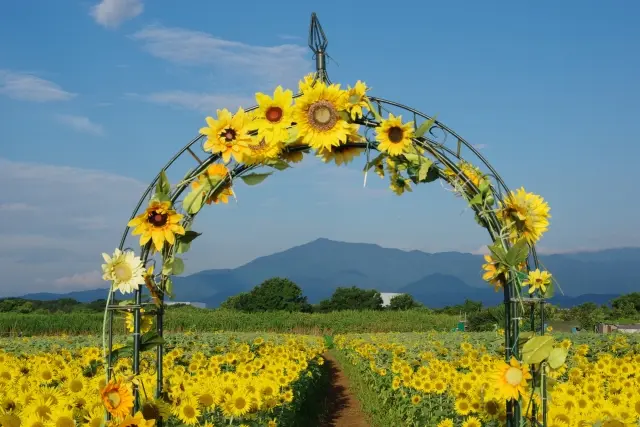
Every summer, the fields around Zakae Bridge (Zakae-bashi) in Zama City, Kanagawa, fill with sunflowers as far as you can see. In 2026, the Zama Sunflower Festival (Zama-shi Himawari Matsuri) runs for three days, from Friday, August 14 to Sunday, August 16.
This guide covers the 2026 dates, how the two fields are laid out, the direct bus from Sobudai-mae Station, and how to check the bloom before you go. Everything below comes from the official pages of Zama City and the Zama City Tourism Association.
If you are still deciding which sunflower field to visit, our Tokyo Sunflower Fields 2026: 5 Spots You Can Reach by Train roundup compares Kiyose, Showa Kinen Park, and others side by side, so you can weigh access and scale before making the trip out to Zama.
The festival at a glance (2026)
Start with the dates, hours, and location. The festival lasts only three days, so lock in the date before you build it into your trip.
Name | Zama Sunflower Festival (August event) |
|---|---|
Dates | Friday, August 14 - Sunday, August 16, 2026 (3 days) |
Hours | 9:30 a. |
Location | Around Zakae Bridge (Zama area and Yotsuya area) |
Admission | Free |
Sunflowers | About 550,000 across the two areas combined |
The fields themselves are open to walk through during the day, and admission is free. Only the festival programming is tied to those three days, August 14-16.
Two areas: Zama and Yotsuya
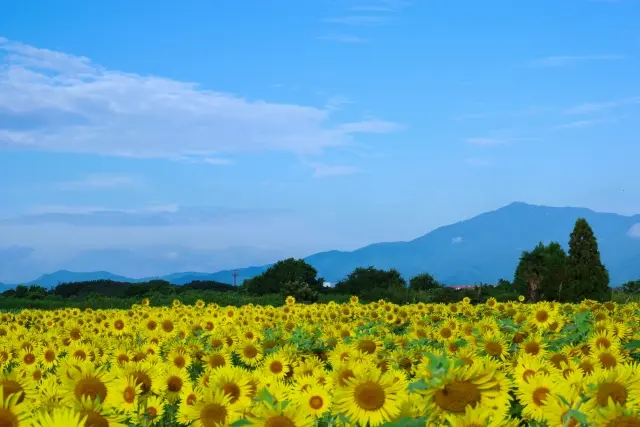
The festival is split across two fields on either side of Zakae Bridge: the Zama area and the Yotsuya area. The "about 550,000" figure in the table is the total for both areas combined, not one field alone. During the festival you can see sunflowers in either area.
Both fields are planted with sunflowers tall enough to look up at, stretching to the horizon, and both have an observation deck and photo spots. There are also cut flowers and local produce for sale, so the day is as much about the local summer atmosphere as the flowers themselves.
Getting there: the shuttle from Sobudai-mae Station
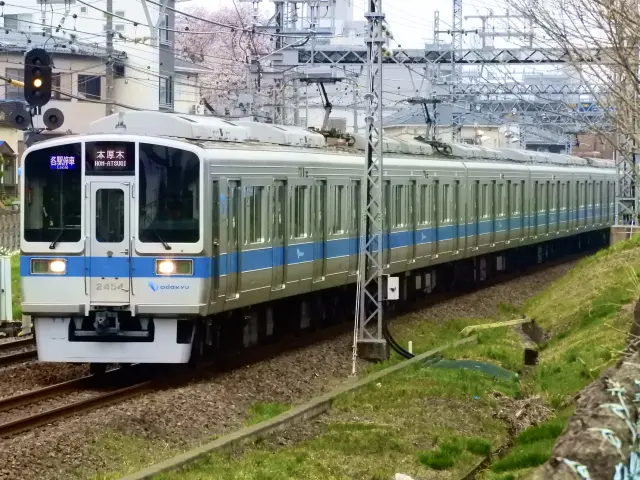
The easiest way in is the temporary shuttle bus from Sobudai-mae Station. Sobudai-mae sits on the Odakyu Odawara Line out of Shinjuku, so it is a straightforward station to reach from central Tokyo. The shuttle runs only from Sobudai-mae; fares and operating hours are in the table below.
Shuttle bus | Sobudai-mae Station ⇔ venue (260 yen one way, every 15-20 min) |
|---|---|
Bus hours | Outbound from Sobudai-mae 9:00-15:40 / return from venue 10:30-17:30 |
Nearest stations | Odakyu Line: Sobudai-mae, Zama / JR Sagami Line: Sobudai-shita, Iriya |
One thing to watch: the last outbound bus leaves Sobudai-mae at 3:40 p.m., even though the fields stay open until 5:00 p.m. If you are coming in the late afternoon, give yourself time to catch it.
If you plan to drive, note that the temporary parking details (location, fee, whether you need to reserve) are not always listed on the official pages. Check the Zama City Tourism Association site for the latest before you set out. The roads around the fields get congested, so public transport is the safer bet.
Food stalls (all three days) and ayu-catching (August 15-16)

Across all three days (August 14-16), local shops set up food stalls at the venue. The official pages do not say which shops appear on which day, but you can count on buying snacks and drinks on site throughout the festival.
A favorite with families is the ayu-catching, where kids grab sweetfish by hand. This runs on only two days, Saturday, August 15 and Sunday, August 16, from 9:30 a.m. to 3:30 p.m. There is no listing for it on the 14th, so if this is what you are coming for, plan around the 15th or 16th.
Checking the bloom
The sunflowers' peak shifts with the weather from year to year. Zama City posts the current bloom status on the Zama City Tourism Association website.
You'll only really know if the field is at full bloom close to the date itself. Once your travel dates are set, check it again a few days before the festival.
Official site: https://www.zama-kankou.jp/event/2026060901-copy.html
What to bring, and the weather
There is almost no shade in a sunflower field. You will be walking under the full midsummer sun, so make sure to bring a hat, sunscreen, and water.
For photos, early morning is best, when the light is soft and the crowds are thin. Sunflowers turn to face the sun, so shooting with the sun behind you makes it easier to catch the flowers head-on.
One more thing: the festival may be cancelled in bad weather, and no rain date is announced. If rough weather is forecast, check the official site the morning of before you head out.
Related reading
Tokyo Sunflower Fields 2026: 5 Spots You Can Reach by Train
Tokyo Summer 2026: Every Festival & Fireworks Show, in Date Order
Shinobazu Pond Lotus 2026: Ueno's Early-Morning Bloom (Best Time & Access)
This article was translated from the original Japanese with AI assistance and reviewed by our editorial team. The Japanese version is authoritative.

