
For four nights every July, Yasukuni Shrine (靖国神社) in central Tokyo disappears under a sea of paper lanterns. This is Mitama Matsuri (みたままつり).
Around 30,000 small lanterns, called mi-akashi, line the approach from the great gate to the main shrine, and once the sun goes down they glow with a soft, warm light from end to end.
It feels less like a street-food fair and more like a festival of light and quiet remembrance. In 2026 it runs from Monday, July 13 to Thursday, July 16.
One thing to know up front: there are no regular festival stalls this year, so food comes mainly from a row of food trucks near the shrine's outer garden. Below are the dates, the highlights, and the practical details worth knowing before you go.
What Mitama Matsuri Is
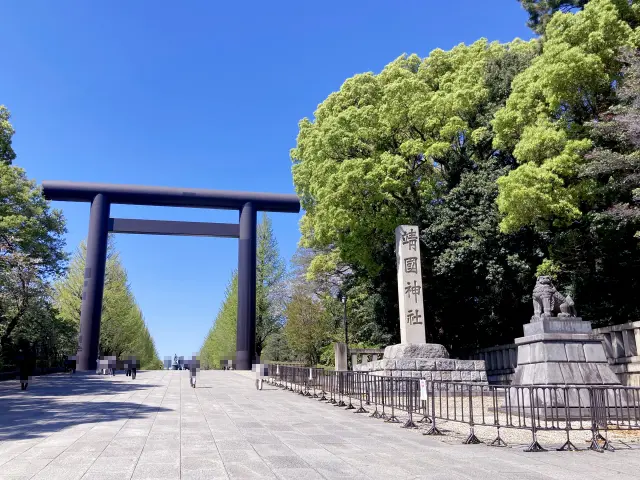
Mitama Matsuri grew out of Obon, the midsummer Buddhist tradition of welcoming back and consoling the spirits of the dead.
Yasukuni Shrine has held it since 1947, and 2026 marks the 79th edition. During Obon, families across Japan light welcoming fires and dance the Bon Odori, and the shrine's own English guide describes the dancing here as "the earliest Bon Odori dance in Tokyo."
It helps to know what kind of place you are visiting. Yasukuni Shrine enshrines those who died for Japan in its modern wars, and it is a site that people view in very different ways. Even on a festival night, this remains a place of prayer. If you keep that in mind and stay considerate of those who have come to pay their respects, you will enjoy the evening all the more.
2026 Dates and Basics
Here are the essentials for 2026 (the 79th festival). Dates and times follow Yasukuni Shrine's official announcements.
Name | 79th Mitama Matsuri |
Dates | Monday, July 13 to Thursday, July 16, 2026 (four days) |
Opening | gates open at 6:00 a. |
Admission | free to enter and worship in the grounds |
The lanterns look their best after dark. Once the sun sets and the flames go up, the whole approach turns into a tunnel of light.
You can see the lantern displays and the painted lanterns during the day, but the real star of this festival is the evening glow. If you have time, arrive in the late afternoon, walk the grounds while it is still light, and wait for dusk.
The 30,000 Lanterns (Mi-akashi)
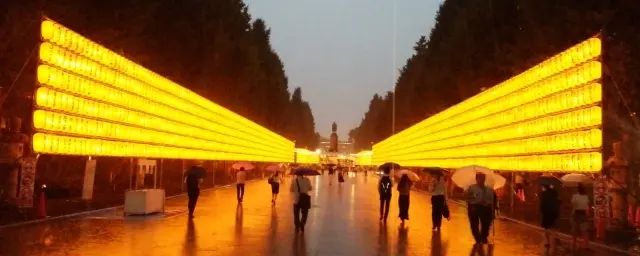
The lanterns are the whole reason to come. More than 30,000 of them, large and small, hang in dense rows along both sides of the approach. Each one carries the name of the person who dedicated it, and the effect is genuinely overwhelming in photos, but even more so standing right under it. They stay lit from dusk on, well into the night.
Among them are the kakebonbori, lanterns painted with calligraphy and artwork by well-known figures. Roughly 300 of these go up each year, and hunting for a panel by a favorite actor, novelist, or sumo wrestler is part of the fun. You will also find haiku lanterns, an exhibition of famous lanterns gathered from across Japan, and Sendai-style Tanabata (star festival) decorations.
You do not have to just look, either. You can dedicate a lantern of your own: a small one costs 5,000 yen, and applications are accepted right up to the festival days. Lighting one in your own name is a souvenir you can't buy at a stall.
What to See Over the Four Days
Each of the four days has its own program of dedicatory performances. Here are the main events planned for 2026 (times and content may change).
Mon, July 13 | A lively opening: brass band parade (6:30 p. |
Tue, July 14 | Mikoshi-furi, a swaying portable-shrine procession (around 6:30 p. |
Wed, July 15 | Mikoshi-furi (around 6:30 p. |
Thu, July 16 | The closing climax: an Aomori Nebuta float (6:30 p. |
Throughout the festival: dedicatory arts on the Noh stage (programs and times vary by day), the famous-lantern exhibition, the kakebonbori, and Sendai Tanabata decorations
The energy of the swaying mikoshi and the huge Aomori Nebuta float moving up the approach is a real sight.
At the same time, there are quiet dances and music dedicated on the Noh stage, so you get both the spectacle and the solemnity in one evening.
That mix is what makes this one worth the trip. If there is a performance you really want to catch, claim a spot a little before it starts so you are not stuck behind the crowd.
Is There Street Food?
One thing worth flagging: Yasukuni Shrine has officially announced that there will be no ordinary festival stalls in 2026. Instead, a line of food trucks sets up in the outer-garden area, at the Ikoi no Niwa and Chuo Hiroba plazas, open from 11:00 a.m. to 9:00 p.m. If you were counting on grazing your way through rows of yatai, plan for something a little different from the usual summer festival.
Food trucks and the shrine's own counters often take cash, so it helps to carry some coins and small bills. There are also convenience stores and restaurants around Kudanshita Station, so eating a proper meal before you head over is a perfectly good option.
Getting There
Address: 3-1-1 Kudankita, Chiyoda-ku, Tokyo (Yasukuni Shrine)
About a 5-minute walk from Kudanshita Station, Exit 1 (Tokyo Metro Tozai and Hanzomon lines, Toei Shinjuku line)
About a 10-minute walk from Iidabashi or Ichigaya stations (JR and subway)
About a 1-minute walk from the "Kudan-ue" Toei bus stop
The closest station is Kudanshita. Come up from the exit, follow Yasukuni-dori, and you will soon see the shrine's huge torii gate. The festival draws big crowds and the station gets busy, especially on the way home at night, so give yourself extra time.
Before You Go
The best viewing is after dark. Build your plan around dusk and the hours after, when the lanterns are lit.
Crowds peak at night. If you want a calmer look, the morning right after the gates open, or a weekday, tends to be quieter.
Tokyo is hot and humid in July. Bring a hat, water, and something to wipe off sweat. A yukata adds to the atmosphere if you have one.
A special evening visit to the inner courtyard is also offered (reception 6:00 p.m. to 9:10 p.m., 2,000 yen per person). The adjacent Yushukan museum stays open during the festival from 9:00 a.m. to 9:00 p.m. (last entry 8:00 p.m.).
Drones are not permitted on the grounds.
Programs and times may change with the weather or the schedule. Check the official site for the latest before you go.
For photography and worship etiquette, follow the signs on the grounds and the staff's guidance. Just remember that people are here to pray, and a little courtesy goes a long way toward one of Tokyo's better summer nights.
Nearby Spots to Pair With Your Visit
The area around Yasukuni Shrine has several sights within walking distance. Chidorigafuchi, famous for its cherry blossoms, the green expanse of Kitanomaru Park, and the Nippon Budokan concert hall are all close by.
None of these are part of Mitama Matsuri, but you could drop by one of them during the day and then wait for the lanterns to light up after dark.
Tokyo's summer is full of other after-dark events, too. If you want to dress up in a yukata or pair the festival with a fireworks show, take a look at our related guides.
This article was translated from the original Japanese with AI assistance and reviewed by our editorial team. The Japanese version is authoritative.


