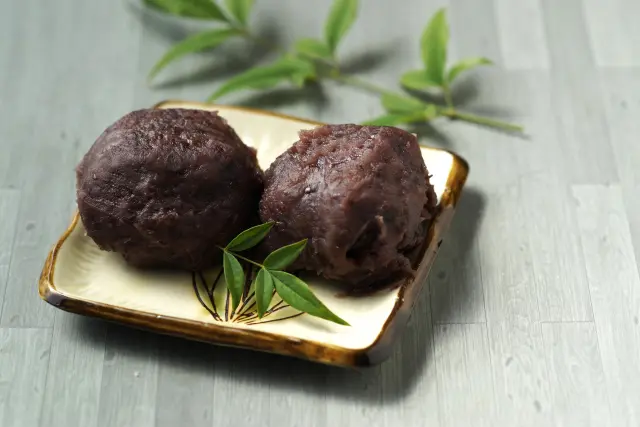
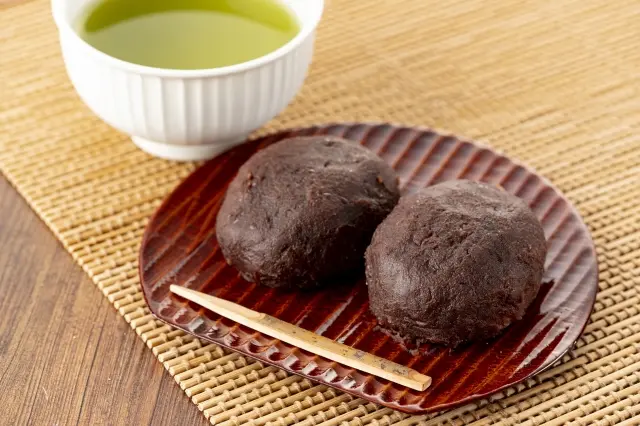
If you are in Japan in late September, you will start seeing the same little rice treat in shop displays everywhere: a soft mound of rice wrapped in glossy red bean paste. That is ohagi, and its season is tied to one of the quieter holidays on the calendar, the Autumnal Equinox.
In 2026 the timing is worth marking. The equinox closes out a rare cluster of autumn holidays, and the week around it is when families visit graves, tidy the family altar, and eat ohagi to remember their ancestors. Here is what the sweet is, when the key days fall in 2026, and where a traveler can actually buy one.
In 2026, Autumnal Equinox Day is Wednesday, September 23, and it anchors a string of holidays: Monday the 21st (Respect for the Aged Day), Tuesday the 22nd (a national "citizens' holiday"), and Wednesday the 23rd. With the weekend before, that is up to five days off in a row, what Japan sometimes calls a "Silver Week."
For more of Japan's autumn calendar, see our guide to Tsukimi, the autumn moon-viewing season.
The 2026 equinox date and the long holiday
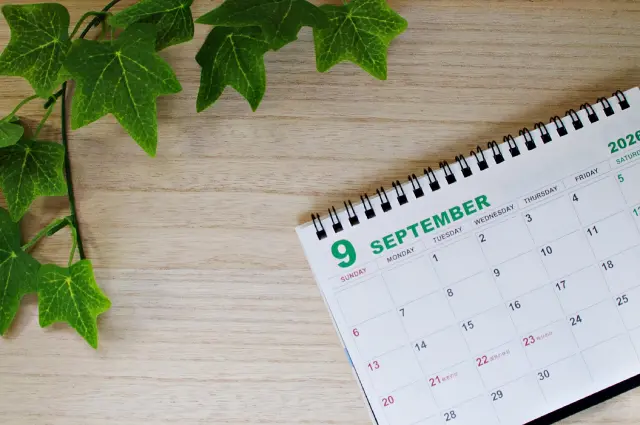
Autumnal Equinox Day (Shubun no Hi) is a national holiday, and in 2026 it falls on Wednesday, September 23. The astronomical moment itself, when the sun crosses celestial longitude 180 degrees, is 9:05 a.m. that morning, according to the National Astronomical Observatory of Japan.
The date is not fixed by law. Japan simply defines the holiday as "the equinox day," and the National Astronomical Observatory calculates the exact date, which the government confirms the previous February, more than a year in advance. That is why it shifts between September 22 and 23 depending on the year.
What makes 2026 stand out is the cluster of holidays around it. Respect for the Aged Day falls on Monday, September 21, and Equinox Day on Wednesday, September 23. Under Japanese law, the ordinary Tuesday caught between them, September 22, becomes a holiday of its own, a so-called "citizens' holiday."
So all three days, Monday through Wednesday, are off. For anyone with the weekend before free, those three days join with Saturday the 19th and Sunday the 20th to make a five-day break, the September run sometimes nicknamed "Silver Week." If you are traveling that week, book trains and popular spots well ahead, because much of the country is off at the same time.
Ohigan: the seven-day equinox week
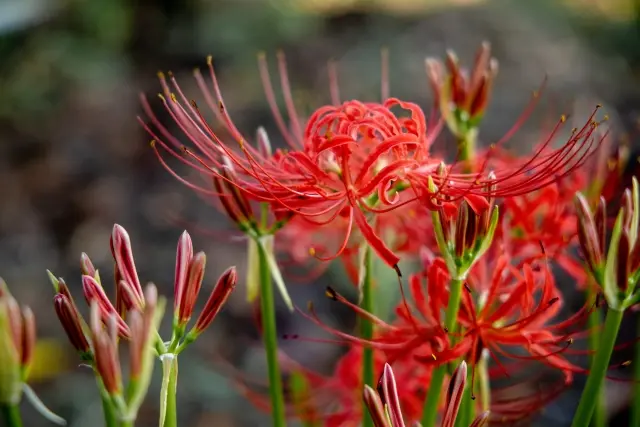
The holiday sits inside a longer observance called Ohigan, which runs for seven days: three before the equinox and three after, with Equinox Day as the midpoint.
In 2026 that means Sunday, September 20 through Saturday, September 26. This span is about honoring ancestors, not the same thing as the run of public holidays.
During Ohigan, families return to their hometowns, clean the family grave, and offer flowers and sweets. It is a Buddhist custom, though it's often described as uniquely Japanese, with no real equivalent in India or China. Spring has its own Ohigan around the March equinox, so this same week comes around twice a year.
You do not need to take part in any of it to enjoy the season. But knowing what the week means explains why the sweets suddenly appear, and why the mood in late September is a little more reflective than festive.
Ohagi and botamochi: the same sweet, two names
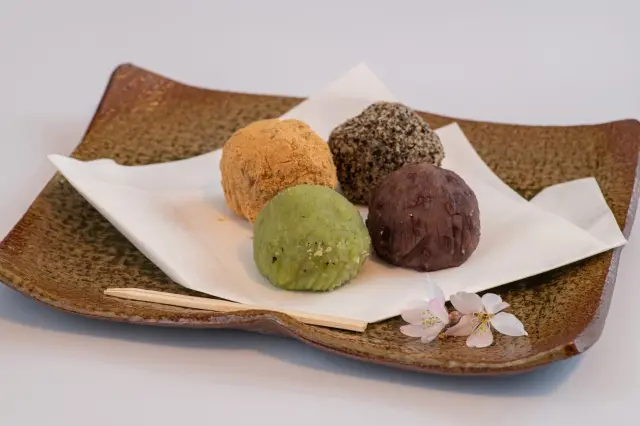
Ohagi is glutinous rice, lightly mashed, formed into a small round, and coated in sweet red bean paste. Here is the part that trips up almost everyone, including Japanese people: the very same sweet is also called botamochi.
The most common explanation is seasonal and floral. In spring it is named for the botan (peony) and called botamochi; in autumn it is named for the hagi (bush clover) and called ohagi.
There are other theories too. Some say botamochi uses smooth koshian paste while ohagi uses chunky tsubuan; others point to differences in size, shape, or the rice blend. The Ministry of Agriculture, Forestry and Fisheries lists several of these and notes that today the names are no longer really distinguished, so in most shops you will just see "ohagi" year-round.
As a bit of trivia, some regions stretch the wordplay across all four seasons, with playful names like yofune in summer and kitamado in winter, though these are folk sayings rather than anything official.
Why ohagi at Ohigan: two theories
No single reason is written in stone, but two explanations come up again and again. Treat both as folklore, not settled history.
The first is about color. The deep red of azuki beans has long been believed to ward off misfortune, which made red-bean sweets a fitting offering to protect and remember the departed.
The second is about sugar. In the era when this custom took hold, sugar was a luxury, so offering a sweet made with it was a way to show gratitude to one's ancestors. The habit of eating ohagi and botamochi at the equinoxes is generally traced to the Edo period.
Whichever story you prefer, the practical version is simple. Families place ohagi on the household altar, share them at home, and sometimes hand them to neighbors.
Where to buy ohagi
The good news for visitors is that ohagi is easy to find and needs no reservation. You will see it at neighborhood wagashi (traditional sweet) shops, in supermarket sweets aisles, in the food halls beneath department stores (the depachika), and at convenience stores. It is sold year-round, but the selection widens noticeably around Ohigan.
A few things worth knowing before you buy:
- Flavors go well beyond plain red bean. Common versions include chunky tsubuan and smooth koshian anko, kinako (roasted soybean flour), black sesame, aonori seaweed, and zunda, a green paste of mashed edamame that is popular in the Tohoku region.
- Ohagi is a fresh sweet and does not keep. Plan to eat it the day you buy it, or by the next day at the latest.
- Prices vary widely by shop, so there is no single set price. A hand-formed piece at a wagashi counter and a supermarket tray of several are simply different things.
Convenience-store chains typically roll out their own ohagi around this season, but the specific 2026 products and prices had not been announced as of this writing, so it is best to just look in the chilled sweets case when you are there.
A simple way to taste the season
You do not need a temple, a grave, or an invitation to take part in the autumn equinox. Buy one ohagi from a supermarket or a small sweet shop, notice how the red bean is sweet but not cloying, and you have shared in a custom that Japanese families have kept for centuries. If you happen to be here for the long September holiday, it is the easiest, tastiest doorway into the season.
This article was translated from the original Japanese with AI assistance and reviewed by our editorial team. The Japanese version is authoritative.